Households that prepare meals in portions
If you regularly freeze prepared meals, drawers can help you organise them and find what you need. UFC-Que Choisir contrasts this upright storage with the large, open space of a chest freezer.


If your current freezer compartment no longer has enough room for your prepared meals or bulk shopping, a separate appliance gives you extra storage: a chest freezer offers more capacity, while an upright freezer makes it easier to organise portions. If space is limited or you’d rather have just one appliance, compare a compact freezer with a fridge freezer, checking how much space is actually available for frozen food.
If you regularly freeze prepared meals, drawers can help you organise them and find what you need. UFC-Que Choisir contrasts this upright storage with the large, open space of a chest freezer.
A chest freezer is worth considering for bulk shopping or larger items, provided you have enough floor space. Also check that the room temperature is suitable for the model you choose.
If there’s no room for a large, dedicated appliance, compare the freezer capacity of a compact model with that of a fridge freezer. Their dimensions and the space needed to open them matter just as much as their stated capacity.
First, work out what your current setup is lacking: easy access to portions, extra storage capacity, a suitable space or the option to keep just one appliance. Then compare the usable freezer capacity and installation requirements of the models you’re considering.
| Factor | What to check | Who it matters to |
|---|---|---|
| Access to portions | Drawer layout and dimensions; space for your containers. | If I often take out a prepared meal, I want to find it without rummaging through all my frozen food. Around 31% of consumers might make easy access a priority. |
| Storage capacity | Usable freezer capacity in litres; access to food stored at the bottom of a chest freezer. | For bulk shopping or lots of prepared meals, I prioritise the space available for food, even if it takes more effort to sort through. This could be a priority for around 31% of consumers. |
| Space and room temperature | Dimensions, door or lid clearance and ventilation; the ambient temperature range specified for the model. | In a narrow kitchen or an unheated room, I need to be able to install the appliance somewhere suitable. Around 23% of consumers would prioritise this consideration. |
| Just one appliance | Capacity of the freezer compartment alone; annual energy consumption in kWh. | If I’m replacing my fridge too, I’d rather check whether a fridge freezer can hold my meals than add another appliance. This preference could be a priority for around 15% of consumers. |
A chest freezer needs floor space and room to lift its lid; an upright freezer needs clearance to open the door and pull out the drawers.
Also measure the route to the room and follow the ventilation clearances specified in the instruction manual.
The climate class indicates a range of ambient temperatures. A claim that a particular model is suitable for certain conditions doesn’t apply to every appliance from the same brand.
Compare the room’s minimum and maximum temperatures with the range specified for the exact model, particularly if the space is unheated.
Two appliances with the same rating can have different freezer capacities and annual energy consumption. Their location and ventilation also affect how they perform.
Look at the kWh/year figure and freezer capacity together, then check the installation instructions before making your choice.
According to Anses, at −18 °C bacterial growth stops, but most micro-organisms survive freezing.
Freeze food while it’s still in good condition, date your portions and follow the appropriate defrosting instructions for each type of food.
The range includes upright freezers designed for storing portions.
The chest freezer range is aimed at households with enough floor space for open storage.
The range includes No Frost upright freezers, some of which are stated to be suitable for unheated rooms.
The upright freezer range may suit anyone looking for vertical storage with drawers.
These models let you compare three chest freezers for separate storage, an upright freezer for organising portions and a fridge freezer if you’d rather keep just one appliance. For convertible chest freezers, check which mode to select depending on whether you want to chill or freeze your food.
 Image unavailable
Worth considering for separate storage if you have enough room for a chest freezer with a top-opening lid.
The product name specifies fridge or freezer mode, an E energy rating, LED lighting, five digital settings and a removable basket. Before installing it in an unheated room, check the ambient temperature range specified for this model.
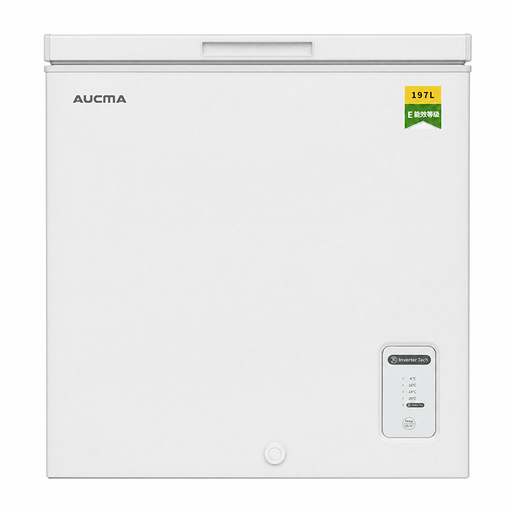 Image unavailable
A separate storage option to compare with the space you have and the number of meals you need to store.
The product name specifies fridge or freezer mode, an E energy rating, five digital settings and a removable basket. Check the ambient temperature range and the storage time in the event of a power cut if these are important for your setup.
 Image unavailable
Worth comparing if you’d like to combine chilled and frozen storage in one appliance rather than add a separate freezer.
The stated 467 L capacity is for the whole appliance: check the freezer compartment capacity separately to see if it will hold your portions. The product name specifies Total No Frost and an E energy rating.
 Image unavailable
An upright model is worth comparing if you want to store portions in separate compartments.
The product name specifies three freezer drawers, No Frost, a reversible door hinge and a C energy rating. Check the external dimensions and climate class for the space you have in mind.
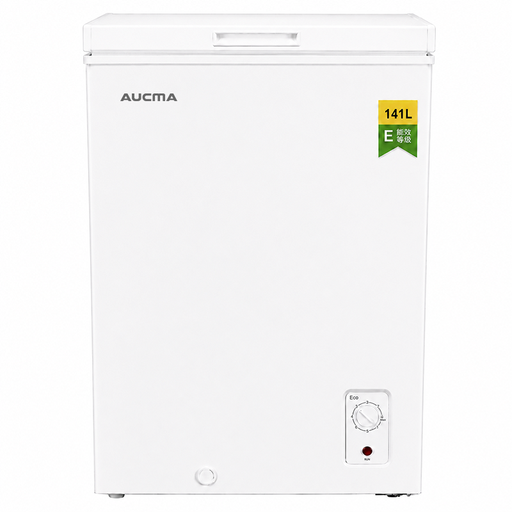 Image unavailable
Worth comparing if you want extra storage in a chest freezer with less capacity than the two other AUCMA models featured here.
The product name specifies fridge or freezer mode, an E energy rating, seven thermostat settings and a removable basket. Check the clearance needed to open the lid and the ambient temperature range before installation.
Aim for −18 °C for home freezing. Anses explains that bacterial growth stops at this temperature, but most micro-organisms survive. Freeze food while it’s in good condition and follow the appropriate defrosting instructions.
No: the ambient temperature range specified for the model must cover the temperatures in your garage. UFC-Que Choisir’s glossary gives 10 to 32 °C for climate class SN and 16 to 32 °C for class N; suitability for lower temperatures must be confirmed for the specific appliance.
Compare annual energy consumption in kWh with the freezer capacity you need, rather than looking only at the rating letter. The European Commission states that, since 1 March 2021, the energy label for household fridges and freezers has used a scale from A to G.
This information can help you compare models if you plan to store a large amount of food. Check the figure and the conditions given in the product details or instruction manual. For example, UFC-Que Choisir’s test measures how long it takes food to rise from −17 °C to −9 °C without power.
According to the French Ministry of the Economy, the legal guarantee of conformity applies to new, second-hand and refurbished goods sold by a professional to a private individual in France. It covers conformity defects. Keep your receipt, the product description and any correspondence with the seller in case you need to report a problem.