Households building up a large stock
You buy or cook in bulk and need more room to freeze batches or large containers. A chest freezer is worth considering if capacity matters more to you than being able to reach every item straight away.


If you want to build up a large stock of frozen food, choose a chest freezer if capacity and room for large containers are your priorities, or an upright freezer if you want to find and sort food easily. A fridge-freezer is a better fit if you also need a fridge and its freezer compartment has enough space for your stock. In all cases, check the dimensions and interior layout. If the appliance will be kept in an unheated room, check its climate class too.
You buy or cook in bulk and need more room to freeze batches or large containers. A chest freezer is worth considering if capacity matters more to you than being able to reach every item straight away.
You open your freezer often and want to keep small packets, ready meals and other food separate. The drawers in an upright freezer make it easier to organise everything, as long as your packaging fits.
You’re thinking of putting the appliance in a narrow kitchen, garage, cellar or utility room. The floor space available and the temperature range the model is designed for may shape your choice before you even consider capacity.
UFC-Que Choisir highlights capacity and ease of access as key factors when comparing chest and upright freezers. If you’re considering a fridge-freezer, compare its freezer capacity separately from its total capacity.
Consider it if: you store a lot of food or containers of different sizes, and have enough floor space.
Bear in mind: food at the bottom may be harder to spot and reach.
Consider it if: you often take food out and want to organise it in drawers.
Bear in mind: the drawers may limit the size of the packaging you can store, even in a high-capacity model.
Consider it if: space is limited and you only need some extra capacity.
Bear in mind: this format is less suited to storing large quantities.
Consider it if: you also need to replace or upgrade your fridge and your freezer needs are modest.
Bear in mind: some of the total capacity is for chilled food, not frozen food.
| Criteria | What to check | Consumers concerned |
|---|---|---|
| Storage capacity | The capacity dedicated to freezing and the space available for your largest containers. | If I’m storing a big food shop or batch-cooked meals, I want enough room for my food above all else. Around 31% of consumers would prioritise this capacity. |
| Access to food | The layout and dimensions of the drawers or baskets, and how easy it is to reach the bottom of the appliance. | If I often take out small packets, I want to find them without rummaging through my whole stock; around 25% of consumers would prioritise access and organisation. |
| Location | The appliance dimensions and the ambient temperature range specified by its climate class. | In a narrow or unheated room, I need to be able to fit and use the appliance in the conditions specified for that model. Around 25% of consumers would prioritise this compatibility. |
| Choosing a separate appliance | The capacity of the freezer compartment alone in a fridge-freezer, and the information on its energy label. | If I also need to replace my fridge, I want to know whether a fridge-freezer can hold my stock without needing a separate appliance. Around 19% of consumers would prioritise this trade-off. |
A spacious chest freezer can make small packets harder to find, while the drawers in an upright freezer may not fit very large packs. With a fridge-freezer, the total capacity also includes the fridge section.
Compare the containers you usually use with the layout of the specific model, and check its freezer capacity separately.
The climate class indicates the ambient temperature range the appliance is designed for. A cellar or garage may fall outside that range at certain times of the year.
Check the lowest and highest temperatures expected in the room, then compare them with the climate class specified for the model.
As well as being suitable for the room, the appliance needs to fit through the doors and reach its intended spot. Collection of your old freezer depends on practical arrangements you’ll need to make with the seller.
Before placing your order, check the access dimensions, what’s included in the delivery service and the collection arrangements.
Liebherr offers chest freezers as well as other standalone formats.
Bosch offers upright freezers, with organisation features available on selected models.
Whirlpool’s range includes chest freezers, upright freezers and fridge-freezers. Compare them based on how much space you need for frozen food.
These two fridge-freezers are worth considering if you also need chilled storage and the model’s freezer capacity is enough for your stock. Don’t confuse the total capacity with the capacity of the freezer alone.
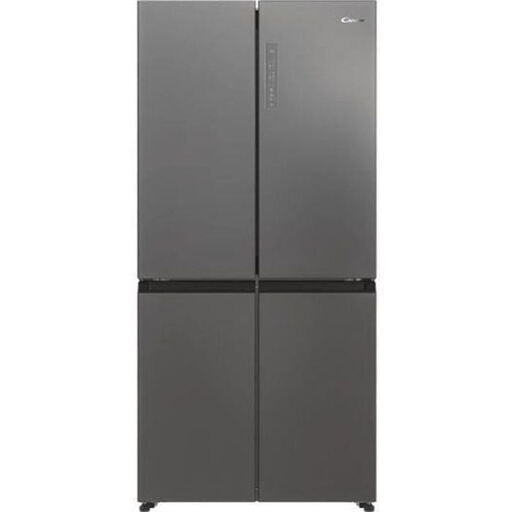 Image unavailable
Worth considering if you also want more fridge space: check how much of the 467 L total capacity is dedicated to frozen food.
4-door model with Total No Frost and an E energy rating.
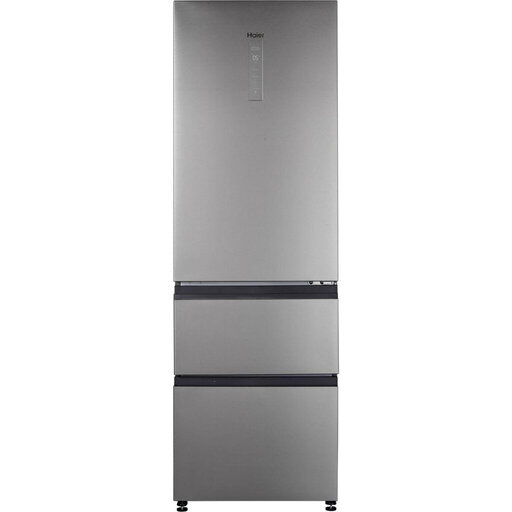 Image unavailable
Worth a look if you want to stick with a fridge-freezer: compare the capacity of its freezer compartment with the amount of food you plan to store.
360 L total capacity; 3-door model with Total No Frost, an E energy rating, Wi-Fi and My Zone.
Yes, as long as the temperatures in the room stay within the range specified for the model’s climate class. For example, Liebherr gives a range of 10 to 32 °C for climate class SN. Check the climate class and the requirements for the appliance you’re considering.
No. A chest freezer is worth considering if capacity and space for large containers are your priorities. An upright freezer may be a better fit if you often access your food and want to organise it in drawers. Compare your packaging, available space and how often you use the freezer, as recommended by UFC-Que Choisir’s criteria.
Yes. As ADEME explains, the energy label helps you compare information about the energy consumption of the appliances you’re considering. Check the label for each specific model, and don’t assume its freezer capacity based on its energy rating alone.
Ask about collection arrangements before ordering, particularly if your new appliance is being delivered to your home. The DGCCRF describes the principle of ‘one for one’ collection of an old appliance when you buy a new one. Confirm the practical collection arrangements with the seller.