If you need extra frozen food storage, consider a chest freezer if capacity is your priority and you have room for the lid to open. An upright freezer may suit you better if you want to find food quickly in separate compartments. A small model may be enough for limited extra storage, while a large fridge freezer is worth comparing if you’re replacing your fridge too. In every case, measure the space and check that the room’s ambient temperature falls within the appliance’s permitted range.
Who is each type best suited to?
Households stocking up
If you buy in bulk, prepare meals in advance or freeze home-grown produce, start by working out how much extra capacity you need. Que Choisir highlights chest freezers in particular for households with significant storage needs.
People who regularly access frozen food
If you often need small portions, drawers can make food easier to organise and reach. Compare their layout with the basket-based organisation you’d need in a chest freezer.
Households planning to use an unheated room
For a cellar, utility room or garage, the deciding factor is the permitted ambient temperature range for the model you choose. The chest or upright format alone doesn’t tell you whether it’s suitable for the room.
What should you compare?
First decide whether you need an additional appliance or whether the freezer compartment in a new fridge freezer might be enough. Then compare the different types based on the space available, access to food and where you plan to put it.
| Consideration |
What to check |
What matters to consumers |
| Extra capacity |
Compare the usable capacity in litres with your usual shopping, and measure the space needed to open the appliance. |
If I’m storing a big food shop or meals prepared in advance, I prioritise the space available for food, even if that means organising a deeper chest freezer. Around 25% of consumers would give priority to this need for capacity. |
| Access to food |
Look at the drawers or baskets and check how easy it is to remove food when the appliance is full. |
If I open the freezer often, I want to find small portions without rummaging at the bottom. Ease of access and organisation would be priorities for around 20% of consumers. |
| Space at home |
Measure the appliance, the delivery route and the clearance needed for the door or lid. |
In a narrow kitchen or utility room, I need to be able to install and open the appliance without blocking the way through. This space constraint would come first for around 20% of consumers. |
| Unheated room |
Compare the room’s minimum and maximum temperatures with the permitted range for the exact model. |
If the freezer is going in a cellar or cold garage, I need to know whether it can operate at the temperatures in that room. Around 15% of consumers would put this compatibility at the top of their list. |
| Everyday running |
Compare kWh/year, noise in dB and defrosting method across appliances of a similar capacity. |
For an appliance that stays plugged in all the time, I want to consider electricity use, noise and maintenance, not just capacity. These factors would be decisive for around 15% of consumers. |
| One appliance only |
If you’re replacing your fridge, compare the capacity of its freezer compartment alone with your extra storage needs. |
If my fridge also needs replacing and I don’t need much extra frozen food storage, I’d rather check whether a large fridge freezer will be enough. This option would be the top consideration for around 5% of consumers. |
Mistakes to avoid
-
Choosing a model for the garage based on its name
An unheated room can fall below the ambient temperature permitted for the appliance. Que Choisir notes, for example, that climate class SN starts at 10 °C.
Track the room’s temperature throughout the year, then check the permitted range in the documentation for the exact model.
-
Comparing only capacity or energy rating
Capacity in litres doesn’t tell you about annual energy use, noise or how long the appliance can keep food frozen during a power cut. Que Choisir also points out that energy use varies with ambient temperature.
For appliances with similar capacities and uses, compare the kWh/year, dB and power-cut storage times shown on the product information for the models you’re considering.
-
Underestimating how hard it can be to reach the bottom of a chest freezer
A large capacity is less convenient if it becomes difficult to find or remove the food you use most often.
Plan to organise food by category and check what baskets are available. If you often need small portions, compare an upright freezer with drawers too.
-
Forgetting to dispose of your old freezer
Used electrical appliances should be taken to a dedicated collection point. The ministries responsible for ecological transition describe a ‘one-for-one’ take-back service when you buy an appliance of the same type.
Before placing your order, ask how take-back will be arranged, particularly if your new appliance is being delivered to your home.
Brands to know
These brands offer examples of types and features to compare on the specific model, without assuming that the same characteristics apply across their entire range.
Bosch
Offers freestanding and integrated upright freezers, among other options, for households who prefer vertical storage.
- Bosch lists a capacity of 366 l, No Frost and a noise level of 39 dB for the GSN58AWEV.
- Check these details, along with the dimensions and internal layout, for the model you’re considering.
Liebherr
Offers chest freezers worth considering for large stocks of food and some unheated locations.
- Liebherr lists a capacity of 497 l and FrostProtect down to −15 °C for the CFe 2500 Pure.
- This stated range applies to the model mentioned. Check the permitted range for any other appliance before installing it in a cold room.
Beko
Offers chest freezers with features relating to frost or installation in an unheated room, depending on the model.
- Beko describes Freezer Guard −15 °C as a feature designed for certain cold locations.
- Check that the feature is included and confirm the permitted climate range for the exact model. The feature name doesn’t apply to every Beko chest freezer.
Whirlpool
Offers chest, upright and integrated models to compare depending on where you plan to install your freezer.
- Whirlpool presents its chest freezers as options for storing larger quantities and its upright models as worth considering when space is limited.
- Compare the dimensions, usable capacity and kWh/year for the specific models rather than assuming these figures based on the type alone.
Freezers for extra storage
These models include chest freezers for creating extra frozen food storage, and an upright freezer for easy access to separate compartments. Compare their capacity and dimensions with your actual needs before choosing.
 Image unavailable
AUCMA, 95 l convertible chest freezer
For extra freezer capacity in a home where space is limited, provided you measure the clearance needed for the lid.
Energy rating E, 7-setting thermostat, removable basket and defrost drain. The product title lists both fridge and freezer modes: check which setting is right for your intended use.
If you’re putting it in a cellar or cold garage, check the permitted ambient temperature range. Also check how long it can keep food frozen during a power cut if this matters to you.
View on Joybuy
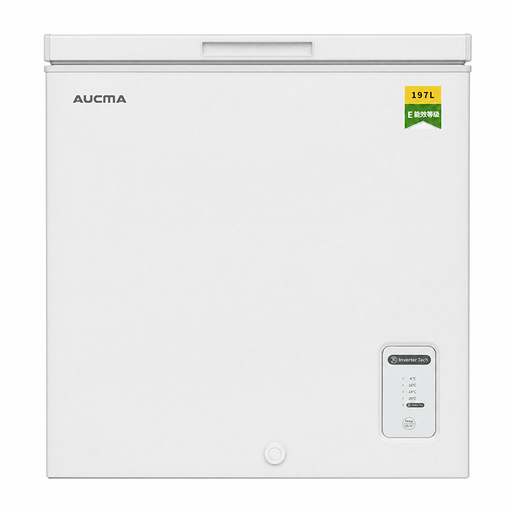 Image unavailable
AUCMA, 197 l convertible chest freezer
For creating a larger dedicated food store, provided you have enough floor space and clearance above the lid.
Energy rating E, 5-setting digital control, removable basket and defrost drain. The title mentions both fridge and freezer modes.
Check the permitted ambient temperature range before installing it in a cold room, and check how long it can keep food frozen during a power cut if needed.
View on Joybuy
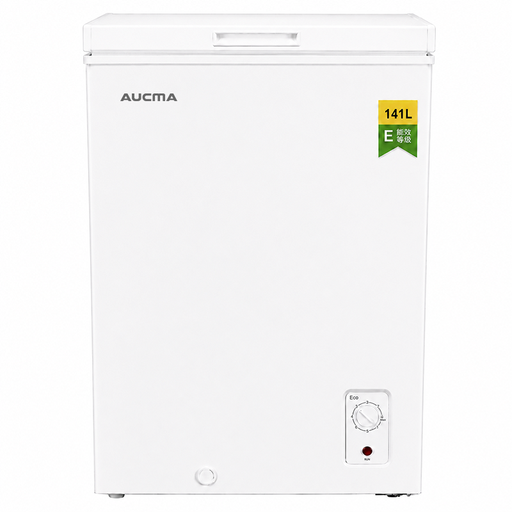 Image unavailable
AUCMA, 141 l convertible chest freezer
For adding extra frozen food storage without choosing the 197 l AUCMA chest freezer. Still, make sure you measure the space needed to open the lid.
Energy rating E, 7-setting thermostat, removable basket and defrost drain. The title lists both fridge and freezer modes.
Check the model’s permitted ambient temperature range if you plan to use it in an unheated room, and its power-cut storage time if you’re concerned about outages.
View on Joybuy
 Image unavailable
CHiQ JR99DWE, 99 l chest freezer
For extra storage, if the chest freezer’s dimensions and lid clearance suit the space available.
Energy rating E, adjustable thermostat and removable basket. It needs to be defrosted manually, so bear this maintenance in mind when choosing.
Compare annual energy use in kWh and check the ambient temperature range and power-cut storage time if these are important to you.
View on Joybuy
 Image unavailable
Heinrich´s, 161 l No Frost upright freezer, stainless steel
For keeping food in separate drawers, so you can reach it without organising a chest freezer into baskets.
Energy rating C, No Frost system, LED display, alarm and reversible door hinge. The freezing temperature listed in the title is −14 °C to −22 °C; this doesn’t describe the permitted ambient temperature in the room.
Measure the space and check the installation dimensions, kWh/year, ambient temperature range and power-cut storage time before deciding.
View on Joybuy
Frequently asked questions
Can I put any freezer in an unheated garage?
No. The permitted ambient temperature range must suit the exact model and the temperatures in your garage. Que Choisir states that climate class SN starts at 10 °C. Some appliances have a lower stated operating range, which you should confirm for the model you choose.
What should I look for on a freezer’s energy label?
Compare annual energy use in kWh across models with similar capacities and uses, rather than looking only at the energy rating letter. The European energy label applies to electrical refrigeration appliances covered by Delegated Regulation (EU) 2019/2016. Also compare the dimensions and noise levels listed for each model.
Is No Frost useful on a standalone freezer?
No Frost is mainly useful if you want to avoid manual defrosting. However, Que Choisir notes that some fan-assisted appliances can be noisier than static models. Compare the dB levels if the freezer will be near a living area.
How can I arrange for my old freezer to be taken away?
When buying an appliance of the same type, ask about the ‘one-for-one’ take-back service described by the ministries responsible for ecological transition. Check exactly how it works before ordering, particularly if you want your old appliance taken away when the new one is delivered.


