Households that stock up in bulk
If you store bulk buys, home-grown produce or prepared meals, a chest freezer can give you dedicated extra capacity. Make sure you have enough floor space and a way to organise food at the bottom.


If your food stocks exceed the capacity of your fridge-freezer, a chest freezer offers extra storage if you have enough floor space, while an upright freezer with drawers makes frequently used food easier to reach. A larger fridge-freezer is worth considering if you’re also short of space for fresh food. Check how much of its capacity is dedicated to freezing, rather than looking at the total volume alone.
If you store bulk buys, home-grown produce or prepared meals, a chest freezer can give you dedicated extra capacity. Make sure you have enough floor space and a way to organise food at the bottom.
If you want to sort food into categories and find it without rummaging, consider an upright freezer with drawers. Check that its capacity and the clearance needed to open it will suit your home.
If both your fresh-food and frozen-food compartments are too small, and there isn’t room for a second appliance, compare larger fridge-freezers. Check how their total capacity is split between refrigeration and freezing.
First work out how much freezer capacity you need, then compare each format with the way you store food and the space available.
Consider one: if you need plenty of storage and have dedicated floor space.
Bear in mind: baskets or labels can help you find food stored at the bottom.
Consider one: if you open the appliance often and want to sort your food stocks between several drawers.
Bear in mind: you’ll need enough height, depth and clearance to open the door and pull out the drawers.
Consider one: if you need more room for both chilled and frozen food but only have space for one appliance.
Check: the freezer compartment may still be too small if frozen food storage is your main priority.
| What to consider | What to check | Your needs |
|---|---|---|
| Freezer capacity | Compare the litres dedicated to freezing, not just the total capacity of a fridge-freezer. UFC-Que Choisir says some chest freezers hold up to 600 L and some upright freezers up to 400 L. | My food stocks exceed the capacity of my current freezer: how much room do I really need without choosing an appliance that’s too large? |
| Access to food | Check how the drawers in an upright freezer open, or how the baskets are arranged in a chest freezer. Think about bulky items and anything stored at the bottom. | I check my food stocks often and want to find things before I forget they’re there. |
| Where it will go | Measure the appliance, the space needed to open it and the delivery route. For a cellar or garage, check the room temperature against the range permitted for the exact model. | The appliance needs to fit into my home and work in the room where I plan to install it, even when the temperature varies. |
| Energy use and noise | According to the European Commission, the energy label shows details including the A to G rating, annual energy consumption, capacity and noise emissions. Compare these figures for appliances of a similar size and format. | If the appliance is near a living area, noise matters to me too. I want to compare energy use rather than relying on the energy rating alone. |
Part of a fridge-freezer’s advertised capacity is for fresh food. So a larger appliance won’t necessarily solve a lack of space for frozen food.
Check the freezer compartment capacity in litres on the product details or energy label, then compare it with the amount you usually store.
An upright freezer’s door or a chest freezer’s lid needs room to open. The appliance also needs to fit through doors, corridors and any lift on the delivery route.
Measure the route and the clearance around the appliance; use the packaged dimensions if they’re provided. Samsung recommends checking this in particular for its larger fridge-freezers.
The permitted ambient temperature depends on the appliance. Beko and Liebherr state that some models or functions can operate at temperatures as low as -15 °C, but this doesn’t apply to their entire ranges.
Compare the lowest and highest temperatures in your room with the limits given in the manual for the model you’re considering.
The rating by itself doesn’t tell you an appliance’s freezer capacity, annual energy consumption or noise level.
On the European energy label, compare the annual kWh consumption, freezer capacity and noise emissions of models that meet the same needs.
These examples highlight features to check on a specific model; they aren’t representative of every appliance from each brand.
Chest freezers to consider if you need plenty of storage or plan to install the appliance in a cold room.
The GSN58AWEV is an example of an upright freezer to consider if you want plenty of vertical storage.
The FNd 7026 Plus is an upright freezer to consider if the temperature in the room where you plan to install it needs particular attention.
The RL38C600CWW is an example of a larger fridge-freezer to consider if you also need more room for fresh food.
This selection includes an upright freezer for organising your food stocks, three chest freezers in different capacities and a fridge-freezer for households that also need more fridge space. Compare their freezer capacity with the amount you store before choosing a format.
 Image unavailable
A vertical option for sorting your food stocks and accessing them via drawers. The product name lists a capacity of 161 L, three freezer drawers, No-Frost, an alarm, a reversible door and an energy rating of C. Check the dimensions and the permitted ambient temperature range for your chosen location.
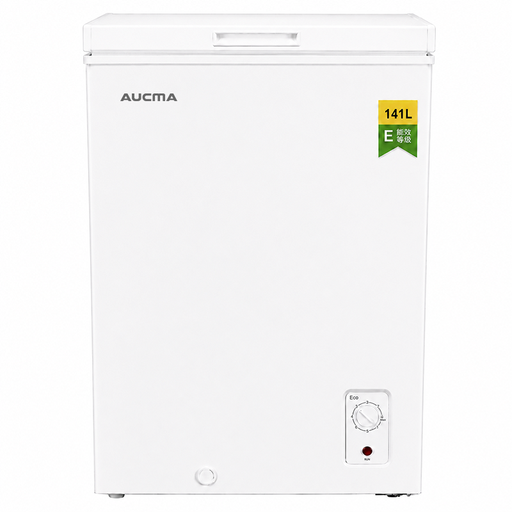 Image unavailable
This 141 L chest freezer offers dedicated space for your food stocks, while its removable basket keeps smaller items within easy reach. The product name lists a switchable fridge and freezer function, a 7-level thermostat and an energy rating of E. Check the requirements for each mode and the permitted ambient temperature before installing it in a cold room.
 Image unavailable
A 140 L chest freezer to consider if you want extra dedicated freezer space. The product name lists a storage basket, a counterbalanced lid and an energy rating of E. Check how much room you’ll need to open the lid, along with the permitted ambient temperature range and the model’s stated annual energy consumption in kWh.
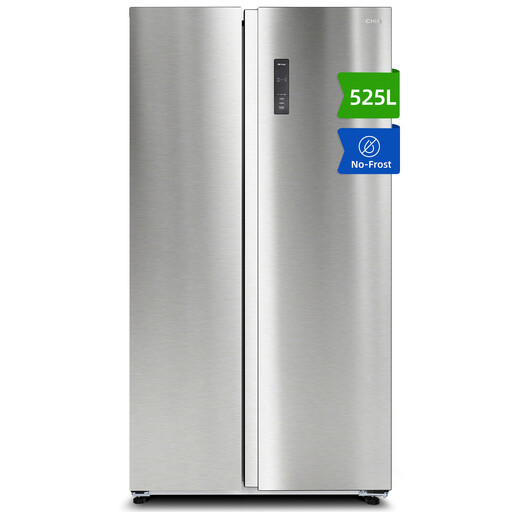 Image unavailable
Worth considering if you need more room for both fresh and frozen food in one appliance, rather than adding a separate freezer. The product name splits its 525 L capacity into 333 L for refrigeration and 192 L for freezing; it also lists No Frost and an energy rating of E. Measure the delivery route and check the full dimensions and annual energy consumption.
 Image unavailable
With a capacity of 99 L, this chest freezer is suited to a more modest need for extra storage than the other sizes featured here; compare its capacity with the amount you store. The product name lists a removable basket, a sliding lid and an energy rating of E. Check the permitted ambient temperature range and annual energy consumption for your installation.
No. Choose according to how much you need to store, the floor space available and how often you access your food. UFC-Que Choisir says some chest freezers hold up to 600 L, but an upright freezer with drawers may make it easier to organise your food if you check your stocks often.
Yes, but only if the model’s stated ambient temperature range covers the conditions in your garage. Beko says Freezer Guard works at temperatures as low as -15 °C on some chest freezers, and Liebherr gives this temperature for the FNd 7026 Plus. Check the manual for the specific appliance rather than assuming these figures apply more widely.
Compare details including annual energy consumption, freezer capacity and noise levels for appliances of a similar size. The European Commission says that, since 1 March 2021, the energy label for household fridges and freezers has used a scale from A to G. The rating alone doesn’t show every difference in how an appliance performs.
Anses advises against refreezing defrosted food. It explains that domestic freezing at -18 °C stops bacteria from multiplying, but most micro-organisms survive. So choosing a larger freezer doesn’t replace the need to follow safe food-storage advice.
In France, contact the professional seller under the statutory legal guarantee of conformity if the appliance you receive doesn’t match its description. The Ministry of the Economy explains that this guarantee covers goods sold by a professional to an individual and applies to defects that existed when the goods were delivered.