
Livraison le jour même ou le lendemain

Qualité garantie

Débloquez vos offres de bienvenue: Livraison GRATUITE | Jusqu'à -80 % | 30 jours d'essai gratuits à JoyPlus
Téléchargez l'application
A good chef's knife can transform your experience in the kitchen. But with a market flooded with marketing claims and technical jargon, it's easy to make the wrong choice. As the head of product selection for Joybuy, my mission is to help you see things more clearly. Let's cut through the noise and focus on what truly matters: finding a reliable, durable cutting companion that will serve you for years to come.
To choose well, let's start by avoiding the most common pitfalls—the ones that are costly and lead to frustration in the kitchen.
To avoid these traps, focus on a few key technical features. These are the true guarantors of a professional kitchen knife's quality and longevity.
The steel is the soul of the knife. For daily home use, a well-made stainless steel blade, such as German X50CrMoV15 steel, offers an excellent balance. It combines good edge retention, excellent corrosion resistance, and is relatively easy to sharpen. High-carbon steels, on the other hand, offer a formidable edge but require more meticulous maintenance to prevent rust.
The "tang" is the part of the blade that extends into the handle. A full tang construction (where the tang runs the full length of the handle) is a hallmark of strength and balance. This design ensures the knife won't break under pressure and provides the sense of control needed to slice meat or mince vegetables with precision. Be wary of knives where the blade is simply glued into the handle.
The choice between these two multipurpose knife profiles primarily depends on your cutting technique.
Instead of searching for the "perfect" knife, it's better to find the one that truly fits your habits. Here are our recommendations, each selected for a specific purpose.
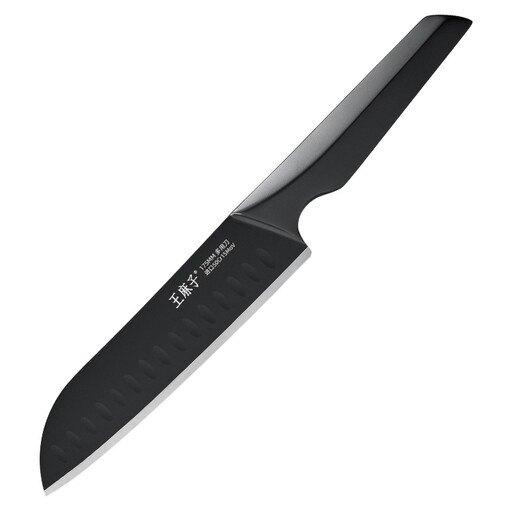
Why it's a great match: Perfect for the home cook who juggles a wide variety of dishes. Its Santoku profile excels at mincing vegetables and slicing boneless meats, making it an ideal partner for everyday prep.
It doesn't rely on fake "Damascus" patterns. Instead, it focuses on proven German steel (50Cr15MoV): a reliable choice that's transparent about its performance and easy to maintain.
Its single-piece, all-steel construction (blade and handle) makes it both hygienic and durable. Its balance is engineered for fatigue-free use during long sessions.
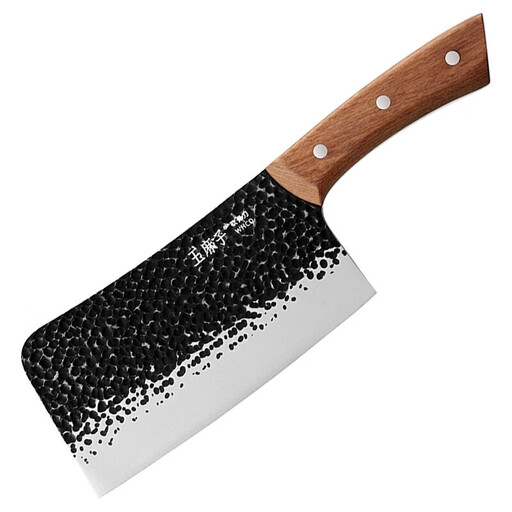
Why it's a great match: Essential for anyone who works with whole cuts of meat or bone-in poultry. This heavyweight is built for the heavy-duty tasks that a classic chef's knife cannot (and should not) handle.
It shatters the myth of the all-in-one knife by embracing its role as a specialist. Its weight and thick blade are designed for power, not finesse, which helps preserve your primary chef's knife.
Its high-carbon steel blade is designed to withstand impacts. The ergonomic wooden handle ensures a secure grip to apply necessary force without fear.
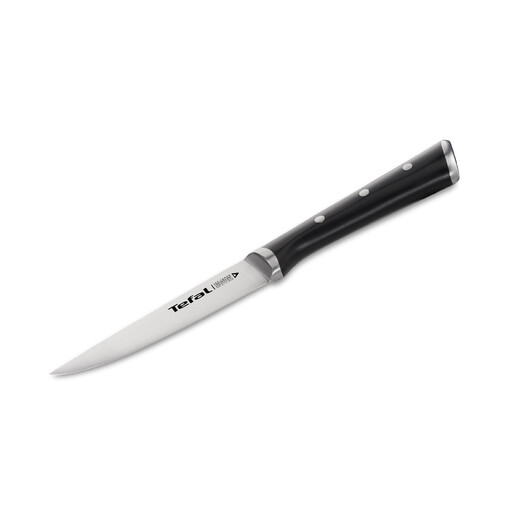
Why it's a great match: Indispensable for detail work: peeling, trimming, coring, or garnishing. Where a large knife becomes clumsy, this paring knife offers absolute agility and control.
It's the ideal complement to a chef's knife, proving that a well-thought-out toolkit surpasses any single "do-it-all" knife. Designed for a specific mission, it performs it brilliantly.
According to Tefal, its Ice Force technology (a cryogenic blade treatment) improves edge durability. Its small size and light weight allow for effortless precision work.
We've curated a complete selection of knives that meet our demanding selection criteria and all applicable regulations.
The classic chef's knife has a curved blade, ideal for the rocking motion used for fine mincing. The Santoku knife, in contrast, has a straighter blade with a downturned tip, which promotes a vertical, up-and-down chopping motion. The choice depends on your cutting style and the foods you prepare most often.
It all depends on the frequency of use and the quality of the steel. For regular home use, using a honing steel once a week is enough to maintain the edge. A full sharpening on a whetstone (or by a professional) is recommended once or twice a year to restore the blade's original sharpness.
Not necessarily. A high price can reflect premium materials, a designer brand, or artisanal craftsmanship that doesn't always impact everyday performance. A well-designed knife with quality steel (like a good German stainless steel) and a full tang construction will often offer the best price-to-performance ratio for most home cooks.