What should you check before buying?
Start with the person’s dietary needs and any texture guidance they’ve been given, then compare recipes they genuinely enjoy. Values per 100 g make it easier to compare different pack sizes, but the amount usually eaten matters too.
| Factor |
What to check |
Who this matters to |
| Dietary intake |
Compare the energy and protein per 100 g, then take the portion eaten into account. |
When someone’s appetite is declining, I want to choose a spread they enjoy without losing sight of their overall intake. Around 40% of consumers would put nutritional intake first. |
| Salt and fat |
Check the salt, fat and saturated fat per 100 g for each product. |
If I need to watch salt or fat, a stronger flavour won’t tell me what’s in the product. Around 30% of consumers would prioritise keeping an eye on these. |
| Flavour and texture |
Choose plain or flavoured to suit personal preferences; if there are swallowing difficulties, follow the texture guidance provided. |
I need a spread the person enjoys and can manage, without confusing ease of spreading with a texture that’s suitable for swallowing. Around 20% of consumers would prioritise this. |
| Pack size and storage |
Check the net weight, use-by date and storage instructions for the product you choose. |
If only small amounts are eaten, I prefer a pack size that suits the person’s mealtimes. Around 10% of consumers would put pack size first. |
Brands to compare, product by product
These brands offer examples of different recipes and pack sizes. The brand name is no substitute for checking the label of the specific product you’re considering.
Boursin
Flavoured options, including Garlic & Herbs, for people who prefer this taste to a plain recipe.
- Auchan describes one creamy product from the brand as easy to spread.
- For the 250 g Garlic & Herbs product, Carrefour lists 385 kcal and 37 g of fat per 100 g. These values don’t apply to other recipes.
Philadelphia
The Original and Light Original versions let you compare two plain cheese spread products.
- Carrefour lists 220 kcal and 21 g of fat per 100 g for Original, compared with 145 kcal and 10 g for Light Original.
- A Light version isn’t automatically right for someone who isn’t eating enough; the choice depends on their dietary needs.
Carrefour
The range includes a cheese spread in a 150 g tub.
- You can compare this pack size with the amount usually eaten.
- To assess its ingredients and nutritional content, check the information for the specific product you choose.
Les Croisés (Marque Repère / E.Leclerc)
The Garlic & Herbs product is described as a whipped cheese.
- Its E.Leclerc product page lists 5,3 g of protein per 100 g.
- The same page lists 1,2 g of salt per 100 g, which is worth checking if salt is one of your priorities.
An option available from Joybuy
This chilli ricotta cream is for people considering a spread with a bit of a kick. When choosing a product for an older person, check its ingredients and any texture guidance they’ve been given too.
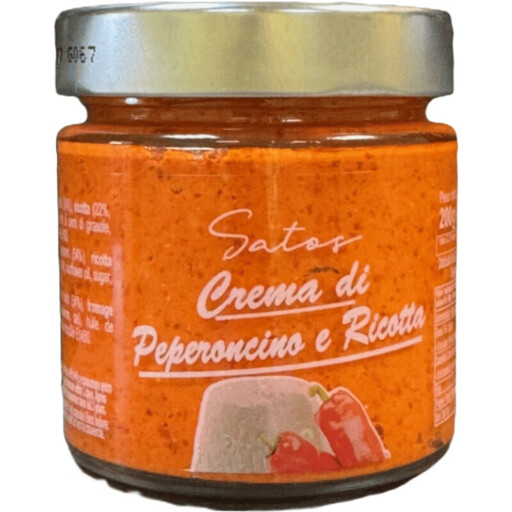 Image unavailable
SATOS Chili & Ricotta Cream 200 g
Worth considering if the person enjoys ricotta and chilli on toast. The stated pack size is 200 g.
Compare the nutritional information for this product, particularly the salt if it needs to be monitored. If you’re looking for a matured cheese or a texture suitable for someone with swallowing difficulties, don’t assume it has these characteristics from the name alone.
View on Joybuy
Frequently asked questions
Is a stronger-tasting cheese spread always matured?
No. A flavoured recipe, such as one with garlic and herbs, isn’t necessarily matured. If maturation matters to you, check that it’s stated for the specific product; don’t use the strength of its flavour to judge its nutritional value.
Which parts of the label should I compare?
Compare the energy, fat, saturated fat, sugars, protein and salt per 100 g. The DGCCRF explains that this format makes comparisons easier. Also check the ingredients, any declared allergens and how much the person usually eats.
Should I choose a Light version if an older person eats very little?
Not just because it says Light: a lower energy content may not meet the needs of someone whose food intake is declining. If they’re losing weight or have been eating less for a sustained period, seek medical or dietary advice rather than deciding based on that label alone.
Is whipped cheese suitable for someone with swallowing difficulties?
The word “whipped” doesn’t tell you whether a product is suitable for someone with a swallowing disorder. In this situation, follow the individual texture guidance provided by the healthcare professional who supports them.
What should I check when storing cheese spread?
Follow the storage instructions on the packaging and check the use-by date where one is given. The DGCCRF highlights how important this date is for perishable foods. Choose a pack size that also suits the amount usually eaten.


