In France, "a meal without cheese is a beauty with an eye missing," as Brillat-Savarin famously said. To honour this tradition, presentation is nearly as important as the selection of cheeses. A good cheese board doesn't just serve; it elevates the tasting experience. Faced with a plethora of options, it can be difficult to navigate the market and choose a set that is at once beautiful, practical, and durable. As a Product Recommendation Manager at Joybuy, my role is to bring you clarity with concrete advice to help you make an informed choice, free from marketing jargon.
How to Choose the Right Cheese Set?
Before looking at specific models, a few objective criteria can help guide your decision. A good cheese set should meet specific needs in terms of materials, functionality, and intended use.
1. Materials: A Matter of Taste and Use
The material of your cheese board influences not only its aesthetics but also its maintenance and durability.
- Wood (bamboo, acacia, olive): This is the traditional choice. Wood provides a natural cutting surface that won't damage the edge of your knives. It has a warm and authentic feel. For food safety, opt for dense, non-porous woods. Regular maintenance with a food-grade oil is recommended to preserve its longevity.
- Slate: Very elegant, slate beautifully highlights the colours of the cheeses. It retains neither odours nor bacteria. Its main drawbacks are its fragility and the fact that it can dull knife blades more quickly than wood.
- Marble: Ideal for keeping cheese cool, marble is a noble and hygienic material. However, it is heavy and, like slate, can prematurely wear down your cheese utensils.
2. The Knives: The Right Tool for Every Cheese
A complete cheese knife set is not a gimmick. Each blade is designed for a specific type of cheese to ensure a clean cut and preserve its texture.
- The soft cheese knife: Often featuring a perforated blade, it prevents creamy cheeses like Brie or Camembert from sticking.
- The hard cheese knife: Its blade is short, sturdy, and sometimes spade-shaped to apply sufficient pressure to break off pieces of cheeses like Comté or Parmesan.
- The cleaver or spade: For semi-hard cheeses, it allows for a clean, straight cut.
- The fork or fork-tipped knife: This is used to spear and serve pieces of cheese once they are cut, without having to touch them with your fingers.
3. Size and Accessories
The size of your board should match your habits. A small board is sufficient for a dinner for two, while a larger model will be necessary for entertaining guests. Some boards include storage drawers for knives or ramekins for accompaniments (dried fruits, jams), which can be very practical.
Our Selection of Cheese Boards and Knives
Here are a few options that stand out for their design and functionality, suited for different needs and budgets.
For a Complete Service: Alpina Cheeseboard with Knives - 4 pcs
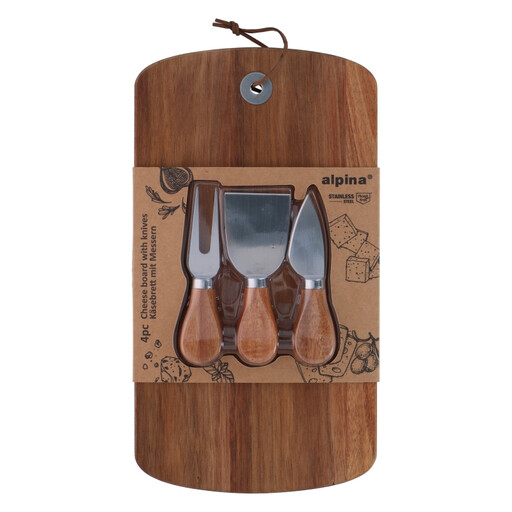
View Product: Alpina Cheeseboard with Knives - 4 pcs
- Why we recommend it: This set is an all-in-one solution for those who want to get equipped without any fuss. It combines an elegant board with the three essential knives to cover most types of cheese. Its design makes it as practical as it is aesthetically pleasing on a table.
- Pros:
- Complete set: Includes a board and three distinct knives, ready to use.
- Elegant design: The presentation is suitable for all occasions, from casual to formal.
- Generous surface: Offers enough space to present a beautiful variety of cheeses.
- Who is this product for: Ideal for people who regularly host dinners, for those new to the art of cheese tasting, or as a gift for a cheese lover.
For Soft and Creamy Cheeses: Alpina Cheese knife
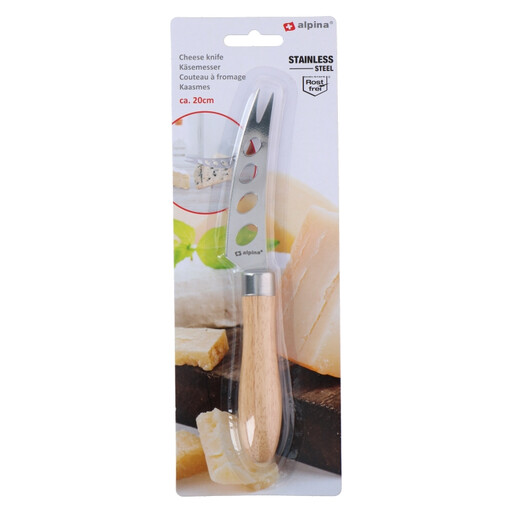
View Product: Alpina Cheese knife
- Why we recommend it: This soft cheese knife solves a very common problem: cheese sticking to the blade. Its design with large holes minimises surface contact and friction, allowing for clean slices even with the creamiest cheeses.
- Pros:
- Non-stick blade: The holes in the stainless steel blade reduce sticking.
- Comfortable grip: The wooden handle provides a good grip for effortless cutting.
- Versatile: The serrated edge and forked tip make cutting and serving easy.
- Who is this product for: Perfect for fans of Brie, fresh goat cheese, or Reblochon who are looking for the specific tool for a perfect cut.
For Hard and Pressed Cheeses: Alpina Cheese Knife - 23.5cm
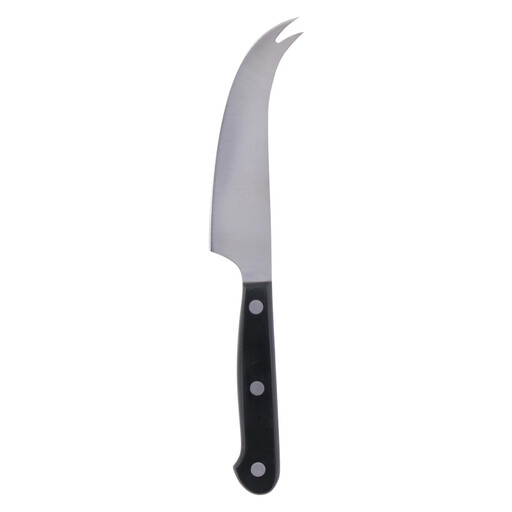
View Product: Alpina Cheese Knife - 23.5cm
- Why we recommend it: Cutting a hard cheese requires a robust and suitable tool. This hard cheese knife is designed for just that. Its stainless steel blade and forked tip allow you to slice and serve with precision and ease.
- Pros:
- Designed for leverage: The solid blade is ideal for applying the necessary pressure to compact cheeses.
- Practical forked tip: Allows you to spear and serve pieces effortlessly.
- Durable material: Stainless steel ensures good longevity and simple maintenance.
- Who is this product for: Essential for lovers of Comté, Beaufort, Parmesan, or aged Mimolette who need a knife capable of handling the resistance of these cheeses.
Looking for a Specific Knife?
Our selection covers a variety of uses, but every cheese lover has their preferences. If you want to complete your collection or find a very specific utensil that isn't featured here, other options are available.
Explore our full range of cheese knives to find the right tool for every type of cheese.
Frequently Asked Questions About Cheese Boards
1. What is the best wood for a cheese board? Hard, low-porosity woods like bamboo, acacia, olive, or maple are excellent choices. They are durable, do not easily absorb odours, and are more hygienic. Avoid soft or resinous woods that can mark easily and transfer a taste to the cheese.
2. How do I care for a wooden cheese board? Never put it in the dishwasher or let it soak in water. After use, wash it by hand with warm water and a little mild soap. Dry it immediately with a cloth. To nourish and protect it, apply a thin layer of food-grade mineral oil or grapeseed oil once a month.
3. What are the different cheese knives for? Each knife is designed for a family of cheeses. The knife with a perforated blade prevents soft cheeses from sticking. The sturdy, spade-shaped or short-bladed knife is made for breaking hard cheeses. A cheese wire is perfect for blue or very creamy cheeses to avoid crushing their texture. Having a small cheese knife set allows you to respect each product and enhance the tasting experience.


