
Livraison le jour même ou le lendemain

Qualité garantie

Débloquez vos offres de bienvenue: Livraison GRATUITE | Jusqu'à -80 % | 30 jours d'essai gratuits à JoyPlus
Téléchargez l'application
A folding trolley with wheels can make shopping, gardening, camping and carrying bulky loads much easier. But a well-written product description doesn’t necessarily help you choose the right one. A very high stated capacity, wheels described as “all-terrain” or a quick-folding design can all have their limitations when you use the trolley day to day.
Here are the main things to check before you buy, along with a selection of recommended models for different needs.
A large-capacity trolley can hold plenty of lightweight items without being designed to carry a heavy load. Conversely, a high maximum load doesn’t guarantee that the base, wheels and handle will still be easy to manoeuvre when the trolley is full.
Check each of the following separately:
A trolley with all-terrain wheels may travel over grass, gravel or sand, but its performance depends on the wheels’ diameter and width, their material and how the weight is distributed. Small swivel wheels are handy on hard surfaces, but may sink into sand.
For a folding garden trolley, a camping trolley or a beach trolley, look for suitably wide wheels and a stable axle. Brakes are also useful when the trolley is loaded or parked on a slight slope.
A bulky model may be difficult to fit into a boot or store in a cupboard. The trolley’s weight when empty matters too: one weighing 8 to 10 kg can quickly become a chore to lift after a day of shopping or a trip outdoors.
Check the folding mechanism, whether it has a carry handle and its dimensions when folded. A genuinely practical folding trolley should be easy to store without complicated dismantling, unless the manufacturer says otherwise.
For everyday use, a load limit of 25 to 50 kg may be enough. If you’re looking for a large-capacity trolley for gardening, camping or DIY, you could consider models rated for 90 to 200 kg, but always check the manufacturer’s recommendations.
A steel or metal-alloy frame generally provides a sturdy base. 600D Oxford fabric is commonly used for bags and soft-sided containers. Take the time to check the stitching, reinforcement on the base and whether the fabric can be removed for cleaning.
Take claims such as “waterproof” or “water-resistant” with a pinch of salt: they don’t necessarily mean the contents will stay dry in prolonged rain.
For trips along pavements or to the market, quiet wheels and a telescopic handle can make the trolley more comfortable to use. For uneven ground, look for:
A sturdy wheeled trolley should remain stable when the load is spread across the base. Avoid stacking heavy items high up, as this increases the risk of tipping.
A stair-climbing trolley or folding sack truck with six triangular wheels can get up steps with less lifting than a standard trolley. It won’t make a heavy load feel light, though. The stated capacity for use on flat ground may differ from the limit for use on stairs.
If you live in a block of flats without a lift, check the trolley’s unladen weight, handle height and overall width before you decide.
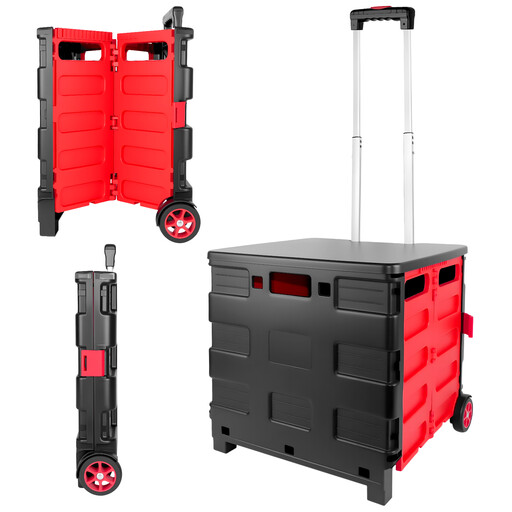
Why this is a good fit for you: This size is ideal for everyday shopping, trips to the market and carrying small parcels. It folds easily, and its telescopic handle extends to a stated 98 cm.
The product details specify a capacity of 35 L and a maximum load of 35 kg. These are concrete figures you can compare with your usual shopping, rather than a vague promise of a large capacity.
Quiet TPE wheels, a lid and a folding frame, according to the product description.
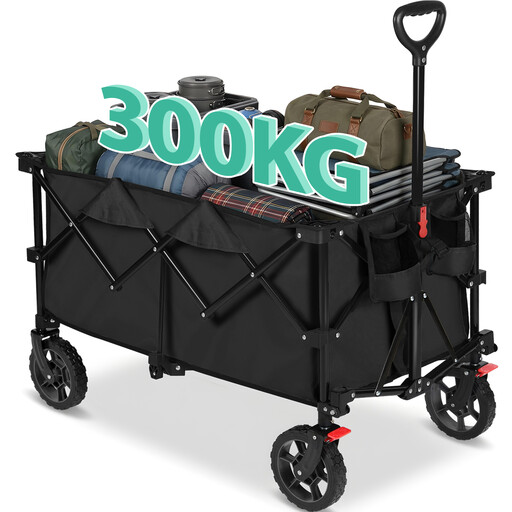
Why this is a good fit for you: This trolley is designed for people who regularly transport gardening equipment, shopping or bulky outdoor gear.
The 200 L capacity and stated 300 kg load limit are listed separately, making them easier to compare with your actual needs.
Lacquered steel frame, adjustable handle, one-handed folding and universal wheels, according to the product listing.
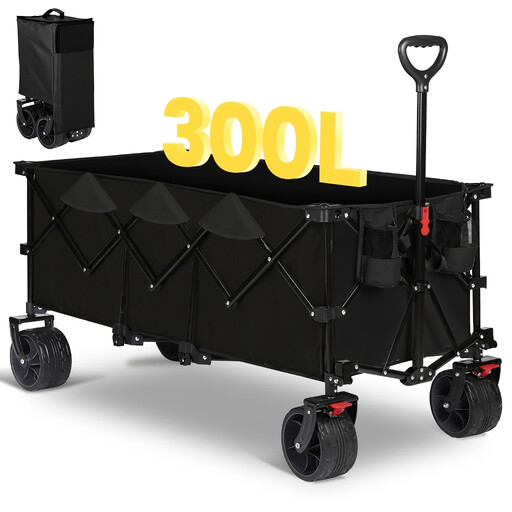
Why this is a good fit for you: Gardeners, campers and families carrying heavy loads get a 300 L container and a length of over 1.2 m, according to the information available.
The 7-inch wide tyres, brakes and quiet bearings address several common limitations of compact models.
600D Oxford fabric, four-way folding, a stated capacity of 200 kg and a two-year warranty.
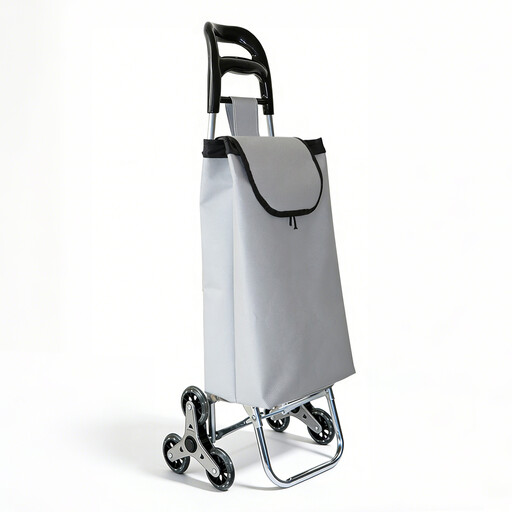
Why this is a good fit for you: This design combines a 25 L shopping trolley with a small sack truck. It’s suitable for anyone who regularly needs to tackle steps or kerbs.
The six-wheel system and triangular frame are designed for stairs, unlike a four-wheel wagon intended mainly for flat surfaces.
Water-resistant 600D Oxford bag, horizontal handle and conversion into a sack truck with a stated load limit of 25 kg.
We’ve put together a comprehensive list, updated in real time, of products that meet these demanding selection criteria and European safety standards.
For regular shopping, choose a lightweight folding shopping trolley with an adjustable handle, a closed bag and wheels suited to pavements. A capacity of 25 to 50 litres is usually enough for everyday shopping. If you need to climb stairs, a six-wheel system may be more suitable than a standard model.
Remove dirt after every outing, especially after travelling over sand or soil. Wipe the fabric with a damp cloth, then let it dry completely before folding the trolley. Regularly check the axles, brakes, screws and locking mechanisms. Never exceed the stated load limit, and place heavy items at the bottom.
Its lifespan depends on the load it carries, how often you use it, how it is stored and the surfaces it travels over. A reinforced frame, securely attached fabric and well-maintained wheels can help reduce wear, but they won’t guarantee the same lifespan in every household. Before buying, check the warranty terms, availability of spare parts and the seller’s safety instructions.