
Livraison le jour même ou le lendemain

Qualité garantie

Débloquez vos offres de bienvenue: Livraison GRATUITE | Jusqu'à -80 % | 30 jours d'essai gratuits à JoyPlus
Téléchargez l'application
Smartphones, laptops, smartwatches, and even electric cars... Our devices are multiplying, and with them, the headache of finding the right charging and power solutions. Between tempting marketing promises and obscure technical jargon, it's all too easy to make the wrong purchase. This guide is here to help you see clearly, make the right choice, and avoid the most common pitfalls on the market.
Before you pull out your credit card, watch out for these common mistakes that can be costly in both time and money?:
To make the right choice, you need to master a few technical concepts. Don't worry, there's no need to be an engineer?: understanding these key points is the key to a successful purchase.
Power, expressed in watts (W) for small devices and kilowatts (kW) for electric vehicles, determines how quickly your equipment will recharge.
The jungle of connectors can be confusing. Here are the standards you need to know to navigate it?:
Safety is a non-negotiable criterion. Make it a habit to always check for the CE marking, which certifies that the product complies with European standards. For EV chargers and power strips, look for built-in protections such as?:
To help you find the perfect fit, we've created a few user profiles and matched them with the ideal solutions.
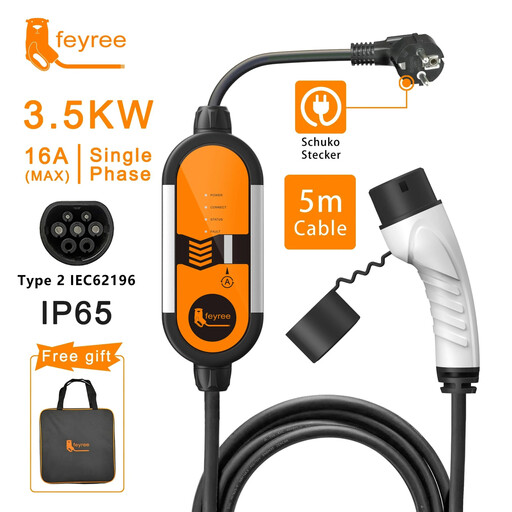
Why it's the right choice for them : Ideal for charging their electric or plug-in hybrid vehicle overnight on a standard household outlet (Schuko), both at home and on the go. No complex installation required.
This charger clearly states its power (3.5 kW) and the required plug type (Schuko). No unpleasant surprises or unrealistic expectations about charging speed.
Adjustable current (from 8 A to 16 A) to match the electrical circuit's capacity. Features an OLED screen for real-time monitoring and a full suite of protections (IP65, overvoltage, overheating).
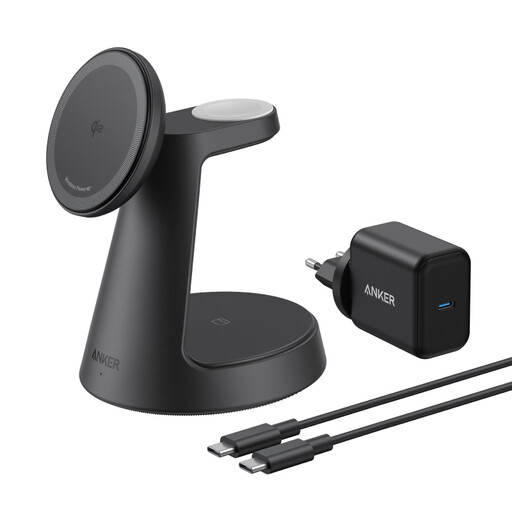
Why it's the right choice for them : Designed for the aficionado juggling an iPhone, Apple Watch, and AirPods. This station centralises charging for the entire ecosystem on a single, elegant stand, finally eliminating cable chaos on the nightstand.
This station relies on certified technologies (Qi2 and MFW for Apple Watch) to ensure fast and safe 15 W charging, a far cry from the unfulfilled promises of generic chargers.
Simultaneous charging for all 3 devices. Compact, foldable design with a non-slip surface for earbuds. Features ActiveShield 2.0 safety system for constant temperature monitoring.
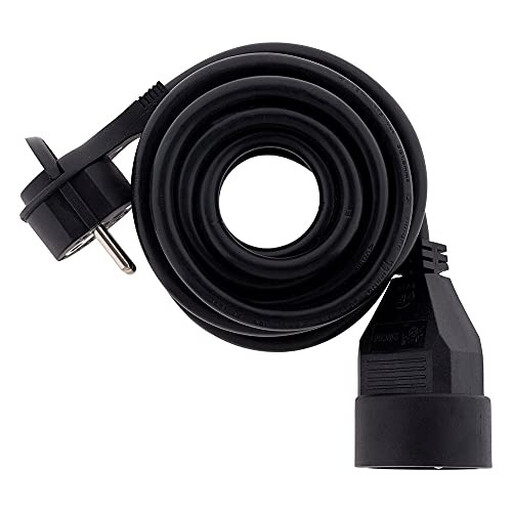
Why it's the right choice for them : The perfect product for those who hunt down every last wasted square inch. This extension cord solves the timeless problem of wall outlets that prevent a sofa, bookshelf, or desk from sitting flush against the wall.
Here, there's no technical jargon or empty promises. The product focuses on a single, concrete, and measurable benefit: its ultra-flat plug. It meets a specific need, period.
Ultra-flat plug designed for the tightest spaces. A robust 3-meter HO5VV-F 3G1.5mm? cable, capable of handling up to 3,680 W—enough for most home appliances.
Explore our complete selection of products, vetted by our experts for their reliability and compliance with European standards.
A 3.5?kW charger plugs into a standard household outlet (16?A) and adds about 15-20?km of range per hour. It's the ideal solution for a relaxed overnight charge. A 7?kW charger, on the other hand, requires a reinforced industrial-type socket (32?A) and can deliver 35-40?km per hour, effectively cutting charging time in half. The choice depends on your patience and your electrical setup.
In theory, yes, provided you choose the right one. A USB-C power strip with multiple ports and a generous total power output (e.g., 65?W or more) can simultaneously power a laptop, a smartphone, and other accessories. However, be careful: always check the maximum power output of each port, as the total power is often shared when multiple devices are plugged in.
Your first step: look for the CE marking on the product and its packaging. For an extension cord, check the cable gauge (for example, 3G1.5mm? is the standard for 16?A). For a charger, scrutinise the spec sheet for essential protections (overheating, overvoltage, short-circuits). Finally, be wary of products that are unusually lightweight or have a questionable finish—these are often bad signs.