
Livraison le jour même ou le lendemain

Qualité garantie

Débloquez vos offres de bienvenue: Livraison GRATUITE | Jusqu'à -80 % | 30 jours d'essai gratuits à JoyPlus
Téléchargez l'application
Electric cars, laptops, smartphones... our devices are more power-hungry than ever. Choosing the right charging solution has therefore become crucial. But faced with a maze of chargers, power strips, and charging stations, how do you navigate it all? The risk of making the wrong choice is real: a bad pick can be costly, or even damage your valuable equipment. This guide is here to help you see things more clearly and make the right choice with complete peace of mind.
Before you even start comparing spec sheets, let's review the classic mistakes. Knowing them is the first step to avoiding them.
Once you've avoided the pitfalls, let's focus on the winning trio that defines good charging equipment: performance, safety, and versatility.
Power, expressed in watts (W) or kilowatts (kW), is the crucial factor: it determines the rate of energy sent to your device. It's therefore vital to choose it based on your needs.
A good charger is, above all, a charger that doesn't endanger you or your devices. Make sure it includes these protections:
The right connector in the right place: a detail that makes all the difference. Think about your different usage scenarios.
To illustrate our guide, here are a few products that tick all the boxes for safety, performance, and suitability.
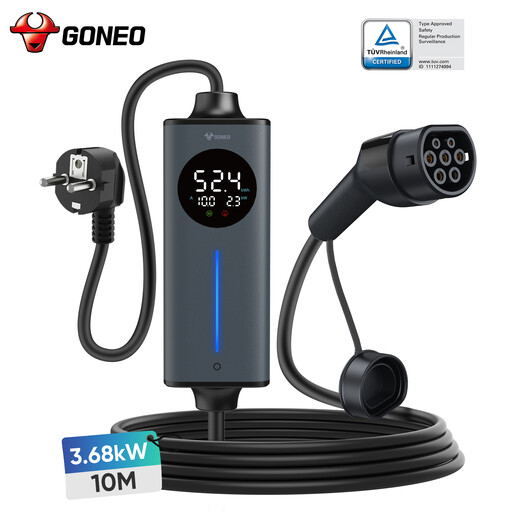
The profile: Perfect for owners of plug-in hybrid vehicles (PHEVs) or compact electric cars. It's the ultimate portable solution, avoiding the cost and complexity of a fixed installation. Ideal for overnight charging at home or for occasional top-ups on the go.
It includes comprehensive residual current protection (Type A + 6 mA DC) and all necessary safety certifications (CE/CB/RoHS). This helps you avoid pitfall #1: the cheap charger that risks frying your vehicle's battery or tripping your home's circuit breaker.
Its programmable charging function lets you fill up on electricity during off-peak hours to save money. Its long 10m cable and universal compatibility (Schuko plug, Type 2 vehicle) make it incredibly versatile.
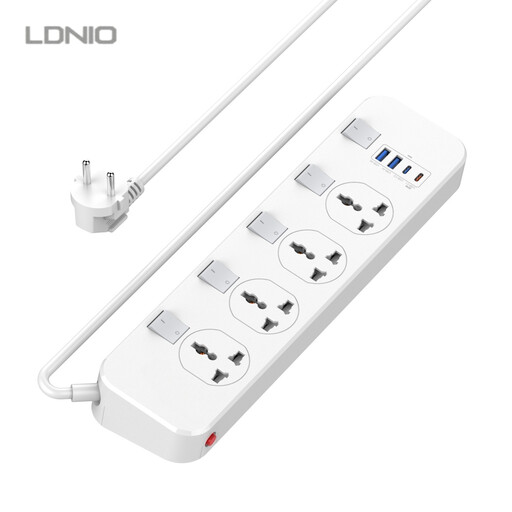
The profile: Designed for those who want a well-organised and secure home office. Say goodbye to cable chaos and risky connections for your computer, monitor, smartphone, and all other peripherals.
Unlike a basic power strip, this unit includes genuine surge protection. The independent switches for each socket allow you to cut power to unused devices and combat 'phantom' standby power consumption.
It's a true charging hub: it combines AC outlets, several USB-A ports, and a 20W USB-C Power Delivery port for fast-charging modern smartphones. Its 2-metre cable offers excellent flexibility for placement on or under your desk.
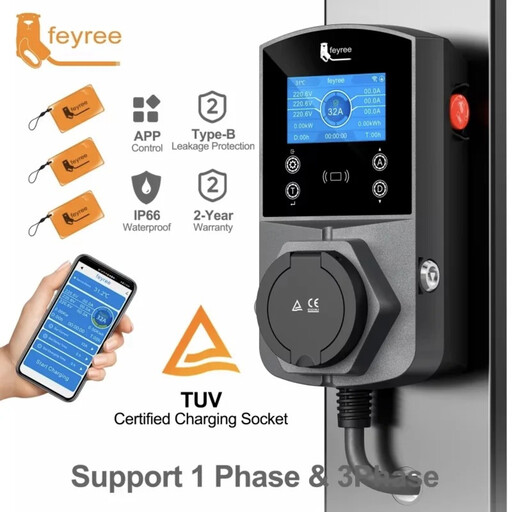
The profile: Aimed at owners of 100% electric vehicles who want the ultimate home charging experience. It's the solution for recovering maximum range in minimum time, essential for those who rack up the miles. Please note, installation by a qualified electrician is required.
This station puts an end to the frustration of endless charging sessions. By delivering up to 22 kW (if your installation and vehicle permit), it ensures optimised charging times and unlocks the full potential of your electric car.
Its 'smart' features: everything is controlled from an app (Wi-Fi/Bluetooth) to schedule charges, adjust power, or monitor consumption. The most comprehensive Type B residual current protection is built-in for maximum safety and peace of mind.
Discover our full selection of products that meet our criteria for safety and performance, and comply with French and European standards.
To put it simply, a portable charger is a supplementary solution. It plugs into any standard domestic socket (Schuko) and delivers a modest amount of power (up to 3.7?kW), perfect for slow overnight charging or while travelling. A wall-mounted station (wallbox) is a fixed installation, connected to your electrical panel by a professional. It's in a different league in terms of speed (from 7.4 to 22?kW) and features (scheduling, monitoring, etc.).
It's very simple: in Europe, the standard for the vehicle-side plug is Type 2 (sometimes called "Mennekes"). Almost all electric and plug-in hybrid cars sold in our market use it. You just need to choose a charger or station equipped with this connector. Don't worry about the power output: the communication between the station and the car automatically adjusts the charge to the maximum speed the vehicle can accept.
Absolutely. Think of it as life insurance for your devices. The electrical grid is never safe from sudden power surges (from lightning, line faults, etc.) that can instantly fry the circuits of your computer, TV, or console. A surge protector power strip acts as a shield that absorbs this voltage spike and protects your valuable equipment. It's a small investment to prevent a major disaster.