
Livraison le jour même ou le lendemain

Qualité garantie

Débloquez vos offres de bienvenue: Livraison GRATUITE | Jusqu'à -80 % | 30 jours d'essai gratuits à JoyPlus
Téléchargez l'application
Navigating the jungle of chargers and power strips can quickly become a headache. Between promises of "ultra-fast" charging and a proliferation of standards, it's easy to end up with an unsuitable, or even dangerous, product. A poor choice can not only damage your precious electronic devices but also pose a risk to your safety.
As a product expert at Joybuy, my mission is to help you see things more clearly. Let's forget the marketing jargon and focus on what's essential. Here are the 3 most common pitfalls to avoid and the key criteria for making an informed purchase.
Many manufacturers promote "fast charging" without specifying the technology used. A 100W fast USB-C charger is useless for a smartphone that only accepts 20W. You're paying for power you'll never use. Worse, a low-quality charger can communicate poorly with your device and, over time, reduce its battery life.
A cheap power strip without the proper certifications is a potential fire hazard. The lack of protection against power surges (surge protector power strip) or overloads can be fatal for your equipment in the event of a voltage spike or if you plug in too many power-hungry devices. The CE mark is a legal minimum, but the NF (French Standard) certification on a power strip is a much higher guarantee of quality and safety.
Who hasn't cursed at a USB power strip whose outlets are so close together that it's impossible to plug in two AC adapters side-by-side? Or at the lack of a switch to cut power to devices in standby mode? These design details, often overlooked at the time of purchase, are what make all the difference in daily use.
To avoid falling into these traps, focus on these three fundamental parameters.
Power, expressed in Watts (W), is the product of voltage (V) and current (A). For fast charging, two protocols dominate?:
The Smart Move?: Check the maximum power accepted by your device (smartphone, tablet, computer) and choose a power adapter or a multi-port wall charger compatible with the correct protocol (PD or QC). A quality fast charging cable, capable of handling the delivered power, is also essential.
Safety is not optional. Ensure the product has at least the following protections?:
The Smart Move?: For power strips, prioritize models certified NF and equipped with overload protection. To protect valuable equipment (TV, computer), a surge protector power strip is an indispensable precaution.
Think about your daily use.
The Smart Move?: List the devices you want to plug in and assess the space you have available to choose the format that best suits your needs.
To move from theory to practice, here are products that meet specific needs while avoiding the pitfalls we've discussed.
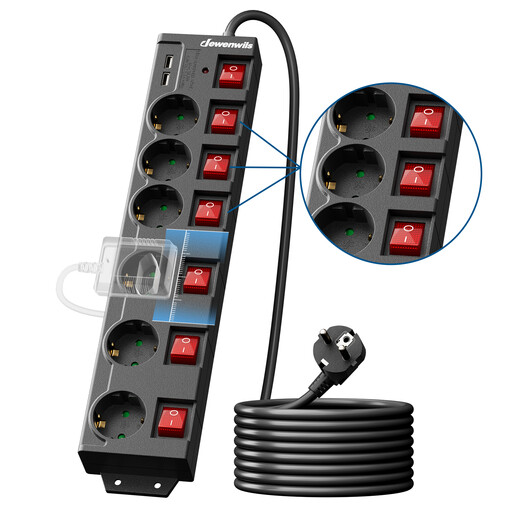
Why it's the right choice : Perfect for a complete home office setup. It lets you manage a computer, monitor, lamp, and charge devices via USB, all while offering full control over each peripheral. Its long 5-meter cable ensures versatile use, no matter your desk configuration.
The individual switches combat phantom power consumption (pitfall #3). The overload and surge protection directly addresses safety requirements (pitfall #2).
6 independently controlled outlets, 2 USB ports, and a 5-meter cable for maximum flexibility.
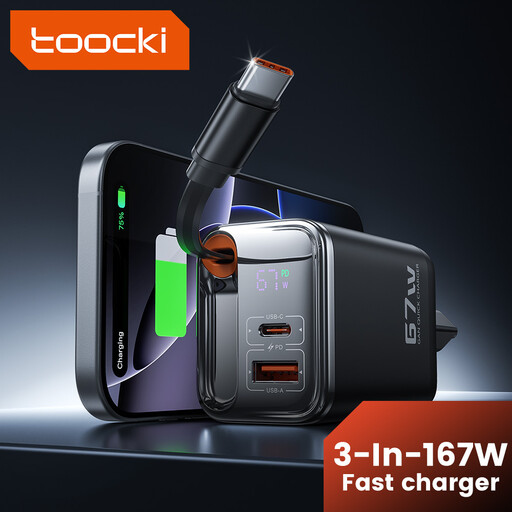
Why it's the right choice : Ideal for travel or hybrid work. It replaces multiple chargers with a single, compact, and powerful solution capable of powering a laptop, smartphone, and other devices simultaneously, without the cable mess.
It offers clear and verifiable fast charging power (67W) with smart distribution, sidestepping vague marketing (pitfall #1). Its all-in-one design with an integrated cable solves the practicality problem (pitfall #3).
High power (67W), 4 ports in total, and a retractable USB-C cable for a minimal footprint.
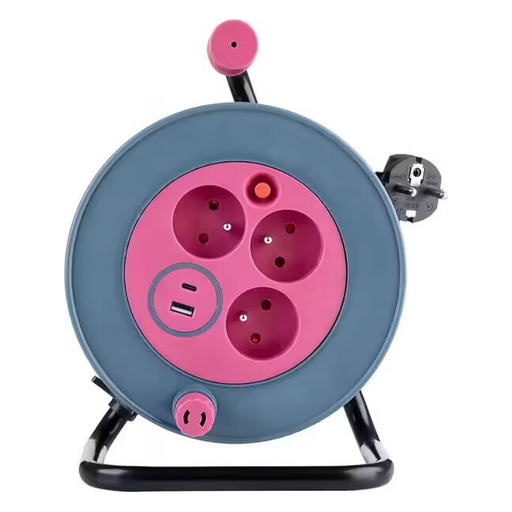
Why it's the right choice : Essential for projects in the workshop, garage, or garden. Its long 12-meter reach and robust design are ideal for powering tools, while the integrated USB ports let you keep a smartphone handy for watching tutorials.
The integrated thermal circuit breaker provides reliable and visible protection against overloads (pitfall #2). Its sturdy reel design solves reach and durability constraints in demanding environments (pitfall #3).
12-meter reach, robust galvanized steel frame, and a thermal circuit breaker for safe, heavy-duty use.
Discover our full selection of products that meet our rigorous selection criteria and French safety standards.
A simple power strip just distributes power to multiple devices. A surge protector power strip (or surge suppressor) integrates an electronic component (often a varistor) capable of absorbing sudden voltage spikes on the electrical grid, thus protecting the sensitive circuits of your computers, TVs, or gaming consoles. It's life insurance for your valuable equipment.
Look at your device's specifications. An iPhone 15 Pro, for example, can fast-charge with a 20W or higher power adapter. A MacBook Air will require at least 30W, while a MacBook Pro might need 67W, 96W, or more. Using a charger that's more powerful than necessary isn't dangerous (thanks to the USB-PD protocol), but using a less powerful one will significantly slow down charging, especially for a laptop.
No, this is a strongly discouraged and dangerous practice, often called "daisy-chaining". Each power strip is designed for a maximum load (3680W). By plugging them into one another, you risk overloading the first power strip connected to the wall outlet, which can cause overheating and a fire hazard. Always plug a power strip directly into a wall outlet.