
Livraison le jour même ou le lendemain

Qualité garantie

Débloquez vos offres de bienvenue: Livraison GRATUITE | Jusqu'à -80 % | 30 jours d'essai gratuits à JoyPlus
Téléchargez l'application
A cable that frays after just a few months, an excruciatingly slow charge, or the infamous “Accessory Not Supported” error message: does this scenario sound familiar? Navigating the jungle of chargers and cables can be overwhelming, often leading to buyer's remorse. Yet, selecting the right accessory is crucial for the performance and safety of your devices.
Before you fall for the lowest price or a tempting marketing promise, let's break down the common pitfalls that cost you time and money.
To make an informed choice, you only need to check a few key technical specifications. These are the true guarantors of quality, performance, and durability.
The connector type is the first compatibility checkpoint.
To benefit from a fast charger, power isn't everything. The key is consistency between the charger, the cable, and the device.
You can see (and feel) a cable's durability.
Instead of an endless list of products, we've matched reliable solutions to typical user profiles. The goal: to help you find the accessory that truly fits your daily life.
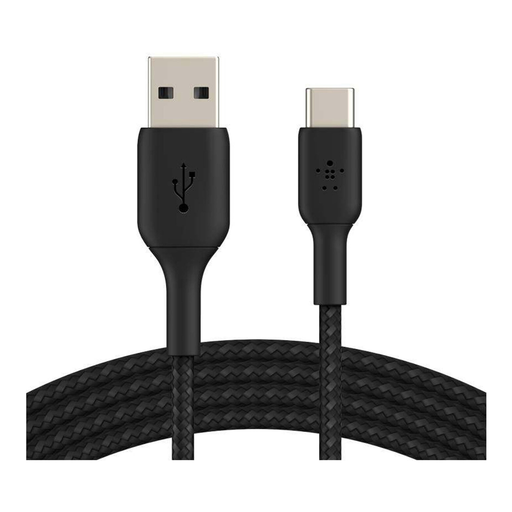
Our take: Ideal for anyone tired of disposable cables. Its 2-meter length offers real convenience at home or in the office, and its design exudes durability, built for heavy use.
Its braided nylon sheath and USB-IF certification tackle the two biggest scourges head-on: fragility and the risks of non-compliant products. Belkin claims it can withstand over 30,000 bends—and that's saying something.
Rock-solid durability and reliability guaranteed by its reinforced design and certification. It's built to ensure stable charging and syncing for years to come.
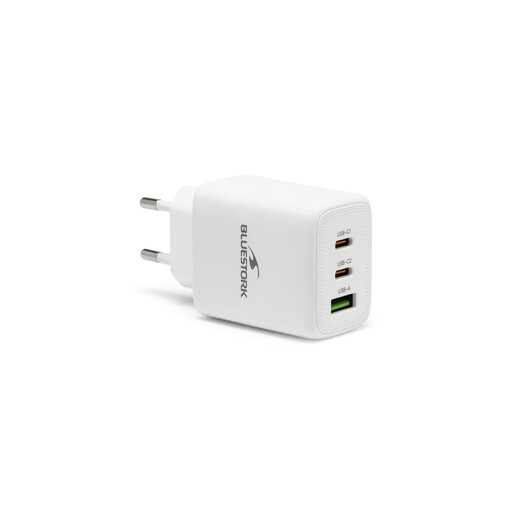
Our take: The perfect accessory for professionals on the go or travelers juggling a laptop and a smartphone. One compact adapter to charge everything—problem solved.
It delivers a true 65W of power through its PD 3.0 compatible USB-C port. This sidesteps the trap of chargers that promise the moon but struggle to power demanding devices like a laptop.
Maximum versatility thanks to its dual ports (USB-C PD and USB-A QC) and ample power for a laptop, all in a compact form factor you'll forget is in your bag.
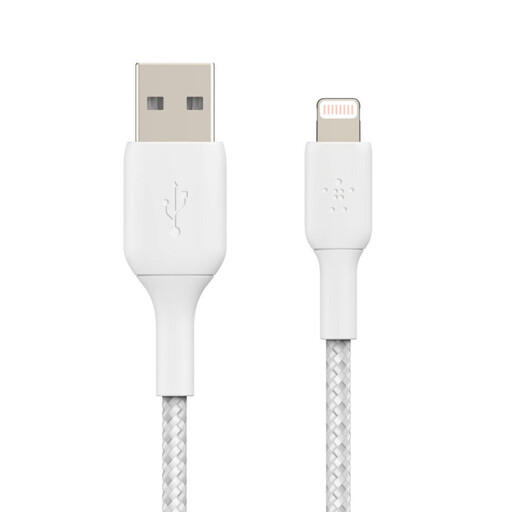
Our take: The peace-of-mind solution for owners of iPhones, iPads, or AirPods with a Lightning port. Its 2-meter length and braided sheath are synonymous with daily comfort and reliability.
Its MFi (Made for iPhone) certification is the key. It guarantees perfect compatibility and absolute safety, saving you from error messages and the risk of damage—a classic pitfall of cheap cables.
The security and compatibility of MFi certification, combined with the robustness of a braided cable. The best of both worlds.
We've curated a complete, up-to-date selection of products that meet our strict selection criteria and European safety standards.
No risk at all. Modern smartphones and devices are "smart": they have built-in protection circuits that "communicate" with the charger to draw only the power they need. A 65W charger will therefore only deliver the maximum wattage your phone can accept. Using an overpowered charger won't speed up charging beyond your device's limits, but it will not damage it in any way.
The difference is primarily physical and ecosystem-related. The Lightning cable is Apple's slim, proprietary connector, used on iPhones up to model 14. The USB-C cable, on the other hand, is a universal, oval-shaped, and reversible standard. It has been adopted by nearly all manufacturers (including Apple for its recent products, driven by European regulations). In general, USB-C offers superior charging and data transfer speeds.
It all depends on usage, but a well-made cable can easily last for several years. The key factors are material quality and design. A nylon braided cable with reinforced connectors will withstand daily wear and tear much better than a simple plastic cable. Certifications like USB-IF or MFi are also an excellent indicator of careful manufacturing and, therefore, a longer lifespan.