
Livraison le jour même ou le lendemain

Qualité garantie

Débloquez vos offres de bienvenue: Livraison GRATUITE | Jusqu'à -80 % | 30 jours d'essai gratuits à JoyPlus
Téléchargez l'application
Your smartphone running out of battery abroad, or your laptop refusing to charge while you're on the move... it's a universal frustration. The charger and adapter market is a veritable jungle, saturated with often-disappointing marketing promises. To avoid ending up with a useless purchase—or worse, an accessory that's dangerous for your devices—it's crucial to know how to avoid the most common pitfalls.
As the Head of Product Curation at Joybuy, my mission is to guide you through this jungle. Let's break down the key points together to make the right choice.
The 3 Pitfalls to Avoid When Buying an Adapter or Charger:
To avoid these pitfalls, focus on a few non-negotiable technical specifications. These are the true arbiters of a product's quality and safety.
The first point to check is compatibility, both physical and electrical.
Charging speed depends on power, expressed in watts (W). This power is the product of voltage (V) and current (A).
For a portable electric car charger, safety is non-negotiable.
Here is our selection of products that meet specific needs, all validated against the criteria we've just detailed.
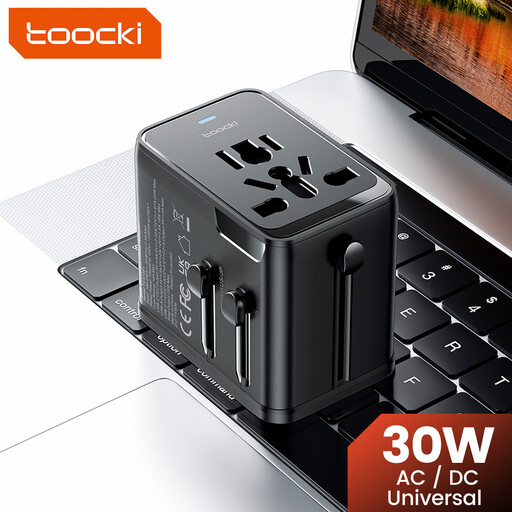
Why we chose it: The perfect solution for travelling light with your entire high-tech ecosystem. It merges a near-universal adapter with modern charging ports, saving you from carrying multiple power bricks.
This isn't just a piece of plastic. It includes a genuine 30W fast charger (PD) and multiple ports. It meets a dual need for versatility and performance, a far cry from fake "universal" adapters.
Compatible with sockets in over 150 countries, it integrates 3 charging ports (including two USB-C) for an ultra-compact, all-in-one solution.
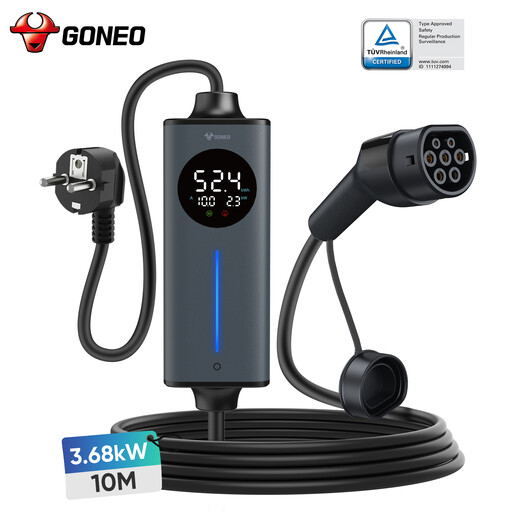
Why we chose it: The ultimate reliable backup charging solution for EV drivers. It allows you to safely plug into any standard domestic socket (Schuko), whether at home, on holiday, or at a friend's house.
It integrates comprehensive RCD protection (30 mA AC + 6 mA DC). This is THE essential safety feature for EV charging, which is too often missing from entry-level models.
Its timer function lets you schedule charging for off-peak hours (and save money!), while the adjustable current adapts to your electrical system's capacity. The LED screen displays all charging info in real time.
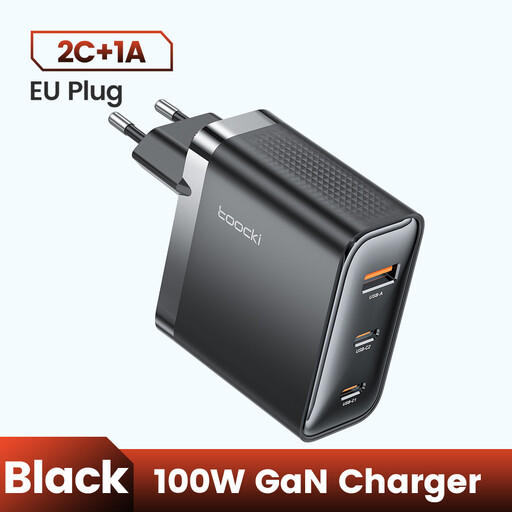
Why we chose it: Perfect for decluttering a desk or lightening a backpack. This single charger replaces all the others and can simultaneously power a laptop, tablet, and smartphone—all at full speed.
It doesn't just split an anaemic power output between multiple ports. This is a true 100W GaN charger that intelligently distributes power according to each device's needs, avoiding the classic pitfall of underpowered multi-port chargers.
The magic of GaN technology: 100W of power in an ultra-compact format. It replaces three chargers on its own, freeing up precious space on your desk or in your suitcase.
We have curated a complete, up-to-date selection of products that meet our strict selection criteria and European safety standards.
An adapter is a simple mechanical intermediary: it changes the shape of the plug to fit into a foreign wall socket, without modifying the electrical voltage (230V in Europe, 120V in the US, etc.). A converter, on the other hand, is an active device that transforms this voltage. For your recent devices (smartphones, laptops), a simple adapter is almost always sufficient, as they are designed to accept a wide range of voltages (usually 100-240V).
Yes, without a shadow of a doubt. For the same power output, a GaN (gallium nitride) charger is more compact, lighter, and generates less heat than a conventional silicon charger. This improved energy efficiency makes it possible to create powerful chargers in pocket-sized formats, perfect for mobility and for saying goodbye to clutter.
Absolutely not! Safety is the non-negotiable criterion. The charger must be compatible with your vehicle's connector (usually Type 2 in Europe) and, more importantly, integrate the necessary safety protections. A Type A Residual Current Device (RCD), supplemented by 6 mA DC leakage detection, is a fundamental requirement to eliminate any electrical risk. Always check for the CE mark and review the safety specifications before making any purchase.