What should you check before choosing?
First decide which pieces of cookware you want to keep and which technology will let you use them. Then check that the hob you’re considering can be installed in your kitchen before comparing models by their cooking zones and everyday use.
Induction
Consider it: if your essential cookware has a ferromagnetic base, or if you’re happy to replace any incompatible pieces.
Bear in mind: cookware without a compatible base won’t work on the induction zones; the installation dimensions and power supply still need to be checked.
Ceramic hob
Consider it: if keeping non-ferromagnetic cookware is a priority.
Bear in mind: according to UFC-Que Choisir, its radiant or halogen zones don’t heat using the magnetic principle behind induction.
Mixed induction and gas
Consider it: if you want to use induction while keeping a gas burner for other cookware or cooking habits.
Bear in mind: you’ll need to check that both the electrical and gas connections are feasible, as well as the layout of the cooking zones on your chosen model.
| Criterion |
What to check |
Who is this for? |
| Keeping your cookware |
Test the base of the pieces you use regularly with a magnet; make a note of what you’d need to replace if you switch to induction. |
I want to keep cooking with my usual saucepans and frying pans, rather than replace pieces that are still fit for purpose. Around 36% of consumers concerned would make keeping their cookware their priority. |
| Suitability for your kitchen |
Compare the cut-out and the space beneath the worktop with the model’s requirements; have the power supply checked if you’re unsure. |
My new hob needs to fit where the old one was without major work. For around 29% of consumers concerned, fitting their kitchen would be the main priority. |
| Cooking zones and large dishes |
Compare the diameter of your largest cookware with the cooking zones, and check how many dishes you can cook at once. |
I often prepare several dishes at once or use a large casserole: the cooking zones need to suit the way I cook. This would come first for around 21% of consumers concerned. |
| Cleaning and everyday use |
Check the controls and cleaning instructions; to compare energy use, look at tests carried out under comparable conditions. |
For everyday use, I mainly want a hob that’s easy to clean and works in a way that suits me. Around 14% of consumers concerned would prioritise these aspects. |
Cookware for a targeted replacement
If you choose induction and some of your saucepans aren’t compatible, these pieces offer an option for replacing cookware one item at a time. Check the base and choose a size to suit what you cook; these are not hobs.
 Image unavailable
Maxcook 30 cm stockpot, 6.5 L, with glass lid
Worth considering if you need to replace a large saucepan for induction cooking: the product information states that the base is compatible, but check it with a magnet before use.
30 cm diameter, 6.5 L capacity and a glass lid. The product information recommends hand washing; check the exact steel grade and what’s included if these details matter to you.
View on Joybuy
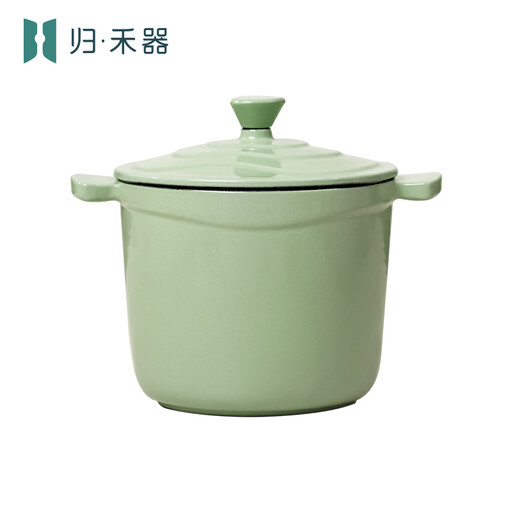 Image unavailable
Guihe small enamelled cast iron casserole, 14 cm, 1.3 L, light grass green
Worth considering if you need to replace a small piece of cookware for individual portions: the title states that it’s induction-compatible, but check the base with a magnet.
14 cm diameter and 1.3 L capacity. Check the care instructions before buying.
View on Joybuy
Frequently asked questions
How can I tell if a saucepan works on induction?
Hold a magnet against its base: if it’s attracted, the base contains a ferromagnetic material, as UFC-Que Choisir explains. Also check that the cookware is suitable for the dimensions and instructions of the hob you’re considering.
Can I keep my aluminium, copper, glass or ceramic cookware?
For induction, keep only pieces with a compatible base: cookware without a ferromagnetic base won’t work directly. Test each piece rather than judging its base by the material it appears to be made from, particularly if it has several layers.
What should I measure before ordering a built-in hob?
Measure the cut-out in the worktop and the available space beneath the hob, then compare them with the instructions for your chosen model. UFC-Que Choisir points out that installation dimensions are not the same as the visible external dimensions.
What should I check about the power supply for an induction hob?
Check the requirements in the instructions and make sure your installation is compatible before buying. For relevant installations in France, Promotelec specifies a dedicated circuit with a connection box, a 32 A socket for single-phase or a 20 A socket for three-phase; if in doubt, ask a qualified professional to assess your setup.
Do I need a flexible zone?
It’s mainly worth considering if you regularly use large cookware or long dishes. If your saucepans fit the separate zones and you only use a few at a time, compare their diameters and layout first rather than choosing a hob based on this feature alone.


