What should you look for?
For an evening drink in a workplace canteen, start with the ingredients list, then check that the format and preparation suit your service. Pure chamomile and a blended recipe should not be presented under the same name.
| Criterion |
What to check |
Who it’s for |
| Tea-free ingredients |
Read the ingredients for the product you buy and look for any tea leaves or other declared sources of caffeine. |
I want to serve an evening drink whose ingredients I can check, rather than relying on the word ‘decaffeinated’; around 40% of consumers would put this check at the top of their list. |
| Service and restocking |
Compare the number of portions, the stated preparation method and the pack size available for catering use. |
When several people prepare the drinks, I need portions and a preparation method that are easy to repeat; this would be the top priority for around 30% of consumers. |
| Flavour choice |
Distinguish between chamomile on its own and a blend, and check any added ingredients before naming it on the menu. |
If chamomile on its own doesn’t offer the variety of drinks I want, I’d prefer to offer a clearly identified blend; around 20% of consumers would put this flavour choice first. |
| Organic and traceability |
Check the claims that apply to the product and batch, including organic composition or place of packing where these are part of your specification. |
My specification calls for a particular feature, such as organic certification, which I need to be able to confirm on the product I buy; this would be the main requirement for around 10% of consumers. |
Joybuy products for evening service
These two formats suit different service requirements: chamomile tea in individual tea bags and a capsule drink prepared using a compatible Dolce Gusto machine. The capsule drink is not a 100% chamomile infusion.
 Image unavailable
DAMMANN FRÉRES chamomile infusion, 21 tea bags, 42 g
For an evening offer with individual tea bags, this product’s ingredients list states 100% chamomile, with no tea leaves listed.
Check the pack’s preparation instructions before setting the serving recipe, and check the pack sizes available for restocking.
View on Joybuy
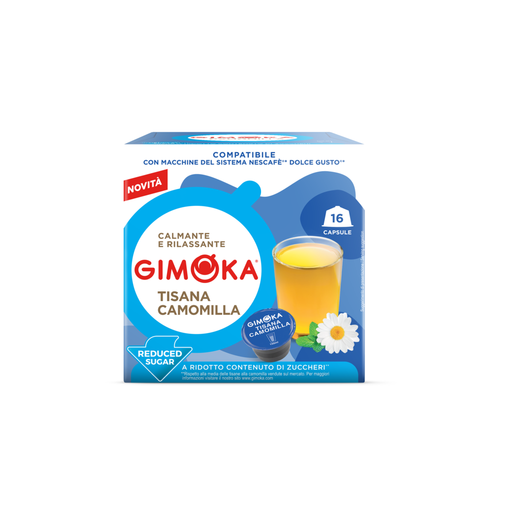 Image unavailable
GIMOKA Camomilla, capsules compatible with Dolce Gusto, 16 capsules, 128 g
This portioned format suits a service with a compatible Dolce Gusto machine, provided the equipment can keep up with the canteen’s demand.
The recipe lists 2.8% chamomile extract, as well as maltitol, erythritol and sugar, so this isn’t a 100% chamomile infusion. Check the ingredients on the product you buy and the pack size available for restocking.
View on Joybuy
Frequently asked questions
Does chamomile need to be labelled ‘decaffeinated’ to be served in the evening?
No. This isn’t the main criterion to look for when choosing a tea-free chamomile infusion. Read the ingredients for the product you buy: Carrefour, Auchan and E.Leclerc, for example, list recipes containing chamomile alone. The European Food Safety Authority includes tea leaves among the sources of caffeine.
Is a ‘night-time’ chamomile infusion pure chamomile?
Not necessarily: the Twinings recipe mentioned here lists 54% chamomile and also contains apple and lime blossom, among other ingredients. If you want a single-ingredient product, look for one whose ingredients list contains chamomile alone.
How can you keep preparation consistent in a canteen?
Set a preparation method for each product based on the instructions on its packaging. Instructions can vary between products, so make sure the team can access them whenever you change tea bags, capsules or suppliers.
What information should you keep when changing products?
Keep the packaging or an up-to-date product sheet so you can check the ingredients of the drink you’re actually serving. The DGCCRF states that food labelling for products offered for sale must be clear and accurate; don’t reuse the details from an old product to describe a new one.
Can chamomile be presented as a treatment for insomnia?
No. Present it as an evening drink, without making therapeutic claims. The National Center for Complementary and Integrative Health says that the available studies do not provide enough reliable evidence to establish the clinical usefulness of chamomile for the conditions examined.


