
Livraison le jour même ou le lendemain

Qualité garantie

Débloquez vos offres de bienvenue: Livraison GRATUITE | Jusqu'à -80 % | 30 jours d'essai gratuits à JoyPlus
Téléchargez l'application
For long days of remote work or well-deserved moments of relaxation, a chair with a footrest promises absolute comfort. But beware: behind this picture-perfect image lie pitfalls that can quickly turn a good investment into a regret. To make the right choice, you need to learn how to spot seemingly good ideas and design flaws that aren't obvious at first glance.
As a Product Expert at Joybuy, my mission is to guide you. Let's break down the three most common mistakes together to help you avoid any disappointment.
To make an informed choice, focus on a few technical specifications that make all the difference in the long run.
There are two main types: integrated footrests and external models.
A good chair is a complete system. The footrest is just one piece of the puzzle. Pay close attention to the lumbar support: is it fixed, adjustable in height and depth, or adaptive (following the movements of your back)? A proper ergonomic chair with a footrest must allow for precise adjustments to match the natural curve of your spine. The backrest tilt, armrest height, and seat depth are just as crucial.
A chair's durability primarily depends on its frame. For an office chair, a star base (steel or aluminium) ensures stability. For a comfortable lounge chair, a solid wood or sturdy metal frame will guarantee its longevity. Regarding upholstery, mesh fabric is breathable and ideal for intensive use, while soft fabrics are perfect for relaxation. Finally, foam density is a key indicator: aim for high density (over 30 kg/m?) to ensure it retains its shape and comfort over time.
There's an ideal chair for every profile. Here are a few models that meet specific needs, all selected according to the quality criteria we've just discussed.
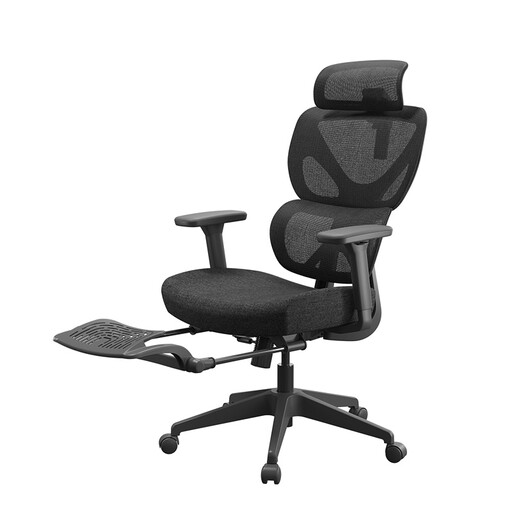
Why we recommend it: Perfect for those who work long hours, this model features a retractable footrest without sacrificing essential ergonomic adjustments. It allows you to switch from a working posture to a micro-break position in an instant.
Here, the footrest isn't a gimmick. It's integrated into a structure designed for ergonomics, complete with dynamic lumbar support and adjustable armrests. It's a truly functional extension of the chair.
Its work/relax versatility, with comprehensive adjustments (lumbar support, headrest, armrests) and a 10 cm thick seat for lasting comfort.
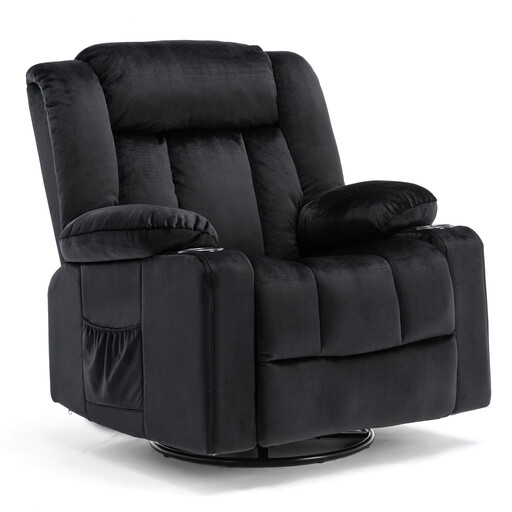
Why we recommend it: Perfect for a reading nook or a movie night, this chair is an ode to relaxation. Its manual recline mechanism is simple and robust, and its extras (360° swivel, cup holders, side pockets) are designed for everyday comfort.
There are no compromises here. Its design is 100% focused on relaxation. The recline mechanism is the core of the product, not an afterthought. The soft fabric upholstery and generous padding are made for cosiness, not the wear and tear of an office.
The total relaxation experience: a swivel base, sturdy metal frame, and well-designed integrated storage.
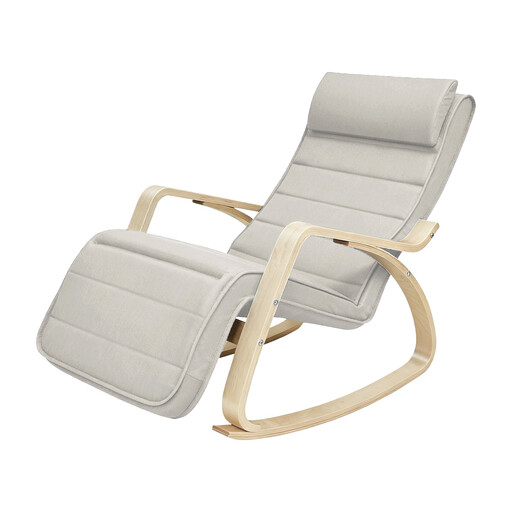
Why we recommend it: For those who refuse to choose between aesthetics and comfort, this Scandinavian-design rocking chair is the perfect solution. It fits just as well in a living room as in a bedroom and offers active relaxation with its gentle rocking motion.
It avoids the gimmicky footrest trap with a truly robust and useful 5-position adjustment mechanism for finding the perfect angle. Its genuine birch wood frame is a mark of quality and durability, far from cheap imitations.
Customisable comfort thanks to the multi-position footrest, and the practicality of its removable, washable cotton cover.
No need to replace it. If your current seat is comfortable but lacks leg support, a dedicated accessory can make all the difference. Complete your setup with a separate ergonomic footrest.
It all depends on your use case; there's no one-size-fits-all solution.
Three points are crucial: the frame, the mechanism, and the padding. Look for a metal or solid wood frame. Test the smoothness of the recline mechanism: it shouldn't require force or have any looseness. Finally, check the foam density: a value over 30 kg/m? is a sign of resistance to sagging.
In a working posture, your feet should be flat (on the floor or footrest), with your knees at an approximate 90-degree angle. The lumbar support should fit into the small of your back. For relaxation, the goal is to limit pressure points. Raise the footrest so your heels are slightly higher than your knees (ideal for blood circulation) and recline the backrest until your back and neck are fully supported.