
Livraison le jour même ou le lendemain

Qualité garantie

Débloquez vos offres de bienvenue: Livraison GRATUITE | Jusqu'à -80 % | 30 jours d'essai gratuits à JoyPlus
Téléchargez l'application
A garden furniture cushion can transform a hard chair, bench or sun lounger. But buying one in a hurry can lead to disappointment: it may not fit, the filling may sag, the ties may be flimsy or the fabric may fade within a few weeks. So, before ordering cushions for your patio, balcony or garden, it’s worth checking a few practical details.
A thick garden cushion isn’t necessarily the most comfortable. A deep cushion may conceal filling that is poorly distributed or not very dense. On the other hand, a well-made cushion that’s 8 to 10 cm thick can provide a comfortable, supportive seat.
Instead, check what the cushion is filled with, whether it has quilted seams and whether it’s designed to hold its shape. Cushions delivered vacuum-packed may also need several hours, or even a few days, to regain their original volume.
A cushion that’s too short will leave part of the seat uncovered. If it’s too wide, it may overhang, fold up or get in the way when you fold away a sun lounger. Measure the furniture frame itself, not just the old cushion:
For a sun lounger cushion, length is particularly important. A 170 cm model won’t automatically fit a 198 cm sun lounger.
Polyester treated to resist splashes is easy to clean, but that doesn’t mean you can leave the cushion outside in the rain. The terms “water-resistant”, “water-repellent” and “UV-resistant” refer to different properties.
Even if the fabric is designed for outdoor use, put the cushion away somewhere dry when you’re not using the furniture. This simple habit helps prevent lingering damp, unpleasant smells and premature wear to the filling.
Measure the seat and backrest together when choosing a garden bench cushion. For example, a 150 × 98 × 8 cm model is designed to cover the seat and backrest of a bench or three-seater outdoor sofa. For an individual chair, a size close to 48 × 48 cm will usually be a better fit.
A hanging chair cushion should also follow the seat’s curved shape and suit the height of the backrest. For a sun lounger, check that the cushion fits the frame and see whether it includes a headrest.
An outdoor cushion with ties will generally stay in place better than one that simply rests on the furniture. The ties should be long enough to go around the furniture’s uprights, but not so long that they hang loose. Some cushions also have a non-slip surface or underside, which is useful on smooth frames.
On a bench exposed to the wind, several fastening points across the seat and backrest will help prevent the cushion from shifting. If you have a folding sun lounger, make sure the ties won’t get in the way of the mechanism.
If you use your furniture every day, look for a removable-cover cushion or one that’s easy to clean. Some models can simply be wiped with a damp cloth, while others need spot cleaning and aren’t machine washable.
A label such as “UV50+” describes a fabric feature stated by the manufacturer. It doesn’t guarantee that the cushion won’t fade at all. The colour you choose, a south-facing position in full sun and storing the cushion out of season will all affect how well it lasts.
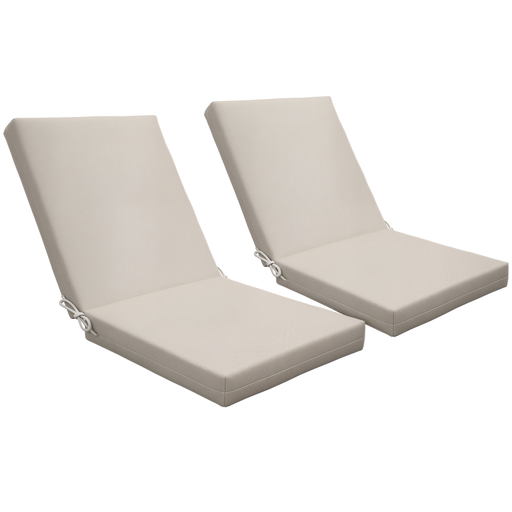
Why this is a good match: This set of two cushions is ideal if you want to quickly refresh several seats on a wide chair, small bench, swing seat or outdoor sofa. The 112 × 51 cm size covers a generous area, as long as you check your furniture’s dimensions first.
The integrated ties help prevent the cushions from slipping or blowing away in the first gust of wind. The stated care instructions also make things simple: just wipe them with a damp cloth, so there’s no fiddly cover to maintain.
Stated thickness of 8 cm, high-density filling and polyester fabric described as resistant to small stains and splashes.
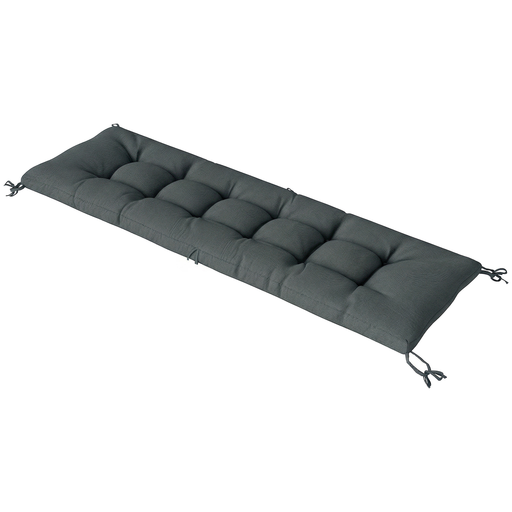
Why this is a good match: This cushion is made for people who regularly use a long sun lounger and want a particularly thick surface for reading or relaxing. It’s described as suitable for sun loungers measuring 198 × 65 cm.
The fastening straps help keep the cushion in place on your sun lounger. The UV50+ protection is stated to help slow fading, although you should still put the cushion away when it’s not in use.
Stated thickness of 13 cm, memory foam filling and 180 g/m² polyester fabric with a water-repellent treatment.
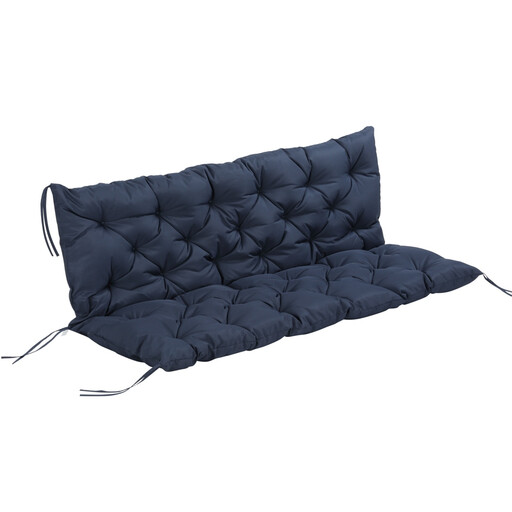
Why this is a good match: This model is suitable for a bench, swing seat or garden sofa around 150 cm wide. It covers both the seat and backrest, creating a coordinated look on a family patio.
Six 30 cm ties hold the cushion in place and help prevent it from slipping on furniture shared by several people.
Three-seater size, seat and backrest with a stated thickness of 8 cm, polyester fabric and cotton filling.
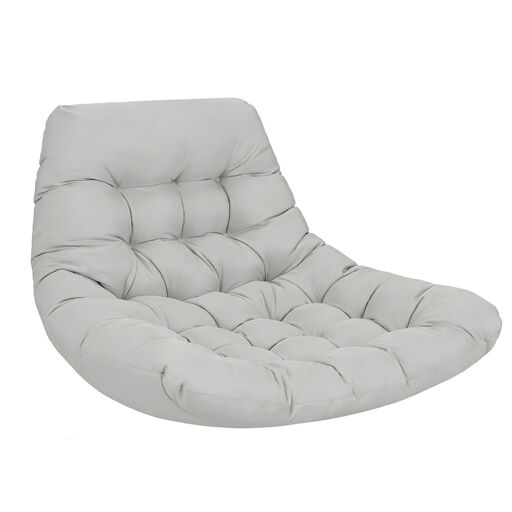
Why this is a good match: This cushion is designed for egg chairs, rattan chairs and hanging baskets in standard sizes. Its thick shape suits a cocoon-style seat, indoors or on a covered balcony.
The side ties mean you won’t have to keep repositioning the cushion as you move. Reinforced stitching and three-dimensional quilting are designed to keep the filling in place.
Thick filling, a size described as suitable for several egg chairs and compressed packaging for easier transport.
We’ve put together a full range, updated in real time, of products that meet these exacting criteria as well as European safety standards.
Choose a model with ties, straps or a non-slip underside. Tie the straps around the solid parts of the furniture, not around any moving parts. On a bench or swing seat, several fastening points across the seat and backrest will help keep the cushion in place.
It depends on how often you use it, how much sun and damp it’s exposed to, and how well it’s stored. To protect the fabric and filling, wipe up splashes promptly, let the cushion dry completely and store it somewhere sheltered during wet weather or whenever the furniture isn’t in use.
It’s generally not recommended, even if the fabric is described as UV-resistant or water-repellent. A protective cover or storage box will help shield the cushion from rain, frost, dirt and temperature changes. Before putting it back on the furniture, make sure it’s completely dry.