For your morning break, choose your chai based on what matters most to you: a blend where black tea takes centre stage, one with a stronger emphasis on spices, or a loose-leaf format you can measure out yourself. Ingredient proportions published by Carrefour and Auchan can help you compare blends, but they don’t tell you how strong the flavour will be or how much caffeine will be in your cup. Also consider how you prepare it and what other caffeinated drinks you have.
Who is this guide for?
Fans of chai with a strong black tea base
You want to find a blend with a high proportion of black tea. The proportions listed on Carrefour and Auchan product pages let you compare the blends, but they don’t tell you how the tea will taste in the cup.
Fans of spiced chai
You’re mainly looking for cinnamon, ginger or cardamom, perhaps with a touch of black pepper. A blend that emphasises these spices won’t necessarily contain the most black tea.
People keeping an eye on their caffeine intake
You also drink coffee or other caffeinated drinks during the day, or you’re sensitive to caffeine. The Anses notes that tea and coffee naturally contain caffeine, so the word ‘strong’ won’t tell you how much is in a prepared cup.
What should you look for first?
First, decide what ‘strong’ means to you: a blend with a high proportion of black tea, or a more pronounced spice flavour. Then check the format and brewing instructions for the product you’re considering.
| What to consider | What to check | Who is it for? |
|---|
| Amount of black tea |
The proportion of black tea in the ingredient list, if provided, and whether the product you want is available. |
If I mainly want a blend where black tea takes centre stage, I compare the stated proportion rather than relying on the word ‘strong’; around 42% of consumers would prioritise this. |
| Spice profile |
The list of spices, especially whether it includes ginger and black pepper if you’re looking for those flavours. |
For my morning break, I might prefer cinnamon and ginger to a high proportion of black tea; around 33% of consumers would make this their priority. |
| Caffeine |
Whether the blend contains black tea, its brewing instructions and what other caffeinated drinks you have during the day. |
If I’m adding chai to my usual coffee, I want to keep track of my overall caffeine intake; around 25% of consumers would put this need first. |
Pitfalls to avoid
-
Assuming ‘strong’ means a specific amount of caffeine
Chai product pages published by Carrefour and Auchan list different ingredients, but their stated proportions of black tea don’t measure how much caffeine is in the prepared drink.
Compare the ingredients to choose a blend. If caffeine is a deciding factor, look for information about the prepared drink rather than relying on the product name.
-
Choosing a product without checking whether it’s available
You may like the ingredients in a blend, but the product might not be available when you want to buy it. For example, the Carrefour Bio product page we checked listed its chai as unavailable.
Check with the retailer before settling on a specific product. Its ingredient list can still help you compare blends.
-
Forgetting about other sources of caffeine
According to the Anses, tea and coffee both naturally contain caffeine, and people vary in how sensitive they are to its effects. A black tea chai could therefore be one of several caffeinated drinks you have in a day.
Consider all the caffeinated drinks you have, and adjust your habits if you notice an effect on your sleep.
Brands to know
Carrefour Bio
Carrefour’s product page describes an organic spiced black tea chai in tea bags, made with 83,5 % black tea, cinnamon, ginger, cardamom and cloves.
- The stated proportion of black tea makes it easy to compare the blend with other chais.
- The product page we checked lists this product as unavailable, so check availability before choosing it.
Éthiquable
According to Carrefour’s product page, its organic Darjeeling chai contains 83,5 % black tea and 16,5 % spices.
- The stated proportions clearly show how much of the blend is black tea and how much is spices.
- These proportions don’t tell you how strong a prepared cup will taste or how much caffeine it will contain.
Clipper
Auchan’s product page for Clipper organic Indian chai in 20 tea bags of 50 g states that it contains 60 % black tea and 20 % cinnamon, as well as ginger and cardamom.
- The stated proportions show how much black tea and cinnamon the blend contains.
- They don’t tell you how much caffeine is in each cup.
Yogi Tea
Auchan’s product page for Yogi Tea organic chai in 15 tea bags of 30 g states that it contains 33 % black tea, 27 % cinnamon, 18 % ginger, 5 % cardamom and 2,5 % black pepper.
- The detailed ingredient breakdown can help you decide if these spices matter more to you than the proportion of black tea.
- A lower proportion of black tea in the blend doesn’t prove that the prepared cup contains less caffeine.
Yaté
E.Leclerc lists Yaté spiced black tea chai as a loose-leaf product, sold in 100 g packs.
- With loose-leaf tea, you can measure out the amount of blend you want to use.
- To compare this blend with chai in tea bags, check its ingredients and brewing instructions on the packaging.
Chai available on Joybuy
These two Pukka products come in packs of 20, including one product explicitly described as tea bags. To choose based on how much black tea or spice you want, check the ingredients for each product before buying.
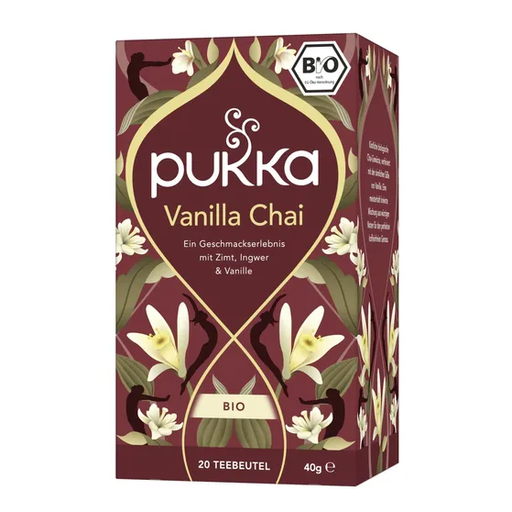 Image unavailable
Pukka Vanilla Chai, 20 tea bags
If you’d rather use tea bags than a loose-leaf blend for your morning break, this pack contains 20 tea bags. Check the ingredients if the presence of black tea is important to you.
View on Joybuy
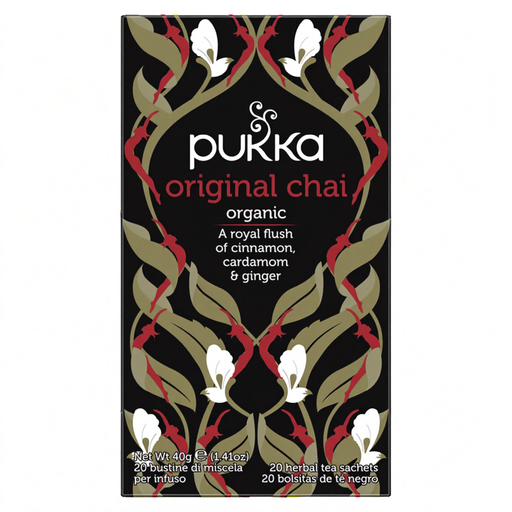 Image unavailable
Pukka Original Chai, 20 units
If you’re considering a pack of chai for your morning breaks, this product contains 20 units. Check its ingredients and brewing instructions before comparing it with tea bag or loose-leaf formats.
View on Joybuy
Frequently asked questions
Does chai labelled ‘strong’ necessarily contain more caffeine?
No. The name alone doesn’t tell you how much caffeine is in a cup. Chai product pages published by Carrefour and Auchan state ingredient proportions, but these don’t measure the prepared drink.
How long should you steep a tea bag of chai in the morning?
Follow the steeping time given for the product you’re making. Auchan’s product page for Yogi Tea chai recommends steeping for 7 minutes in 250 ml of water at 100 °C; this instruction doesn’t apply to every chai in tea bags.
What should you consider when drinking black tea chai during pregnancy?
Consider the caffeine in all your drinks, not just your chai. In its 2015 opinion, the European Food Safety Authority considers intakes of up to 200 mg per day from all sources for pregnant women; this figure doesn’t tell you how much caffeine is in your cup. Ask a healthcare professional for advice about your personal circumstances.


