Anyone looking for a chai made with tea
You want black tea to play a prominent part in the recipe. If you drink your cup late in the day, consider how sensitive you are to caffeine too: Anses says it can disrupt sleep.


To enjoy with a snack while studying, start by choosing the kind of drink you want: a chai made with black tea, a blend with a stronger focus on spices, or a spiced green tea. Then check the ingredients and brewing instructions for the product. The proportion of tea in the recipe alone won’t tell you how much caffeine is in your cup.
You want black tea to play a prominent part in the recipe. If you drink your cup late in the day, consider how sensitive you are to caffeine too: Anses says it can disrupt sleep.
Your choice is guided mainly by the ingredients you want alongside your snack, such as cinnamon, ginger or cardamom. The ingredients list tells you more than the name ‘chai’ alone.
You want to make a cup between study sessions. Tea bags are easy to compare, but follow the instructions for each product: Auchan’s product listings recommend 2 minutes for Lipton Tchaé Orient and 7 minutes for the Yogi Tea chai mentioned here.
For a study break, first decide whether you want tea in the recipe, then compare the spices, format and preparation method. These points matter just as much when choosing a drink to enjoy with a snack as they do when you plan to drink it on its own.
Choose this if: you want black tea to remain a key ingredient in the blend.
Bear in mind: tea contains caffeine, which Anses says can delay falling asleep.
Choose this if: cinnamon or ginger notes are the main things you’re looking for to go with your snack.
Bear in mind: a heavily spiced recipe can still contain black tea, as in the Yogi Tea blend described by Auchan.
Choose this if: you prefer a green tea base with spicy notes to a black tea chai.
Bear in mind: this changes the base of the drink, but it still contains tea, so when you drink it is still worth considering.
| What to compare | What to check | Who is this for? |
|---|---|---|
| Tea and caffeine | Check the ingredients for black or green tea. Don’t use the percentage of tea in the blend to estimate the caffeine in each cup. | If I drink chai late in the day, I want to know whether it contains tea so I can choose when to have it. Around 40% of consumers would put this first. |
| Spice profile | Compare the spices listed and check whether flavourings are included, depending on your preferences. | To go with my snack, I’m looking for certain spice notes rather than a recipe described simply as ‘chai’. This would be the top priority for around 30% of consumers. |
| Preparation | Check the number of tea bags, as well as the brewing time, temperature and amount of water stated for the product. | Between study sessions, I want to make a cup in the time I have available. Preparation would come before the other criteria for around 20% of consumers. |
| Ingredients | Read the full ingredients list and check the allergens highlighted on the packaging. | Before choosing, I want to identify the ingredients precisely, especially anything I want to avoid. Checking the label would be the main concern for around 10% of consumers. |
Kusmi Tea and Auchan list different recipes: the Yogi Tea chai mentioned contains 33% black tea, compared with 71% in the Ethiquable blend. So ‘chai’ doesn’t mean a fixed proportion of tea and spices.
Compare the ingredients and percentages wherever they’re shown on the product listing or packaging.
A recipe can contain cinnamon or ginger as well as tea. Anses reminds consumers that the caffeine in tea can affect sleep.
If you’re having a cup late in the day, check whether it contains tea and consider how much caffeine you’ve had throughout the day.
A recipe can combine spices with natural flavourings: Kusmi Tea lists both in its Kashmir Tchaï blend. The word ‘natural’ is no substitute for checking the ingredients.
Read the full ingredients list and check the allergens highlighted before choosing a blend.
The instructions listed by Auchan range from 2 minutes for Lipton Tchaé Orient to 7 minutes for the Yogi Tea chai mentioned here. Using the same method for both products wouldn’t follow their instructions.
Start by following the brewing time and temperature shown on the packaging of the blend you’ve bought.
Kashmir Tchaï is a black tea chai with spices, available in formats including tins and tea bags.
The organic Darjeeling spiced Tchaï tea featured by Auchan comes in a pack of 20 tea bags.
The organic spiced black chai described by Auchan comes in a pack of 20 tea bags.
The spiced black tea chai featured by Auchan comes in a pack of 15 tea bags.
Tchaé Orient is a spiced green tea, so it’s different from a chai made with black tea.
These two Pukka tea bag options could be worth considering when choosing a drink for a study break. To see whether their recipes suit your preference for tea or spices, compare the ingredients on the packaging.
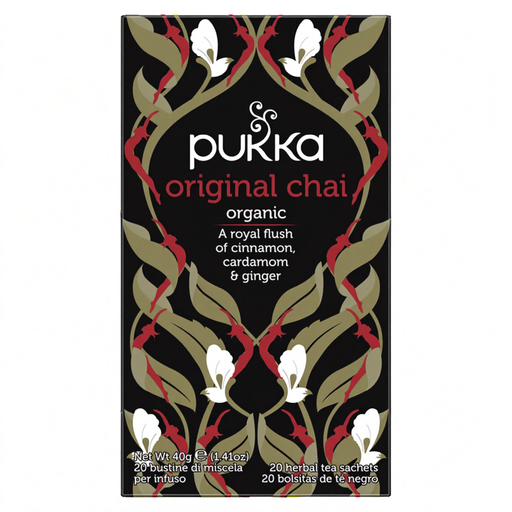 Image unavailable
A tea bag option to consider when making a cup during a study break.
Check the ingredients and brewing instructions on the packaging to see whether it suits your choice of drink and the time you have available.
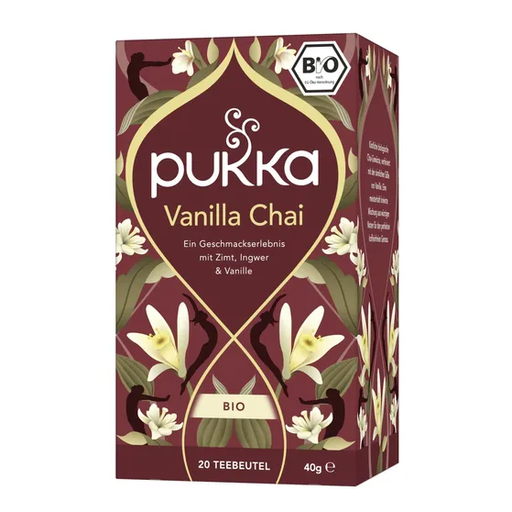 Image unavailable
Another tea bag option to explore if you’d like to compare blends for your snack break.
Check the ingredients list on the packaging before choosing, especially to see how much tea and how many spices this version contains.
It depends in part on how sensitive you are to caffeine and what time you plan to go to bed. A chai containing tea provides a source of caffeine. Anses says caffeine can delay falling asleep and reduce the length or quality of your sleep. Check the recipe and consider any other sources of caffeine you’ve had during the day.
The ingredients list shows whether the recipe contains spices, flavourings or both. Kusmi Tea’s listing for Kashmir Tchaï mentions spices and natural spice flavourings, while Auchan’s listings for Ethiquable and Clipper detail the spices in their recipes. Compare the lists based on the ingredients you’re looking for or want to avoid.
No. Follow the instructions for the product you’ve bought. The instructions for Lipton Tchaé Orient recommend brewing for 2 minutes at 90 °C, while those for the Yogi Tea chai mentioned here recommend 7 minutes in boiling water. These instructions shouldn’t be applied to every chai.
Read the full ingredients list and check the allergens highlighted before buying. The Directorate General for Competition Policy, Consumer Affairs and Fraud Control reminds consumers that allergens must be highlighted on the labels of relevant food products.