People who are sensitive to caffeine
If someone is a light sleeper or doesn’t tolerate caffeine well, check whether the blend contains black tea, green tea or maté. ANSES says caffeine can delay falling asleep and reduce sleep duration and quality.


For an older person, start by choosing chai based on their caffeine tolerance and the ingredients list. A black tea blend may be suitable during the day if they tolerate caffeine well, while a spiced infusion without black tea, green tea or maté is a better choice if they want to avoid these sources of caffeine. Making chai at home gives you control over the ingredients, but adding tea brings caffeine back into the drink. Also check for liquorice, particularly if the person has high blood pressure or takes regular medication. Chai can accompany a drink or a meal, but it should not replace water or meals.
If someone is a light sleeper or doesn’t tolerate caffeine well, check whether the blend contains black tea, green tea or maté. ANSES says caffeine can delay falling asleep and reduce sleep duration and quality.
Liquorice needs particular attention if someone has high blood pressure, kidney or liver disease, or takes regular medication. ANSES warns against consuming large amounts of liquorice over a prolonged period.
Chai can accompany a meal or snack, but it shouldn’t replace one. Manger Bouger guidance for people aged over 75 highlights the importance of keeping up regular meals when appetite decreases.
First, choose between tea and an infusion based on caffeine tolerance, then read the full ingredients list, even if you’re making the blend yourself. If you’re serving it with a meal, also distinguish between a tea bag for infusion and a chai latte mix, which may be prepared with added milk and sugar.
| What to consider | What to check | Who is it for? |
|---|---|---|
| Caffeine and sleep | Look for black tea, green tea or maté in the ingredients list, and consider when the drink will be served. | If I sleep badly or don’t tolerate caffeine well, I want to avoid it in my chai, especially in the evening. Around 33% of consumers put this need first. |
| Fitting it in with meals | Distinguish between tea or an infusion you prepare yourself and a chai latte with added ingredients; don’t rely on the drink to replace a meal. | When my appetite decreases, I’m looking for a drink to serve with a meal or snack, without losing sight of my usual diet. This is the main concern for around 42% of consumers. |
| Liquorice and other ingredients | Check the label for liquorice, and seek advice before drinking it regularly if you have high blood pressure, kidney or liver disease, or take regular medication. | If I’m buying for someone with a health condition or taking medication, I want to be able to avoid ingredients that require caution. This is the first thing around 25% of consumers check. |
Chai can contain black tea. According to ANSES, caffeine can affect sleep, although the impact varies from person to person.
If you’re choosing an evening drink or buying for someone who is sensitive to caffeine, check that the infusion contains no black tea, green tea or maté.
A spiced infusion may contain liquorice. ANSES highlights the risks of consuming large amounts of liquorice products over a prolonged period, particularly for people with high blood pressure or taking certain medicines.
Read the full ingredients list and, if the person is affected, seek advice from a health professional before making it a regular drink.
A flavoured drink alone won’t meet the nutritional needs of someone whose appetite is declining. Manger Bouger recommends that people aged over 75 continue to eat regular meals.
Serve chai as an accompaniment. If the person is losing weight, skipping meals or eating less over a prolonged period, speak to a health professional.
Carrefour offers an organic spiced black tea chai in a box of 20 tea bags.
Auchan and Carrefour product listings feature an organic Darjeeling chai made with black tea and spices.
Carrefour’s product listing describes an organic chai made with black tea, cinnamon and ginger.
Auchan’s product listing features chai tea bags containing ingredients including cinnamon, cardamom, black tea, ginger and liquorice.
This selection features a black tea and spice chai, best considered as a daytime drink if you tolerate caffeine well. If you’re looking for an infusion without tea or a homemade recipe, follow the ingredient-checking advice above instead.
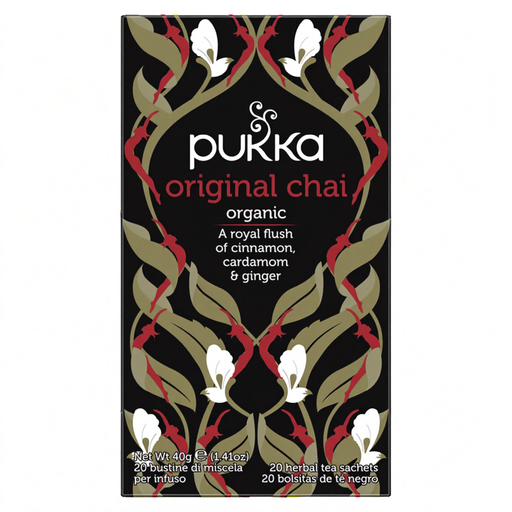 Image unavailable
Worth considering as a daytime drink for someone who tolerates black tea. This blend also contains liquorice. If you have high blood pressure, kidney or liver disease, or take regular medication, seek advice before drinking it regularly.
Not necessarily: black tea contains caffeine, which can affect sleep, according to ANSES. If the aim is to avoid the sources of caffeine mentioned here, choose an infusion whose ingredients list contains no black tea, green tea or maté, and check its other ingredients too.
According to ANSES, consuming large amounts of products containing liquorice over a prolonged period can cause high blood pressure and low blood potassium. This is particularly important if you have high blood pressure, kidney or liver disease, or take medication that may interact with liquorice. Seek advice before drinking it regularly.
No, chai isn’t a substitute for a meal. Manger Bouger advises people aged over 75 to keep up regular meals when their appetite decreases. If you’re concerned about weight loss or a sustained reduction in food intake, consult a health professional.