Hosts who love the taste of black tea
You’re making several cups and want the black tea to come through, rather than letting the spices dominate. Compare the ingredients and choose a format that suits the number of cups you’re serving.


For an easy way to serve several cups at brunch, choose tea bags if you want a recognisable black tea base. Opt for a loose-leaf blend if you’d like to make milky chai and adjust the amount. If by “robust” you mainly mean a strong spice flavour, check the ingredients instead: the proportion of black tea tells you about the recipe, but doesn’t measure how intense the finished cup will taste.
You’re making several cups and want the black tea to come through, rather than letting the spices dominate. Compare the ingredients and choose a format that suits the number of cups you’re serving.
You’d like to measure out the blend and prepare all the cups together. A loose-leaf recipe designed to be made with milk could work well, as long as you allow time to heat and strain it.
If the ingredients or caffeine content matter to your guests, read the packaging of the product you choose. Anses points out that tea naturally contains caffeine. Check the ingredients and any highlighted allergens before serving, too.
For brunch, first decide whether you want a noticeable black tea flavour, a milky preparation or a blend that suits your guests. Then consider the format and preparation instructions.
| What to consider | What to check | Who it matters to |
|---|---|---|
| Black tea base | Compare the proportion of black tea if it’s listed on the label, then check the recommended quantities and brewing instructions. Carrefour lists 60% black tea for Clipper chai; Auchan lists 71% for Éthiquable tchaï. These proportions don’t measure how strong the prepared cups will taste. | I want to taste the tea in my cup, not just the spices. Around 42% of consumers put a black tea base at the top of their list of priorities. |
| Making it with milk | Check that the recipe is suitable for making with milk and have something ready to strain loose tea. Carrefour’s Jolivia preparation uses 20 cl of water, 20 cl of milk and two teaspoons of blend for two cups. | I prefer to be able to adjust the blend when serving milky chai, even if it takes longer to prepare. This is the top priority for around 33% of consumers. |
| Ingredients and caffeine | Read the ingredients and any highlighted allergens on the packaging. If caffeine matters, check whether it contains black tea: Anses points out that tea naturally contains caffeine. | Before serving my guests, I want to know what’s in the chai and take their sensitivity to caffeine into account. Around 25% of consumers put this check first. |
Cinnamon, ginger and pepper can give a blend a pronounced flavour without indicating a high proportion of black tea. The ingredients published by Carrefour for Clipper and by Auchan for Éthiquable show different proportions.
If you want to taste more of the tea, compare its place in the recipe, then follow the preparation instructions for the product you choose.
Loose-leaf tea lets you adjust the amount, but making chai with milk involves more steps than brewing a tea bag directly in a cup.
Plan time for heating and straining before your guests arrive, or choose tea bags if you need to serve the cups quickly.
You may need a strainer or filter to serve a loose-leaf blend.
Not all blends use the same spices. The DGCCRF points out that allergens must be highlighted in the ingredients list of pre-packed foods.
Check the packaging of the product you’re going to serve, especially if a guest needs to avoid an ingredient.
According to Anses, tea naturally contains caffeine, and people’s sensitivity to it varies.
If a guest is keeping an eye on their caffeine intake, check whether the blend contains black tea and consider offering a tea-free drink after checking its ingredients.
An organic chai tea-bag option worth considering if you want to serve black tea without preparing a loose-leaf blend.
A tea-bag option to consider if the spices matter as much as the black tea base when you’re choosing a blend.
An organic loose-leaf chai option for making cups with milk together.
These two tea-bag options are suited to serving spiced chai at brunch. If your priority is a cup where black tea takes centre stage, or a loose-leaf blend for making with milk, compare their ingredients and preparation methods with what you need before choosing.
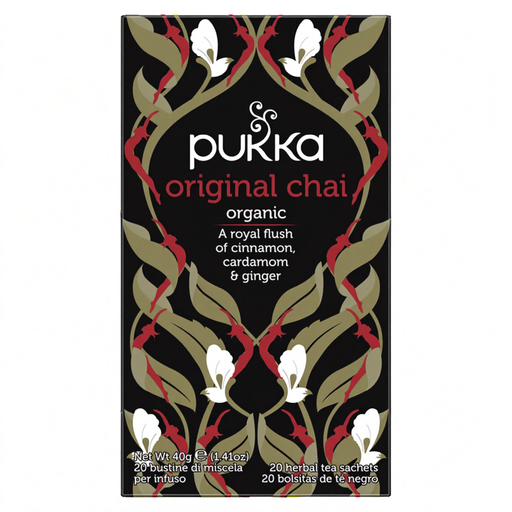 Image unavailable
Worth considering if you want to serve spiced chai in individual portions. If you’re mainly looking for a strong black tea flavour, check where it appears in the ingredients and follow the brewing instructions on the packaging.
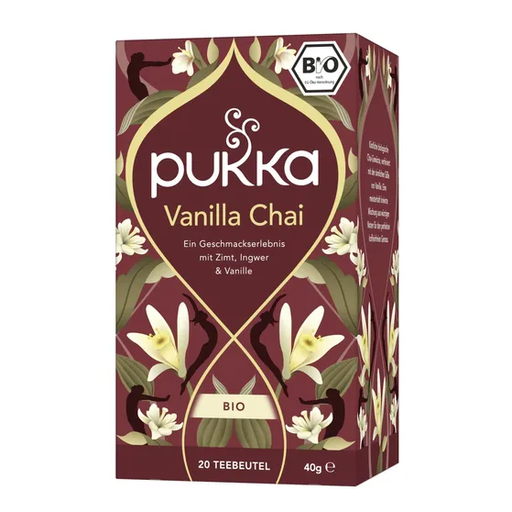 Image unavailable
A tea-bag option to consider if you’re mainly looking for a spicy flavour. If you want a robust black tea flavour, check the ingredients before buying rather than relying on the name “chai”.
No. On its own, it doesn’t tell you how much black tea or how many spices the blend contains. Check the ingredients, then the recommended amount and brewing instructions. Even a proportion listed on the label doesn’t measure how intense the prepared cup will taste.
Choose a blend that comes with a recipe for making it with milk. For its Jolivia product, Carrefour recommends bringing 20 cl of water and 20 cl of milk to a simmer with two teaspoons of blend. Then follow the product’s preparation and straining instructions.
Read the ingredients list on the packaging of the product you’re serving. The DGCCRF points out that allergens must be highlighted on pre-packed foods. Don’t assume you know what’s in a chai from its brand name or the main spices alone.
Yes. As Anses points out, tea naturally contains caffeine. If this matters to a guest, check whether the blend contains black tea and choose a drink with their sensitivity in mind.