For a chai you can enjoy regularly, start with the base of the blend: black tea with clearly listed spices if you’re looking for the classic recipe, or green tea chai if you prefer that base and can follow its brewing instructions. The ingredients list matters more than the word ‘chai’ alone: some blends are made mostly of spices, and a clearance-sale label tells you nothing about what’s inside.
Who are these blends for?
Fans of classic black tea chai
You’re looking for a black tea base paired with named spices. The Ethiquable and Clipper blends listed by Carrefour show why it’s worth checking the proportions: two black tea chai blends can have different amounts of tea and spices.
Fans of bold spices
You pay particular attention to cinnamon, ginger or cardamom. The ingredients list helps you tell recipes apart, but the product name alone won’t tell you how intense they’ll taste.
Those who care about the base and format
You’re choosing between tea bags and loose tea, or want to take the tea’s naturally occurring caffeine into account. Check the recipe’s base and follow the brewing instructions for the blend you choose.
What should you look for first?
When several chai blends are featured in a clearance sale, start by checking the tea base and ingredients, then look at the format and brewing instructions. A spice blend called chai may suit a different preference from black or green tea chai.
| Criteria |
What to check |
Who it’s for |
| Black tea base |
Whether black tea is included, its proportion if stated, and the spices listed. |
If I’m looking for black tea chai where I can identify the spices, I want to know what’s in the blend. Around 33% of consumers would prioritise this classic profile. |
| Proportion of spices |
The list of spices and any stated proportions, particularly for cinnamon. |
If the spices guide my choice, the word ‘chai’ isn’t enough to help me choose between two recipes. This intensity would be the top criterion for around 27% of consumers. |
| Format |
Number of tea bags or quantity of loose tea, availability and recommended amounts. |
I’d rather know how to prepare the blend day to day before choosing between tea bags and loose tea; around 20% of consumers would put this convenience first. |
| Caffeine and brewing |
Whether it contains black or green tea, and the product-specific temperature and brewing time. |
If I’m keeping an eye on caffeine or when I drink it, the blend’s base matters more than its name. This would be the priority for around 20% of consumers. |
Common pitfalls to avoid
-
Assuming every chai follows the same recipe
Carrefour’s product listings show that Ethiquable chai contains 83.5% black tea and 16.5% spices, while Clipper chai contains 60% black tea and 20% cinnamon. These figures describe two specific recipes, not a standard chai blend.
Read the ingredients for the product you’re interested in, then choose according to how much tea and spice you want in the blend.
-
Comparing formats without checking what’s inside
A box of tea bags and a pack of loose tea don’t offer the same preparation guidance. Carrefour’s green chai listing recommends 12 to 15 g/L for that particular recipe.
Check the number of tea bags or the quantity of loose tea, then read the brewing instructions. Also check availability before you choose.
-
Assuming ‘chai’ means caffeine-free
Black and green tea naturally contain caffeine, as the Anses points out. So the name of a blend alone won’t tell you whether it contains caffeine.
Check the ingredients to find out what it’s made with. If avoiding caffeine is essential for you, make sure this is clearly stated on the product you choose.
Brands and retailers to know
Kusmi Tea
The brand’s range includes Kashmir Tchaï bio, described as a spiced black tea in a box of 20 tea bags.
- The tea base and format of this product are clearly stated.
- If you want to compare the amount of each spice, check the ingredients list on the box in question.
Carrefour
The retailer’s listings feature several chai recipes, including Ethiquable and Clipper blends with different ingredients.
- The ingredients and some stated proportions make it possible to compare these two specific recipes.
- Check whether the product is available at your chosen store and through your preferred way of shopping.
Chai blends available on Joybuy
These two Pukka tea bag options suit different preferences: Original Chai is for those looking for a spiced blend, while it’s worth checking the ingredients in Vanilla Chai if you’re deciding between a spice infusion and a tea-based chai.
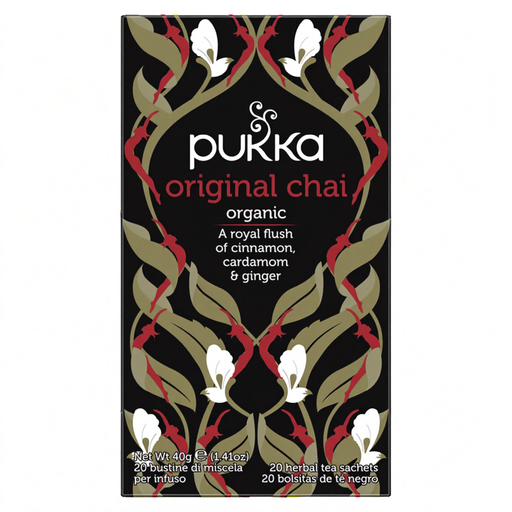 Image unavailable
Pukka Original Chai, 20 tea bags
Worth considering if you’re looking for a spiced chai in tea bag form. The box contains 20 tea bags. If you prefer a blend where tea is the main ingredient, compare its ingredients with those of other chai blends.
View on Joybuy
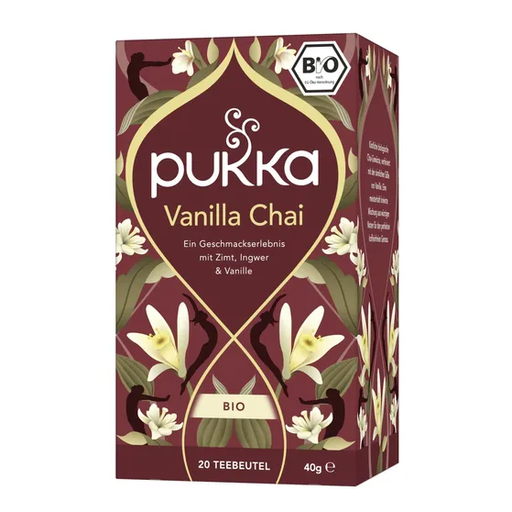 Image unavailable
PUKKA Vanilla Chai, 20 tea bags
Worth comparing if you’re looking for a spice infusion rather than black or green tea chai. The box contains 20 tea bags. Check the ingredients on the packaging if the presence of tea or caffeine matters to your choice.
View on Joybuy
Frequently asked questions
Does black or green tea chai contain caffeine?
Yes. Black and green tea naturally contain caffeine, as the Anses points out. If this matters to you, check the blend’s ingredients to see what it’s made with rather than relying on the word ‘chai’ alone.
How do you prepare loose-leaf green chai?
Follow the instructions for the blend you choose, rather than those for black tea chai. Carrefour’s listing for JOLIVIA green chai recommends 12 to 15 g/L and a brewing time of 2 to 3 minutes in water at 70–80 °C. These settings don’t apply to every recipe.


