For an evening chai, if avoiding caffeine is your priority, choose a spiced infusion whose ingredients do not include tea leaves. Decaffeinated tea may still contain caffeine. If you’re keeping track of the carbohydrates in your drink, check the ingredients too. For a chai latte or ready-to-drink option, look at the carbohydrates, including sugars, in the portion you’ll have, and factor in anything you add to your cup.
Who is this choice for?
People who want to avoid caffeine in the evening
If you’re looking for a spiced chai without tea leaves, check the ingredients rather than relying on the word ‘infusion’. Decaffeinated tea meets a different need: it reduces the caffeine while keeping a tea base.
People keeping track of the carbohydrates in their drink
If you’re making a chai latte or choosing a ready-to-drink option, check the ingredients, the nutritional information if it’s shown on the packaging, and the portion you’ll actually consume. Any milk, sugar or syrup added to your drink counts too.
Black tea chai fans who need to take certain precautions
If the black tea notes matter to you, consider the caffeine content and what time you drink your chai. Anses notes that caffeine can disrupt sleep. Check the other ingredients in the blend too, especially liquorice if you drink it regularly.
What to check before buying
Start by choosing between an infusion with no tea leaves and decaffeinated tea, depending on what you want from your evening drink. Then check the ingredients in the drink as you’ll prepare it, along with the spices and herbs in the blend.
| What to consider |
What to check |
Who it’s for |
| Caffeine in the evening |
Look for black tea, green tea and any other ingredients containing caffeine in the ingredients list. For decaffeinated tea, check the stated residual caffeine content if this information is provided. |
In the evening, I want chai’s spiced flavour without tea leaves, and I can’t rely on the word ‘infusion’ alone; around 42% of consumers would put caffeine-free options first. |
| Carbohydrates and sugars |
For a chai latte or ready-to-drink option, compare the portion you’ll consume with the carbohydrates, including sugars, if these are listed. Remember to include anything you add to your cup. |
If I make a chai latte, I want to count everything I drink, including any additions; around 33% of consumers would make tracking carbohydrates and sugars their priority. |
| Flavour and ingredients |
Compare the spices listed and look out for liquorice, especially if you plan to drink the blend regularly. |
I’m looking for a spiced blend I’ll enjoy, without overlooking any herbs I need to be mindful of; around 25% of consumers would prioritise this choice of ingredients and flavour. |
Mistakes to avoid
-
Assuming a ‘chai infusion’ is caffeine-free
The name alone isn’t enough: Carrefour’s product listing for Yogi Tea Organic Spiced Chai Infusion states that it contains 33% black tea.
Read the full ingredients list. If you want to avoid tea leaves, also look out for tea extracts, yerba mate or guarana.
-
Assuming ‘decaffeinated’ means ‘sugar-free’
The caffeine content tells you nothing about the ingredients in chai latte powder or a ready-to-drink beverage, or what you add when preparing it.
Check the ingredients and, where available, the nutritional information for the portion you’ll consume.
-
Choosing a chai because of claims about blood sugar
Brand claims about the effects of spices are no reason to replace your usual monitoring with this drink.
Base your choice on the ingredients and your drink preferences. Don’t change your treatment based on marketing claims.
-
Overlooking liquorice in a blend you drink regularly
According to Anses, high and repeated consumption of liquorice can lead to low blood potassium and high blood pressure.
Look for liquorice or liquorice root in the ingredients. If you have high blood pressure or take medication that may be affected, seek advice suited to your circumstances before drinking it regularly.
Brands to consider for this choice
Yogi Tea
The brand sells a product called ‘Organic Spiced Chai Infusion’, whose ingredients show why it’s important to read the label.
- Carrefour’s product listing details ingredients including cinnamon, ginger and cardamom.
- The same listing states that it contains 33% black tea, so it isn’t suitable if you’re looking for chai without tea leaves.
Lipton
Lipton Decaffeinated Evening Tea is a tea base to consider if you’re happy to add spices separately for a chai-style flavour.
- Carrefour’s product listing states that this product contains less than 0.1% caffeine.
- It isn’t a ready-made chai, and ‘decaffeinated’ doesn’t necessarily mean completely caffeine-free.
Pure Tea
The brand offers a chai infusion focused on spices rather than tea leaves.
- Pure Tea’s published ingredients list includes cinnamon, aniseed, ginger, cardamom and fennel, with no black tea.
- This blend doesn’t have the black tea notes you might expect from a traditional chai.
Chai infusion available on Joybuy
If you want to make a spiced chai drink in the evening without tea leaves, this tea-bag infusion lets you check the blend’s ingredients and consider what you might add to your cup.
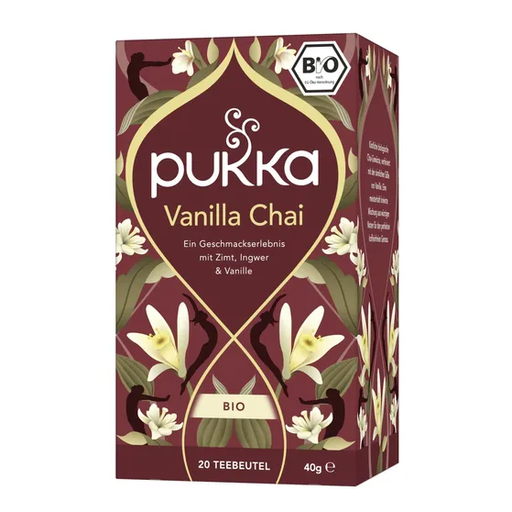 Image unavailable
PUKKA Vanilla Chai, 20 tea bags
If you want a spiced chai without tea leaves, check the ingredients on the box before choosing this infusion. The blend contains liquorice root, so bear that in mind if you plan to drink it regularly. If you’re keeping track of the carbohydrates and sugars in your drink, remember to include anything you add to your cup.
View on Joybuy
Frequently asked questions
Is a ‘chai infusion’ always caffeine-free?
No. Carrefour’s product listing for Yogi Tea Organic Spiced Chai Infusion states that it contains 33% black tea. If you want an evening chai without tea leaves, check the ingredients rather than relying on the product name alone.
Is decaffeinated tea guaranteed to contain no caffeine?
No. Carrefour’s product listing for Lipton Decaffeinated Evening Tea states that it contains less than 0.1% caffeine. This indicates a low level, not that it’s completely caffeine-free. If you want to avoid tea leaves, check the ingredients of a spiced infusion instead.
What should I check on a chai latte label?
Check the ingredients, any listed allergens and, where shown on the packaging, the nutritional information, particularly carbohydrates, including sugars. Compare these figures for the portion you’ll drink and remember to include any milk or sugar added during preparation.
Should I avoid all chai blends containing liquorice?
Not necessarily: how often and how much you consume matters. Anses warns against high and repeated consumption of liquorice, particularly because of the risks of high blood pressure and low blood potassium. If you have high blood pressure or take medication that may interact with liquorice, seek advice suited to your circumstances before consuming it regularly.


