If you want to avoid caffeine during your afternoon break, look for chai that is explicitly labelled caffeine-free, then check the ingredients. Rooibos chai labelled as such is one option, unlike regular black tea chai. If you’d rather enjoy the flavour of black tea chai, accept that it contains caffeine; according to Anses, its effects on sleep vary from person to person.
Who is this choice for?
Anyone avoiding caffeine later in the day
You’d like a spiced drink for your break, but don’t want to choose black tea chai. The blend’s base and any “caffeine-free” or “theine-free” label matter more than how closely it resembles the traditional recipe.
Black tea chai lovers
You’re looking first and foremost for a recipe that combines black tea and spices, knowing that black tea contains caffeine. Check the ingredients rather than assuming all chai has the same base.
Anyone after a quick break
You’re making a single cup between activities: tea bags mean less fuss, while loose-leaf tea lets you measure out the blend yourself. Either way, the format won’t tell you whether it contains caffeine.
What should you look for before buying?
For an afternoon break, first choose your chai base according to whether you want to avoid caffeine. Then compare the spices and preparation format.
| What to consider |
What to check |
Who is it for? |
| Caffeine |
Look for a “caffeine-free” or “theine-free” label, then check the base and whether black tea appears in the ingredients. |
If your break runs into the evening, you may want a spiced drink without black tea: around 46% of consumers would put avoiding caffeine first. |
| Chai recipe |
Check whether the base is black tea or rooibos, then compare the spices listed on the label. |
If you’re mainly after the flavour of black tea chai, you may be happy to have the caffeine rather than switch to a different base; around 36% of consumers would put traditional flavour first. |
| Preparation |
Compare tea bags with loose-leaf tea, as well as the recommended quantities and brewing instructions for your chosen product. |
If you’re making a cup during a short break, you may prefer not to measure out loose-leaf tea; around 18% of consumers would put ease of preparation first. |
Common misconceptions to avoid
-
Assuming “chai” means caffeine-free
The word can also refer to spice blends made with black tea. Carrefour, for example, says that its Carrefour Bio chai is made mainly with black tea.
If you want to avoid caffeine, don’t rely on the product name alone. Check the base listed in the ingredients and look for a clear label that suits your needs.
-
Choosing based only on the spices listed
Two chai blends flavoured with cinnamon or cardamom can have different bases, such as black tea or rooibos. The spices alone therefore won’t tell you whether the drink contains caffeine.
Check the plant-based ingredients first, then choose between recipes according to the spices you prefer.
-
Confusing a product listing with availability when you buy
A product featured on a product page or in a catalogue may not be available when you place your order.
Check availability and collection or delivery options with the seller before settling on a particular product.
Brands to know
These products illustrate different ingredients and formats. A brand’s inclusion here doesn’t guarantee that its products are available from a particular seller.
Yogi Tea
Yogi Tea’s Chai Rooibos combines rooibos and spices in tea-bag form.
- The product listing published by iHerb France describes this product as caffeine-free and says it contains 16 tea bags.
- If you’re comparing several Yogi Tea chai blends, check the ingredients of each product: these details apply to Chai Rooibos.
Destination
Destination offers a 100 g pack of organic loose-leaf rooibos chai, with spices including cinnamon, cardamom and ginger.
- The product listing published by Greenweez describes this product as theine-free; the loose-leaf format lets you measure out the blend yourself.
- With loose-leaf tea, you’ll need to measure out the amount you want and use a suitable infuser.
Thé Bon Thé Bio
Thé Bon Thé Bio’s Rooïbos Chaï is a loose-leaf blend of rooibos and spices, including cinnamon, ginger and cardamom.
- The brand describes this blend as theine-free and recommends 2 g for a 20 to 25 cl cup.
- These recommended quantities and ingredients apply to Rooïbos Chaï, not to the brand’s entire range.
Carrefour Bio
Carrefour Bio’s Thé Noir Chaï Épicé Bio illustrates the difference between spiced chai and a caffeine-free infusion.
- Carrefour’s product listing details the ingredients, including 83.5% black tea.
- As this product is made with black tea, it isn’t suitable if you’re looking to avoid caffeine.
An option on Joybuy
If you prefer tea bags for your break, this chai lets you make a cup without measuring out a loose-leaf blend. If being caffeine-free or having a rooibos base is essential, check these details on the label of the product you choose.
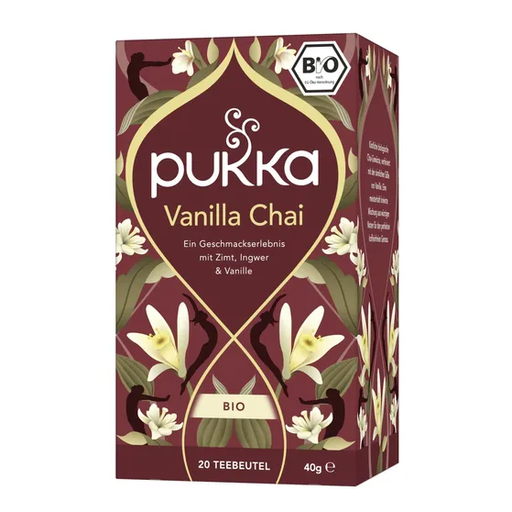 Image unavailable
PUKKA Vanilla Chai, 20 tea bags
The tea-bag format is handy if you want to make a cup during a short break.
This product contains 20 tea bags. If you’re specifically looking for caffeine-free chai or a rooibos-based blend, check the label and ingredients before buying.
View on Joybuy
Frequently asked questions
Is spiced chai always caffeine-free?
No. Chai can be made with black tea, which contains caffeine. To choose a caffeine-free blend, look for a clear label and check the ingredients rather than relying on the word “chai” alone.
Will rooibos chai help me avoid caffeine?
Rooibos chai labelled as theine-free or caffeine-free may suit your needs, provided you check the ingredients of the specific product. If your question relates to your personal medical circumstances, choosing a drink is no substitute for advice tailored to your situation.
What should I look for on a chai label?
First, read the ingredients to distinguish between black tea, rooibos and spices. For prepacked foods, the DGCCRF also reminds consumers that allergenic ingredients must be clearly highlighted.
Will a product I’ve seen online be available when I’m ready for my break?
Not necessarily. Check availability and purchasing options with the seller when you place your order. A product listing or catalogue doesn’t guarantee that you’ll be able to get the product you want.


