
Livraison le jour même ou le lendemain

Qualité garantie

Débloquez vos offres de bienvenue: Livraison GRATUITE | Jusqu'à -80 % | 30 jours d'essai gratuits à JoyPlus
Téléchargez l'application
Waking up with a stiff neck or persistent cervical pain? That's often a sign it's time to take a closer look at your bedding—especially your pillow. The cervical memory foam pillow is often touted as the miracle solution. The problem? The market is saturated with marketing promises that don't always deliver. As the Head of Product Recommendations at Joybuy, my mission is to help you cut through the noise and invest in a model that will genuinely improve your quality of life.
Before you pull out your credit card, let's review the common pitfalls that can turn a promising purchase into a costly disappointment.
Identifying these pitfalls is a great start. Now, you need to know which technical criteria to check to make a durable purchase that's truly suited to your needs.
To find the pillow that will genuinely relieve your neck pain, forget the marketing slogans and focus on objective features. Here are the three key checkpoints you should never overlook.
The purpose of a good ergonomic pillow is to maintain the natural alignment of your spine. The right choice depends mainly on your dominant sleeping position.
Density, expressed in kilograms per cubic metre (kg/m?), is the most reliable indicator of a memory foam's quality and lifespan.
A good orthopaedic pillow will always feature a foam with sufficient density to guarantee consistent support, night after night.
A good cervical pillow must also provide a healthy sleep environment.
Rather than a generic list, here is a selection of products tailored to specific needs, taking into account the quality criteria we've just discussed.
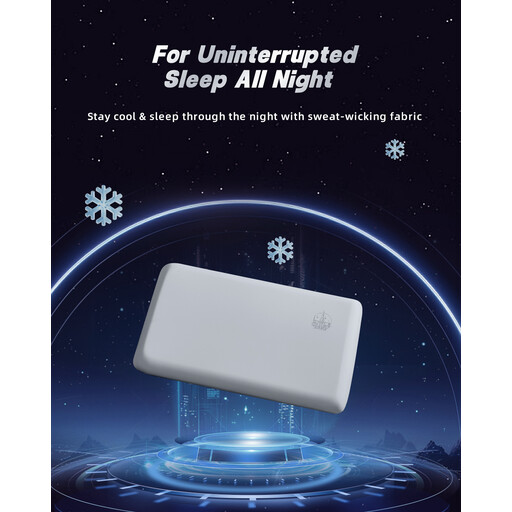
Why it's suited for this profile: Its 10 cm height is perfectly calibrated for side sleepers, ensuring optimal head-neck-spine alignment. Its Queen Size format also provides a generous sleeping surface.
This model avoids the "one-size-fits-all" trap by offering a precise height designed for a specific sleeping position, not a flimsy universal solution.
Optimised 10 cm height for side sleeping and a comfortable Queen Size format.
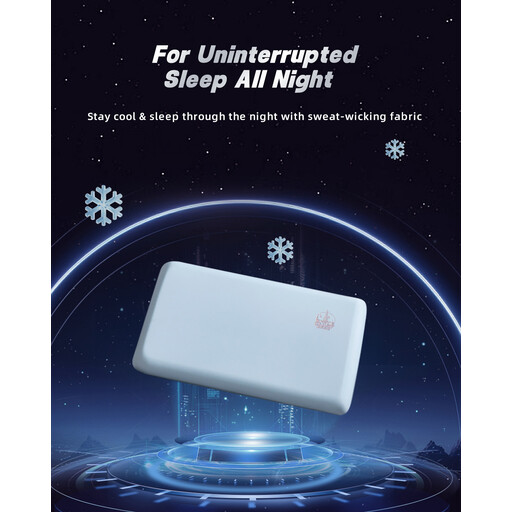
Why it's suited for this profile: With its more contained 8 cm height, this pillow is ideal for back sleeping. It supports the cervical curve without tilting the head forward, making it a perfect fit for smaller body frames as well.
It offers a specific height, acknowledging that needs differ based on sleeping position, thereby countering the "one-size-fits-all" approach.
Low 8 cm profile for natural alignment when sleeping on your back.
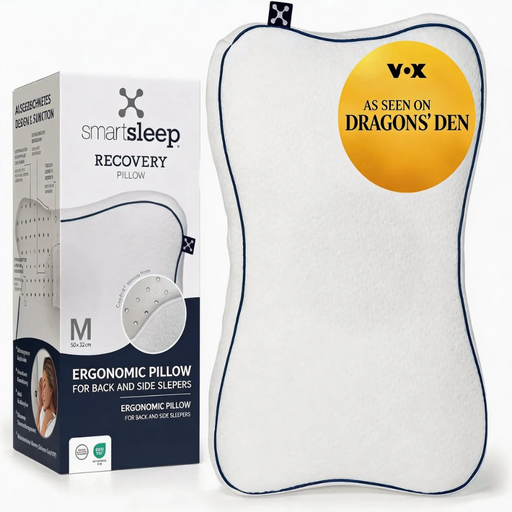
Why it's suited for this profile: This model is designed for those who prioritise thermoregulation and material quality. Its ergonomic design is suitable for both back and side sleepers, and its certified materials provide peace of mind for sensitive skin.
It directly tackles the heat trap with ventilation channels carved into the foam. In addition, its Oeko-Tex certification guarantees it is free from any undesirable substances.
Optimised breathability for cooler nights and certified hypoallergenic materials.
We have curated a full range of products that meet these quality criteria and current regulations.
On average, you can expect them to last between 2 and 3 years. It all depends on the foam's density and how you care for it. The tell-tale signs that it's time for a replacement are: the pillow sags and no longer returns to its shape, the support diminishes, or lumps appear.
Crucially, never put the foam block in a washing machine or submerge it in water, as this will destroy its structure. Generally, only the cover is washable. For the foam core, simply spot-clean it by dabbing it with a damp cloth and a little mild detergent. In any case, always refer to the manufacturer's care label.
Yes, you should expect an adjustment period of a few days to two weeks. This is the time it takes for your body, especially your neck, to get used to the new posture. A good tip is to use it gradually: for a few hours per night at first, then for the whole night once it feels comfortable.