Travellers comparing calories per serving
If you’re packing a bar for a break on the train, check the energy in the bar you’ll actually eat. The figure per 100 g alone won’t tell you how much energy the bar in your bag provides.


For a light snack on the train, compare the kcal in the bar you’ll eat with the weight of its serving, and don’t assume that a small bar is a meal in itself. If your journey overlaps with a mealtime, plan what else to have alongside your snack to suit your needs. Check the allergens first, then compare protein, fibre and sugars according to your priorities.
If you’re packing a bar for a break on the train, check the energy in the bar you’ll actually eat. The figure per 100 g alone won’t tell you how much energy the bar in your bag provides.
An easy-to-pack bar can make a handy snack for your journey. If it needs to see you through a mealtime, check its serving size and ingredients, then decide whether to pack something else as well.
Check the ingredients and information on the exact pack before comparing calories. Some of the products featured contain cereals, soya, milk, peanuts or nuts, for example.
When choosing a bar to eat on the train, start with anything that could rule a product out, such as allergens. Then compare the serving you actually plan to have for a snack or meal.
| Criterion | What to check | Who is it for? |
|---|---|---|
| Calories per bar | Check the kcal and weight of the bar you’ll eat. If the pack only gives kcal per 100 g, work out the figure for that bar. | For a light snack, I want to know the energy in my bar, not just in 100 g of the product. Around 40% of consumers prioritise this figure per serving. |
| What the snack contains | Compare the protein and fibre per serving. If your journey overlaps with a mealtime, also think about what else you’ll pack to have with the bar. | When my next meal is a long way off, the bar’s small size isn’t enough to help me decide: I look at what my snack includes. Around 30% of consumers prioritise this. |
| Allergens | Read the ingredients list and any ‘may contain’ statements on the exact pack. The DGCCRF notes that allergens must be highlighted on the labels of prepacked foods. | If I need to avoid an ingredient, I need to rule out any unsuitable bars before comparing their nutritional values. Around 20% of consumers put this first. |
| Pack size for travelling | Check the weight of each bar and the number of bars in the pack so you can take the amount you want. | With limited room on my journey, I’m mainly looking for a portion that’s easy to carry. Pack size is the top criterion for around 10% of consumers. |
A low energy value per bar may suit a snack, but it may not provide everything you need from a meal during your journey.
Decide whether you’re packing a snack or a meal. If it’s a meal, take something suitable to go with the bar rather than relying on the bar alone.
Two recipes with different serving sizes can’t be compared directly using this figure alone. Carrefour lists 412 kcal per 100 g for its Classic’ dark chocolate bar; for a 21 g bar, that works out at around 87 kcal.
First compare the kcal in the bar you’ll eat, then use the per-100 g figure to compare recipes on an equal-weight basis.
Kellogg’s Special K Protein coconut and cashew bar contains 116 kcal per 28 g, compared with 85 kcal per 21.5 g for the Special K dark chocolate bar. So in this example, prioritising protein doesn’t mean choosing the lower-calorie bar.
Check the protein and kcal per bar separately before choosing a recipe for your journey.
A cereal-based recipe may also contain soya, milk, peanuts or nuts, depending on the product.
Check the ingredients and any ‘may contain’ statements on the pack you’ll be taking with you.
Two bars from the range let you compare a small dark chocolate serving with a Protein coconut and cashew option. These figures don’t apply to every Special K product.
These two ranges illustrate different formats and recipes. The figures below apply only to the products named.
The Protein cocoa and hazelnut bar is another recipe to consider if the ingredients matter to you, but don’t assume how many calories it contains per bar.
This selection features a cereal bar format to consider for a snack to take on the train. If you’re choosing something for a meal, that also depends on what else you plan to eat.
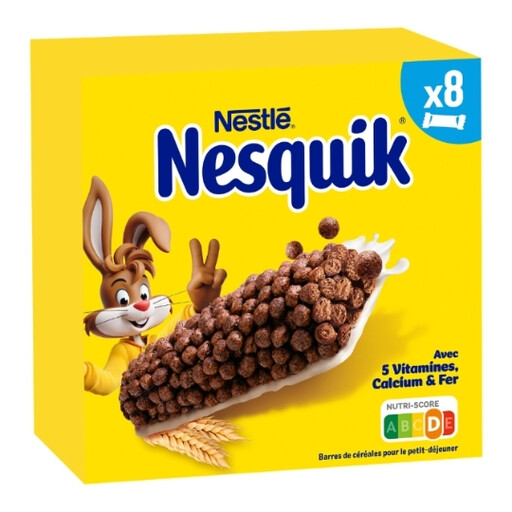 Image unavailable
At 25 g per bar, this format makes it easy to pack one for a break on the train. The information for this product gives a figure of around 97 kcal per bar. Check this on the exact pack before comparing it with other serving sizes.
If allergens are a concern, check the pack for information about gluten, milk and possible traces of nuts. Don’t automatically assume that one bar is a meal.
Not on its own simply because it’s low in energy. If your journey overlaps with a mealtime, plan a snack with something else to suit your needs. For example, Kellogg’s suggests having a piece of fruit with its Special K dark chocolate bar.
Start with the kcal per bar if you plan to eat one during your journey. The per-100 g figure can then help you compare equal quantities: according to Carrefour’s figures, 412 kcal per 100 g and a 21 g bar work out at around 87 kcal per bar.
No, this claim doesn’t tell you how much energy is in a serving. To see if a bar suits your goal of having a light snack, read its nutritional information and check the kcal in the bar you’ll eat.
Read the label on the exact pack, including the ingredients and any ‘may contain’ statements. For prepacked foods in France, the DGCCRF specifies that allergens must be highlighted in the ingredients list.