If you need breakfast on the go, a compact cereal bar offers convenience. If protein is your priority after exercise, compare the grams listed per bar rather than relying on the product range name. Either way, don’t assume a bar is enough for breakfast on its own: check the portion size, ingredients, sugars, fibre and allergens.
Who are these bars for?
People who need a quick snack after exercise
You’re looking for a portable snack with a clearly stated protein content per bar. Andros Sport lists 20 g of protein in its 55 g Chocolate Peanut bar. Its positioning as a sports recovery snack is a brand claim, not a guarantee of an effect.
People who sometimes have breakfast on the go
You want a cereal bar that’s easy to take with you, without choosing one based solely on the word “Protein”. Kellogg’s France lists 5.9 g of protein per 28 g serving for Special K Protein Coconut and Cashew, and 9 g per bar for High Protein Salted Caramel.
People who pay attention to ingredients
You want to check the serving size, sugars, fibre, ingredients and allergens before buying. The DGCCRF notes that prepacked foods must carry nutrition information, and any allergens present must be emphasised in the ingredients list.
What should you look for?
Start by thinking about how the bar will fit into your morning, then compare the serving sizes and labels of the recipes you’re interested in.
| What matters to you | What to check | Who is it for? |
|---|
| Protein after exercise |
Compare the protein listed per bar and the weight of each serving. Andros Sport lists 20 g in its 55 g Chocolate Peanut bar. |
After a workout, I first look for a snack with a quantified protein content. Around 42% of consumers are said to prioritise this need. |
| A morning-friendly format |
Check the bar size and protein per serving: Kellogg’s France lists 5.9 g per 28 g serving of Special K Protein Coconut and Cashew, compared with 9 g per High Protein Salted Caramel bar. |
When I’m heading out early, I mainly want a cereal bar that’s easy to take with me. This convenience is said to be the main priority for around 33% of consumers. |
| Ingredients and allergens |
Read the nutrition information per 100 g and per serving, as well as the ingredients list and allergens for the exact recipe. |
If I need to watch certain ingredients or compare sugars, the product range name isn’t enough. Around 25% of consumers are said to put ingredients ahead of other criteria. |
Mistakes to avoid
-
Comparing bars based only on the word “Protein”
The name doesn’t tell you how much protein a serving contains. Andros Sport lists 20 g in a 55 g bar, while Kellogg’s France lists 5.9 g in a 28 g serving of Special K Protein. The serving sizes also differ.
Compare the grams of protein and the weight of the bar you actually plan to eat.
-
Assuming “high in protein” means a complete nutritional profile
Under Regulation (EC) No 1924/2006, published on EUR-Lex, this claim relates to the proportion of energy provided by protein. On its own, it tells you nothing about sugars, fat, fibre or salt.
Read the nutrition information per 100 g and per serving before comparing two recipes.
-
Guessing allergens from the flavour alone
Ingredients vary from one recipe to another. The DGCCRF notes that any allergens in a prepacked food must be emphasised in its ingredients list.
Check the list on the packaging of the variety you’re buying, even if you already know another bar from the same brand.
Brands to compare
Andros Sport
The brand describes its 55 g Chocolate Peanut bar as a sports snack and lists 20 g of protein per bar.
- The protein content listed per bar makes it possible to compare with the other formats mentioned here.
- Its positioning as a recovery snack doesn’t mean you can skip checking the recipe, allergens and how the bar fits into your breakfast.
Kellogg's
Kellogg’s France lists two different bars: High Protein Salted Caramel and Special K Protein Coconut and Cashew.
- The brand’s product information lists 9 g and 5.9 g of protein per bar, respectively.
- These figures relate to different recipes, so check the ingredients and allergens for the one you choose.
Carrefour Sensation
Carrefour France lists, among others, Protein Seeds and Chocolate cereal bars, sold in a box of 4 × 32 g bars.
- The box format and bar size are specified.
- To compare the protein content with another recipe, check the nutrition information for this product on its packaging.
Nature Valley
Carrefour France’s product information for the Protein Fibre Chocolate-Orange bar lists 7 g of protein per bar.
- The amount listed per bar gives you a useful reference for this particular recipe.
- Don’t assume this figure applies to other Nature Valley varieties; check their own labels.
Bars available on Joybuy
This selection includes sports-focused protein bars and bars to take with you for a quick snack. If you’re specifically looking for a cereal bar, check the ingredients of each product rather than relying on its protein content alone.
 Image unavailable
Andros Sport High-Protein Bar Chocolate Peanut, 55 g
Worth considering if you’re looking for a snack with a stated protein content per bar after exercise. Andros Sport lists 20 g of protein in this 55 g bar; check the ingredients and allergens on the packaging.
View on Joybuy
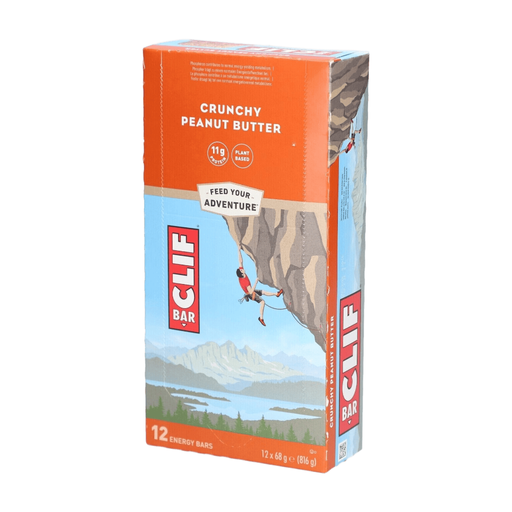 Image unavailable
CLIF Bar Peanut Butter, 12 × 68 g
This multipack may suit you if you’re looking for individual bars to take with you in the morning. It contains 12 bars of 68 g each. Check the protein, sugars and allergens in this recipe before comparing it with others.
View on Joybuy
 Image unavailable
Optimum Nutrition Marshmallow Crunch Protein Bar, 10 bars, 650 g
A box of protein bars to consider if you want to keep some portions handy to take with you. The pack contains 10 bars weighing 650 g in total; compare the values per bar and the ingredients list on the label.
View on Joybuy
 Image unavailable
nu3 Fit Protein Bar Salted Caramel, 55 g
Its 55 g format may appeal if you’re looking for a snack to take with you. Before choosing it for its protein content, check the amount per bar, along with the sugars, ingredients and allergens in this variety.
View on Joybuy
Frequently asked questions
What does “high in protein” mean on a bar?
In the European Union, under Regulation (EC) No 1924/2006, published on EUR-Lex, this claim means that at least 20% of the product’s energy value comes from protein. It doesn’t correspond to a set number of grams per bar, so check the stated serving size too.
What should I compare on the label before buying?
Compare protein and sugars per serving, then look at the nutrition information per 100 g to put different formats into perspective. Check the ingredients and allergens too. The DGCCRF notes that energy, fat, sugars, protein and salt are among the nutrition details that must be declared for relevant prepacked foods.
How can I identify allergens in a prepacked bar?
Look for allergens highlighted in the ingredients list for the recipe you’ve chosen. The DGCCRF specifies that they must stand out from the rest of the list. Don’t assume that two flavours from the same range have the same ingredients.
Is a protein bar automatically suitable after exercise?
No. The amount of protein shown on the pack isn’t enough to establish that a bar is suitable for everyone or every situation. Andros Sport presents its Chocolate Peanut bar as a recovery snack. When choosing a snack, compare the serving size, stated protein content and ingredients instead, and don’t treat the brand’s positioning as proof that it works.


