A snack after lunch
If the bar is an addition to a meal rather than a replacement for it, check the energy per bar and the portion size, then look at the sugars listed on the packaging.


When taking a cereal bar to work, first compare the kcal in the portion you’ll eat, then check the sugars, fibre, protein and allergens in the recipe. A small bar may work as a snack or an accompaniment to lunch, but that doesn’t necessarily mean it meets the ‘low energy’ claim: in France, EU Regulation (EC) No 1924/2006 reserves this wording for solid foods containing no more than 40 kcal per 100 g.
If the bar is an addition to a meal rather than a replacement for it, check the energy per bar and the portion size, then look at the sugars listed on the packaging.
To choose between two recipes, compare the nutrition information per bar and per 100 g. Sugars, fibre, protein and ingredients give you more to compare than kcal alone.
If you prefer a bar with more protein, compare its energy per portion too, and check the allergens in the exact recipe.
For a snack at work, start with the portion you’ll actually eat. The values per 100 g are then useful for comparing recipes where the bars differ in weight.
| What to check | Look for | Who this matters to |
|---|---|---|
| Energy per portion | Kcal and weight per bar; how many bars you plan to eat. | If I have a bar with lunch, I want to know the energy in my snack rather than in a whole pack. Around 36% of consumers put this amount of energy per portion first. |
| Sugars and fibre | Sugars per bar and per 100 g; fibre listed in the nutrition table. | When comparing two similar-sized recipes, I prefer to look at their sugars and fibre before choosing. Around 29% of consumers would make this their top priority. |
| Protein | Protein and kcal per portion; ingredients and allergens in the recipe. | If my lunch is delayed, I might look for a bar with more protein, while accepting that it may contain more calories per portion. Around 21% of consumers would put protein content first. |
| Size and allergens | Bar weight, pack size and allergens listed on the label. | To keep bars at work, I need a convenient pack size and a recipe that suits my dietary requirements. Around 14% of consumers would make this their priority. |
A bar may contain relatively few kcal per serving simply because it’s small, without meeting the threshold for the regulated claim. EU Regulation (EC) No 1924/2006 sets the threshold for solid foods at no more than 40 kcal per 100 g.
Use the kcal per bar to plan your snack, and the value per 100 g to check what a ‘low energy’ claim means.
Kellogg's lists serving sizes of 21.5 g for Special K dark chocolate and 28 g for Special K Protein coconut and cashew; Auchan lists 23.5 g for Nestlé Fitness Original. So the kcal per bar don’t refer to portions of the same size.
Compare the weight and kcal per bar together, then check the kcal per 100 g.
According to Kellogg's product information for these two recipes, Special K Protein coconut and cashew contains 5.9 g of protein and 116 kcal per bar, compared with 85 kcal per bar for Special K dark chocolate. More protein doesn’t, by itself, demonstrate any particular effect on satiety.
If protein matters to you, consider it alongside the energy per portion, sugars and allergens.
A range may include different sizes and ingredients. The French Directorate-General for Competition Policy, Consumer Affairs and Fraud Control reminds consumers that allergenic ingredients must be highlighted in the ingredients list.
Before keeping a pack at work, check the allergens, number of portions and storage instructions on the packaging.
Kellogg's product information makes it possible to compare Special K recipes with declared portion sizes and nutrition values.
Carrefour’s range includes Classic', Bio, Sensation and Protein bars, with several pack sizes available.
The Marque Repère range includes Grainea bars and other recipes sold in different pack sizes.
Auchan’s range includes Crousti and Less Sugar products, as well as bars from other brands.
These two LU Grany bars offer a choice of recipes to take with you for a snack at work. To decide on your portion, check the weight of each bar and its nutrition values per bar on the packaging.
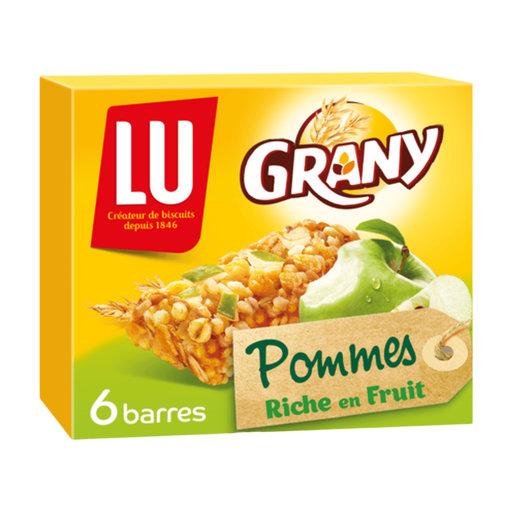 Image unavailable
A recipe to consider if you’d like to take an apple cereal bar to work for a break. The pack weighs 125 g. Check the kcal and sugars in the bar you plan to eat, along with the allergens listed on the packaging.
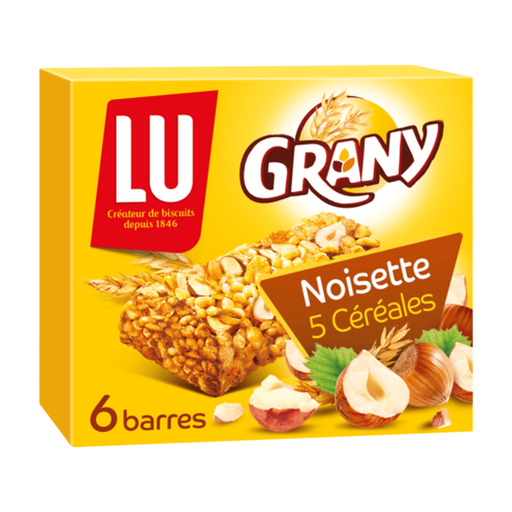 Image unavailable
Another recipe to consider for a snack on the go if you’re looking for a hazelnut cereal bar. The pack weighs 125 g. Check the energy and sugars per bar before comparing portions, and read the allergens list if needed.
Not simply because it’s small. In France, EU Regulation (EC) No 1924/2006 only allows the ‘low energy’ claim, or wording with the same meaning, for a solid food if it contains no more than 40 kcal per 100 g. The Kellogg's and Auchan product information for the three examples mentioned here lists values per 100 g that are above this threshold.
Check both: kcal per bar relates to the portion you eat, while the value per 100 g helps you compare recipes with different weights. Also consider whether you plan to eat one bar or several.
For this comparison, treat it as a snack or an accompaniment to lunch, rather than as a meal in its own right. Manger Bouger’s advice on lunch breaks at work focuses on the make-up of the meal as a whole.
No. If a bar displays a Nutri-Score, it’s an additional guide. To find out the energy, sugars or fibre in the portion you’ve chosen, read the nutrition information and check the bar’s weight.
Read the allergens for the exact recipe, then check the date and storage instructions on the pack. The French Directorate-General for Competition Policy, Consumer Affairs and Fraud Control states that allergenic ingredients in prepacked foods must be highlighted in the ingredients list.