Students looking for a quick snack
Between lectures, you want a bar that’s easy to pop in your bag. The energy in the portion you’ll actually eat matters more when choosing than a ‘light’ claim on the pack.


For a snack to take with you to university, compare the calories and sugars in the bar you’ll actually eat, not just the figures per 100 g. If you’re relying on it to tide you over at lunchtime, don’t automatically count a small bar as lunch. Plan what else you can take with you to make up the meal, depending on your needs and what you can carry.
Between lectures, you want a bar that’s easy to pop in your bag. The energy in the portion you’ll actually eat matters more when choosing than a ‘light’ claim on the pack.
A bar can be one of the things you take with you for lunch. If it’s the only thing you’re eating, think about what else you could add so you don’t mistake a quick fix for lunch.
You might be preparing snacks for the week or need to avoid certain ingredients. The number of bars, their weight and the label for each recipe can help you choose the right pack.
First decide whether the bar is for a snack or will form part of your lunch. Then check the label for the specific product and the portion you’ll eat.
| What to consider | What to check | Who is it for? |
|---|---|---|
| Energy per bar | The calories and sugars in the portion you’ll eat, as well as its weight. | If you want a light snack between lectures, you need to know what’s in the whole bar, not just the figures per 100 g. Around 36% of consumers prioritise energy per bar. |
| How it fits into lunch | What you plan to use the bar for and what else you can take with you. | If I only have a short lunch break, an easy-to-carry bar can tide me over, but I don’t want to automatically count it as a meal. Being able to add to lunch is a priority for around 27% of consumers. |
| Pack size | The number of bars, their individual weight and how many you plan to take with you. | When preparing my snacks for the week, I look for portions that are easy to divide up in my bag. Bar size comes first for around 19% of consumers. |
| Ingredients | The ingredients list, any allergens shown and the sugars in that specific recipe. | If I need to avoid certain ingredients, I check the recipe before choosing a flavour or multipack. This is the top consideration for around 18% of consumers. |
Carrefour’s range includes 18 g bars, as well as products weighing 32 g or 35 g. The weight helps you understand the portion, but it isn’t enough to work out the calories or sugars. France’s Directorate-General for Competition Policy, Consumer Affairs and Fraud Control (DGCCRF) reminds shoppers that pre-packed foods carry an ingredients list and a nutrition declaration, among other details. Check the information for the specific product you’re buying.
A compact bar can work as a snack, but it won’t automatically make up everything you need to eat at lunchtime. Manger Bouger reminds us not to skip meals on busy days.
Before buying, decide whether the bar is for a snack or part of your lunch. If it’s the latter, plan what else you can take with you.
Two bars of different weights aren’t the same portion. Carrefour’s range includes individual bars weighing 18 g, 21 g, 32 g and 35 g.
Check the calories and sugars for the amount you’ll eat, then look at the weight of each bar.
These range names don’t tell you how many calories are in a bar. Recipes and portion sizes can vary.
Compare the nutrition information for the exact product, rather than guessing its calories from the name or a highlighted ingredient.
Bars from the same brand can have different ingredients. Auchan, for example, describes a Special K Protein recipe containing seeds, nuts and coconut.
If you need to avoid an ingredient, check the ingredients list and any allergens shown on the pack you choose.
Auchan’s range includes Special K dark chocolate bars and a Protein recipe with coconut, cocoa and cashew.
Carrefour’s range includes a red berry option in a pack of six 18 g bars.
Carrefour’s range includes almond and raisin, Protein and Energy options.
This Joybuy selection features a cookie bar multipack to consider for a break between lectures. Its format alone doesn’t make it a low-calorie cereal bar or a lunch option.
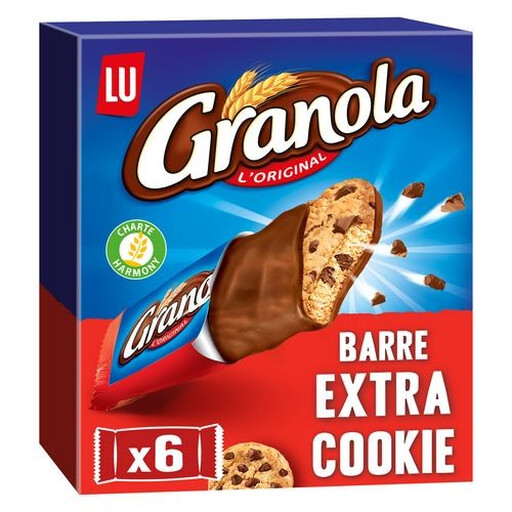 Image unavailable
This pack of six cookie bars can help you stock up on snacks to take with you. The stated total weight is 168 g. To decide whether a bar is right for your break, check its individual weight, calories, sugars, ingredients and allergens on the pack. Don’t automatically count it as lunch.
Compare the calories in the portion you’ll eat, then check the weight of each bar. Figures per 100 g are useful, but don’t tell you everything about the calories in bars of different sizes.
A small bar can tide you over, but you shouldn’t automatically consider it a complete lunch. If you’re relying on it at lunchtime, plan to take other portable foods too, depending on your needs and circumstances.
Check the ingredients list and nutrition declaration on the exact pack you’re buying. The DGCCRF says these details form part of the labelling for pre-packed foods. They let you check the recipe and compare nutrition information.
Yes. Check the packaging for each recipe, even if you already know the brand. Different flavours or ranges can contain different ingredients.