To choose lower-fat cereal bars to take with you on your summer holidays, compare the fat per 100 g in products from the same category, then check the amount per bar. Also look at the sugars, fibre, ingredients and storage instructions: a lower fat content doesn’t tell you everything about a recipe.
Who are these criteria useful for?
People who look at fat content first
If you’re planning snacks for a journey or day out, compare the fat per 100 g before looking at the amount per bar. Product information from Kellogg’s France and Carrefour France shows that levels vary depending on the specific recipe.
People comparing several nutritional values
If sugars, fibre and serving size matter to you too, look at the nutritional values together rather than focusing on a single figure. If it appears on the packaging, Nutri-Score is an additional guide; Santé publique France says its use is voluntary.
People who need to check the ingredients
If you avoid certain ingredients or allergens, check the ingredients list on the pack for your chosen flavour before comparing nutritional values. The DGCCRF says allergens in prepacked foods must be highlighted in this list.
Which criteria should you check first?
For snacks to take with you on your summer holidays, start with the factor that matters most to you, then check the other details on the packaging of the version you’re buying.
| Criteria | What to check | Who it’s for |
|---|
| Fat |
Compare the grams per 100 g in bars from the same category, then check the grams per bar. |
When preparing lower-fat snacks without confusing a smaller serving with a lower-fat recipe, I compare the amounts on the same basis first. Around 36% of consumers put this reduction at the top of their needs. |
| Sugars, fibre and serving size |
Check the sugars and fibre per 100 g, then the serving weight; look at the Nutri-Score if it’s displayed. |
If several bars have similar fat levels, I want to compare their recipes without overlooking sugars or serving size. This is the main concern for around 29% of consumers. |
| Allergens and ingredients |
Check the ingredients list and any highlighted allergens on the exact version you’re considering. |
When I need to avoid an ingredient, the composition is the first thing I check to decide whether the bar can go in my bag. This comes before other criteria for around 21% of consumers. |
| Pack size and storage |
Check the number of bars, their weight and the storage instructions on the pack. |
When dividing snacks between the journey and days out, I look for a pack that’s easy to carry and storage instructions I can follow. Around 14% of consumers prioritise this practical aspect. |
Mistakes to avoid
-
Assuming “lower fat” means “lower sugar”
Kellogg’s France lists 7.7 g of fat and 28 g of sugars per 100 g for its Special K Red Berries bar. So you can’t use the first figure to work out the second.
Compare both figures per 100 g, then check the weight of the bar you plan to take with you.
-
Assuming a recipe with seeds is lower in fat
Carrefour France lists 39 g of fat per 100 g for its Bio Seeds and Almonds bar. The type of ingredients doesn’t replace checking the nutritional values.
If fat is your top priority, check the amount in each specific recipe before choosing.
-
Relying on the flavour name to check for allergens
A flavour description doesn’t give you the full ingredients list for a bar. For prepacked foods, the DGCCRF says allergens must be highlighted in the ingredients list.
Read the list on the pack you’re buying, even if you’re switching to a different flavour in the same range.
-
Taking a different version without checking its label again
Two bars in the same range can have different recipes and nutritional values. A comparison made for one flavour won’t necessarily apply to another.
Before you set off, check the version you’ve chosen, its nutritional values and its storage instructions.
Brands to compare
Kellogg’s
The Special K and Croustille Avoine ranges let you compare different recipes from the same brand.
- Kellogg’s France lists 7.7 g of fat per 100 g for Special K Red Berries, compared with 19 g for Croustille Avoine Chocolate.
- These figures apply only to these two versions; also check the sugars, serving size and ingredients on the pack you choose.
Carrefour / Carrefour Bio
Carrefour offers bars with different recipes and ranges, so compare each product individually.
- Carrefour France’s product information for its Bio Seeds and Almonds bar lists sunflower seeds, pumpkin seeds and almonds among its ingredients.
- The same product information lists 39 g of fat per 100 g: the word “organic” doesn’t tell you about this nutritional value.
Marque Repère / Graínea
E.Leclerc’s Graínea range includes products whose nutritional values can be checked by version.
- E.Leclerc lists 9.5 g of fat and 27 g of sugars per 100 g for the Graínea dark chocolate cereal bar.
- These figures don’t apply to other flavours; check the label of the one you choose.
Auchan
Auchan’s range includes bars from different brands, as well as Auchan products labelled “Less Sugar”.
- This variety lets you compare several recipes using their respective labels.
- “Less Sugar” refers to sugars, not fat content: check this value on the exact product.
Cereal and energy bars on Joybuy
This selection brings together a LU Grany apple cereal bar and three CLIF BAR energy bars for you to compare as snacks to take with you. Check the nutritional values for each version before choosing one that meets your priority for lower fat.
 Image unavailable
CLIF BAR Blueberry Energy Bar, 12 × 68 g
This pack could be a good fit if you’re planning several snacks for your journey or days out and want to compare a blueberry energy bar.
The pack contains 12 bars of 68 g. If lower fat is your priority, check the fat and sugars on the label for this version.
View on Joybuy
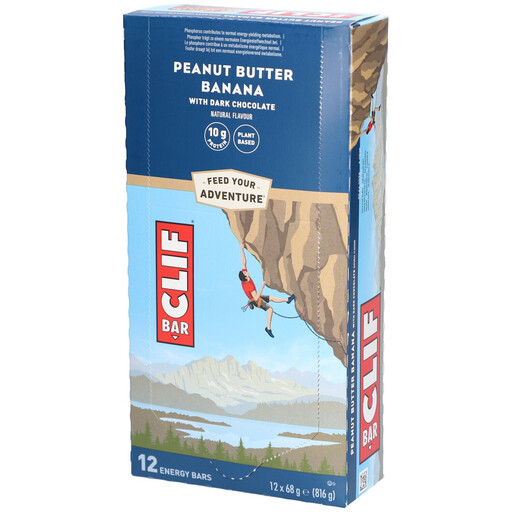 Image unavailable
CLIF BAR Peanut Butter Banana Energy Bar, 12 × 68 g
This peanut butter and banana-flavoured energy bar is for anyone who wants to compare this recipe with other snacks for days out.
The pack contains 12 bars of 68 g. If you avoid certain ingredients, check the ingredients list and allergens on the packaging for this version.
View on Joybuy
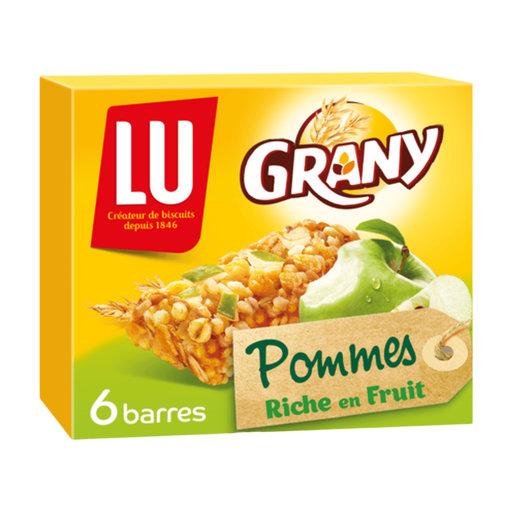 Image unavailable
LU Grany apple cereal bars, 125 g
If you’re specifically looking for an apple cereal bar for your holiday, this product is a cereal bar rather than an energy bar.
The pack weighs 125 g. To compare serving sizes, check the weight of one bar and the nutritional values on the packaging.
View on Joybuy
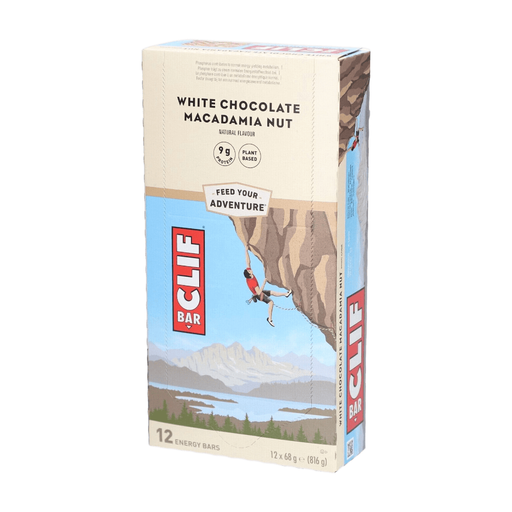 Image unavailable
CLIF BAR Macadamia Nut and White Chocolate Energy Bar, 12 × 68 g
This macadamia and white chocolate recipe is another energy bar to consider if your choice of ingredients matters as much as a convenient format.
The pack contains 12 bars of 68 g. Don’t assume you know its fat content from the name: compare the nutritional values for the exact version and read its ingredients list.
View on Joybuy
Frequently asked questions
Can a bar with less fat automatically be called “reduced fat”?
No. Having less fat than another bar isn’t enough to justify a “reduced fat” or “light” claim. The DGCCRF notes that nutrition claims are governed by European regulations; check the wording on the exact product and compare the values per 100 g.
Do cereal bars in France have to display Nutri-Score?
No. According to Santé publique France, producers display it voluntarily. If it appears on a bar, use it alongside the nutritional values and ingredients list for that version.
Where should you check for allergens before setting off?
Read the ingredients list on the pack you’re taking with you. The DGCCRF says allergens in prepacked foods must be highlighted in the list; the flavour name or fat content is no substitute for checking it.
Do all cereal bars need to go in a cool bag in summer?
Not necessarily: follow the storage instructions for the bar you’ve bought. Anses guidance on using an insulated bag and keeping food chilled applies to foods that need to be kept cold; it doesn’t mean all dry cereal bars need a cool bag.


