Students planning several snacks
If you’re kitting out your accommodation and want to keep bars close at hand or take them with you in a bag, check how many portions are in the multipack and whether they’re the right size for you.


When stocking up on cereal bars as you move into student accommodation, compare the number of bars, their weight and the portions you’re likely to use. Then check the nutritional values per 100 g, ingredients, allergens and best-before date. A protein or specialist recipe will only meet a specific need if the details of the product you choose are right for you.
If you’re kitting out your accommodation and want to keep bars close at hand or take them with you in a bag, check how many portions are in the multipack and whether they’re the right size for you.
Comparing sugars, fibre, fat and salt per 100 g gives you a like-for-like way to check the nutritional information for different recipes, as the DGCCRF points out.
If you need to avoid an ingredient or allergen, check the exact variety rather than relying on the range name. The recipes featured by Auchan and the Kellogg’s product information show how ingredients can vary within the same category.
When moving into student accommodation, start with how you plan to use the bars, then check the ingredients and storage instructions before stocking up.
| What matters | What to check | Who it matters to |
|---|---|---|
| Portions that work for you | Compare the net weight, number of bars and weight of each bar across products intended for the same use. | If I’m getting ready for my first few weeks in a new place, I want a multipack with portions that suit the snacks I have in mind. Around 42% of shoppers put getting the right portions first. |
| Ingredients and allergens | Read the nutritional values per 100 g and the ingredients list for the exact variety, paying particular attention to highlighted allergens. | A recipe that doesn’t fit my dietary choices, or contains an ingredient I need to avoid, isn’t right for me even if I like the pack size. Ingredients and allergens are the top priority for around 33% of shoppers. |
| Taking them with you and storing them | Check the portion format, best-before date and storage instructions on the packaging. | If I want to pop a bar in my bag and keep the rest at home, I need packaging that suits my routine. This is the main consideration for around 25% of shoppers. |
The Grainea green apple bar featured by E.Leclerc contains 25.9 g of sugars per 100 g and includes cereals such as wheat, oats, rye and barley. Recipes in the same category can vary.
Compare the values per 100 g and check the ingredients and allergens for each variety you’re considering.
A protein claim on the packaging doesn’t tell you about the other nutritional values or allergens. The Kellogg’s High Protein product information featured by Auchan lists peanuts and tree nuts, among other ingredients.
Check the protein, sugars, fat and ingredients for the exact product before choosing it for this feature.
The amount you buy should suit how quickly you’ll eat the bars, their best-before dates and any storage instructions. The DGCCRF notes that this information appears on prepacked food labels, where applicable.
Before stocking up, check the dates and instructions on the packs you’re planning to buy.
Carrefour’s French range includes Classic’, Sensation, Bio and Protein cereal bars.
E.Leclerc offers several Grainea recipes in packs of six bars.
Auchan’s French range includes cereal bars in different recipes and formats, including products described as high-protein and gluten-free.
The products listed include Special K Chocolate in packs of six 21.5 g bars at Carrefour and a High Protein bar featured by Auchan.
This selection includes two cereal bar multipacks and a cookie bar multipack. If you’re planning snacks to take with you, compare their formats and ingredients, and remember that a cookie bar isn’t the same as a classic cereal bar.
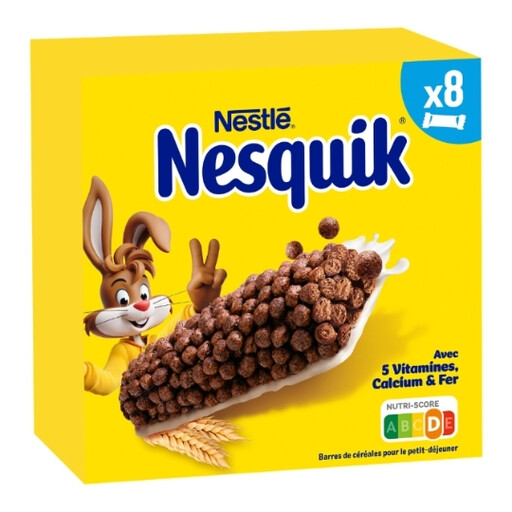 Image unavailable
A multipack of individually wrapped portions for snacks on the go: eight 25 g bars, weighing 200 g in total. The product description lists 23.5 g of sugars per 100 g and mentions wheat and milk; it may contain traces of nuts. If you have an allergy, check the label for the exact variety.
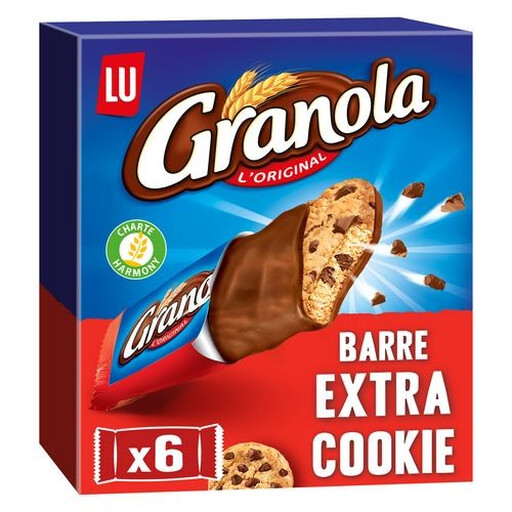 Image unavailable
An option to consider if you’re looking for portion-sized cookie bars rather than classic cereal bars. The multipack contains six bars weighing 168 g in total. The product description lists 39 g of sugars per 100 g and mentions wheat, milk and soya. Check the allergens for the exact variety.
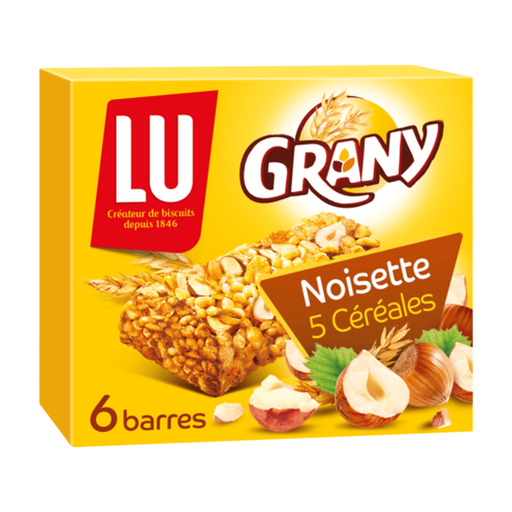 Image unavailable
Hazelnut cereal bars to consider if this recipe suits your tastes. The pack weighs 125 g, so check how many bars it contains to see whether the format works for your snacks. The product description mentions cereals containing gluten and hazelnuts, as well as possible traces of milk and other nuts. It also notes that excessive consumption may have a laxative effect.
Start with the values per 100 g to compare recipes with different portion sizes. The DGCCRF says this format makes comparisons easier. Then check the portion size to see how much a whole bar contains.
Read the ingredients and highlighted allergens on the packaging for the exact variety, including any warnings about possible traces. The European Commission and the DGCCRF set out the rules for declaring allergens on prepacked foods. The name of a range doesn’t tell you whether a bar is suitable for your needs.
Choose an amount that suits how much you expect to eat, then check the best-before dates and storage instructions on the packs you’ve chosen. The DGCCRF notes that labels on prepacked foods include the relevant date and, where necessary, specific storage instructions.