Households preparing several lunchboxes
The number of portions and their weight matter when planning snacks for the week. Compare the contents of the multipack with how often a bar will be taken along.


When preparing several lunchboxes, choose a multipack with enough bars and suitable portion sizes for the snacks you have planned. Then check the ingredients, allergens and nutritional information for the exact product. A larger multipack or a bigger bar won’t necessarily suit your household’s needs.
The number of portions and their weight matter when planning snacks for the week. Compare the contents of the multipack with how often a bar will be taken along.
If certain ingredients need to be avoided, check the ingredients list and allergen information for each product. You can also compare sugars and other nutritional values per 100 g, then per portion.
A portion that’s easy to pop into a bag should also be a size they’ll actually eat. The formats available range from small bars in boxes of six to 40 g bars in boxes of four.
If you’re preparing a lunchbox regularly, first check how many usable portions the multipack contains. Then consider whether their size and ingredients are right for your secondary school pupil.
| What to consider | What to check | Who is it for? |
|---|---|---|
| Number of snacks | Number of bars, the weight of each one and how many portions you’ll need for the week. | If I’m preparing several lunchboxes, I want to know how many days the multipack will last, without confusing the number of bars with the number of individual packets. Around 42% of consumers put portion planning first. |
| Ingredients and allergens | Ingredients list, allergens and ‘may contain’ statements; sugars and other nutritional values per 100 g, then per portion. | If an ingredient needs to be avoided, I need to be able to check the exact recipe before putting a bar in the bag. This is the top priority for around 33% of consumers. |
| Easy-to-carry format | Weight of each bar and the packaging for the portion being taken along. | A portion is only useful to me if it’s easy to carry and suits what the pupil wants to eat. For around 25% of consumers, the format is the main consideration. |
Seeing ‘oats’ or ‘cereal’ on the pack doesn’t tell you everything about the ingredients, sugars or allergens. Recipes vary from one product to another.
Check the ingredients list, any ‘may contain’ statements and the nutritional information for the product you’ve chosen. According to the DGCCRF, displaying the Nutri-Score is voluntary; it doesn’t replace reading the label.
Six bars of around 21 g and four 40 g bars don’t provide the same number of portions or the same size snack.
Compare the weight of each bar with what you need for the lunchbox and how often you plan to use them. If the pupil hasn’t tried this format before, check that it suits them before buying several multipacks.
A box of four bars will need replacing sooner than a box of six if one bar is taken each day.
The Mini BN products sold in packets are filled biscuits. They’re a different category, with different ingredients and portion sizes from a cereal bar.
If you’re considering them for a lunchbox, treat them as biscuits and check their label separately.
These products show a range of pack sizes and recipes. Always check the label for the specific product you’re considering.
Available formats include six Special K bars of around 21.5 g and four 40 g Croustille Avoine Chocolat bars.
Carrefour’s Chocolat Noir product comes in a box of six 21 g bars.
E.Leclerc offers boxes of six 126 g bars in flavours including apple and apricot, and dark chocolate and peanuts.
Auchan’s cereal bar selection includes multipacks of six bars, as well as products from several brands.
Auchan’s Mini BN products are filled biscuits, sold in four packets of ten biscuits. They’re a different type of snack.
These multipacks contain portions in different sizes for an on-the-go snack. Nesquik is described as a cereal bar, while the Nature Valley and Ovaltine products are labelled ‘Energy Bar’. Check the category and label of each one to make sure it suits the snack you’re looking for.
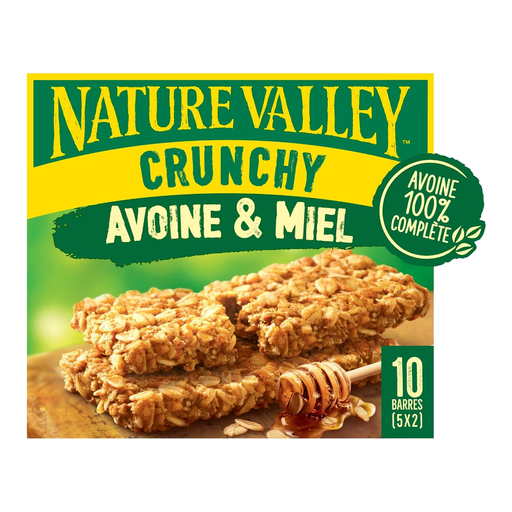 Image unavailable
If you’re splitting a multipack between several snacks, check how much you’ll take each time. The product name indicates five units weighing 210 g in total. Check the packaging and allergen information before preparing the lunchbox.
 Image unavailable
This multipack provides eight snacks if you take one bar each time. Each bar weighs 25 g. Check the ingredients and allergen information for this product before choosing it.
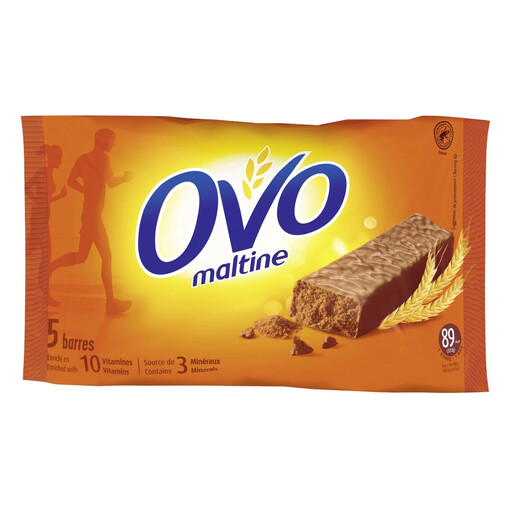 Image unavailable
If you’re looking for a 20 g portion, this pack contains five bars. The product is labelled ‘Energy Bars’, so don’t assume it’s equivalent to a cereal bar. Check its ingredients and any listed allergens.
No. The DGCCRF states that displaying it is voluntary. To compare two recipes, check their ingredients lists and nutritional information too, particularly the values per 100 g.
Read the ingredients list and check for any ‘may contain’ statements on the exact product. The DGCCRF says allergenic ingredients must be highlighted on the label. Don’t assume an allergen is present or absent based on the bar’s name alone.
Not necessarily: weight alone doesn’t establish that different recipes or portions are equivalent. Compare the weight of each bar and the nutritional values per portion, and consider what the pupil will actually take with them.
Mini BN are filled biscuits, not cereal bars. Their packets may suit the need for an on-the-go snack, but compare their portion size and ingredients with other products in the same category.
Follow the use-by date and storage instructions on each pack. The Kellogg's and BN product information consulted recommends storing them in a dry place. Also check that each individual packet is intact before putting it in a lunchbox.