People who pay attention to ingredients
You want to compare the sugars, fat, salt and ingredients in bars for your revision breaks. Nutri-Score can help you make comparisons when it’s shown, as explained by Manger Bouger.


To prepare revision breaks you can take with you, start by deciding what matters most: comparing the ingredients or choosing portions that are easy to carry. Check the nutritional values per 100 g, then look at the weight and packaging of each bar. If you’re interested in a nut-based recipe or a bar that highlights its protein content, check the ingredients and allergens too.
You want to compare the sugars, fat, salt and ingredients in bars for your revision breaks. Nutri-Score can help you make comparisons when it’s shown, as explained by Manger Bouger.
You might be looking for a recipe with oats or nuts, or want to compare fibre and protein. The ingredients and allergens listed for each product remain key.
You’re planning several snacks for revision away from home and prefer individual portions. However, the number of bars in a box won’t tell you their weight or how they’re wrapped.
When putting together your selection, start with your main priority, then check the other details on each product’s label.
| What to look for | What to check | Who is it for? |
|---|---|---|
| Ingredients | Compare the sugars, fat and salt per 100 g, and check the ingredients list too. | If I want to tell recipes apart without relying on their name or packaging, ingredients come first. Around 42% of consumers would put them at the heart of their choice. |
| Ingredients you’re looking for | Check the fibre and protein per 100 g and per portion, as well as the ingredients and allergens. | For my break, I might prefer a recipe with oats or nuts, as long as it suits my dietary requirements. This would be the main consideration for around 33% of consumers. |
| Portions to take with you | Check the number of bars, the weight of each one and whether they’re individually wrapped. | When I’m planning several breaks away from home, I mainly want to be able to grab a bar without having to divide up the contents of the box. Around 25% of consumers would prioritise this format. |
These terms alone don’t tell you everything about a product’s nutritional values. Manger Bouger explains that comparing values per 100 g gives you a consistent basis for checking sugars, fat and salt, among other things.
Read the nutritional table and ingredients list for the specific bar you’re thinking of buying.
A recipe chosen for its nuts may not be suitable for someone with a nut allergy. Ingredients and ‘may contain’ warnings can also vary between products in the same range.
Check the highlighted allergens and ‘may contain’ warnings for every flavour you choose.
Carrefour, for example, lists a box of six Bio chocolate bars weighing 138 g, and a box of six Classic’ dark chocolate bars weighing 21 g each. So the same number of bars doesn’t necessarily mean the same weight per bar.
Check the net weight, the weight of each bar and how the portions are wrapped before putting together your selection.
Kellogg's France features products including its Honey Almond & Peanut bar and Special K Protein Coco. Check the ingredients of each recipe separately to see whether they suit your needs.
Carrefour offers several cereal bar products in boxes of six, including Bio chocolate and Classic’ dark chocolate.
Auchan’s range includes Crousti and Less Sugar cereal bars, both in packs of six.
This selection includes cereal bars, an oat-based energy bar and a barley and rice bar. When planning revision breaks to take with you, compare their categories and formats, as well as the information provided for each product.
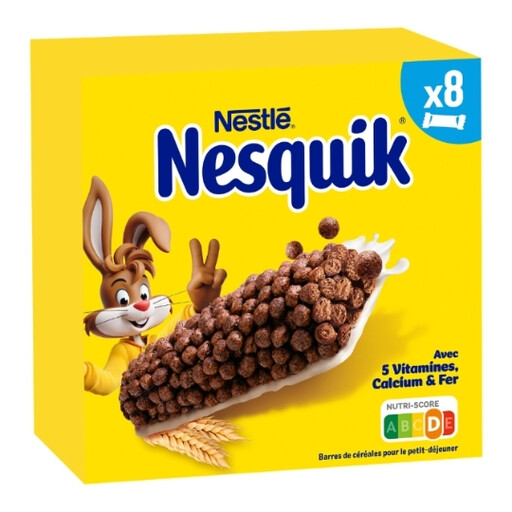 Image unavailable
The 8 × 25 g pack is a good choice if you want to plan several portions for your breaks.
Before adding it to your selection, compare its sugars with those in other products and check the warnings about wheat, milk and possible traces of nuts.
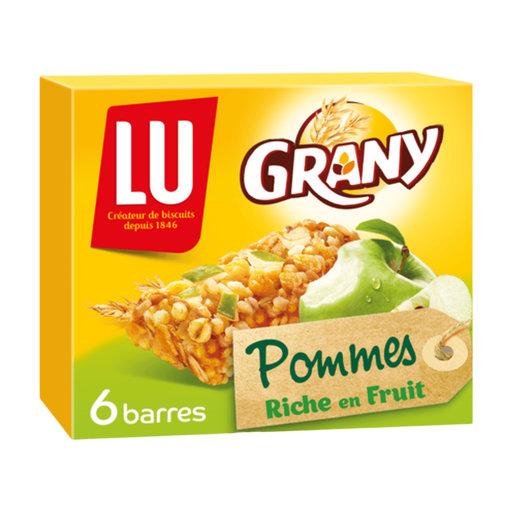 Image unavailable
This apple recipe is one to consider when comparing cereal bars in different flavours.
If you want each break to be ready to take with you, check the number of bars, their weight and how they’re wrapped. Also check the warnings about cereals containing gluten and possible traces of milk and nuts.
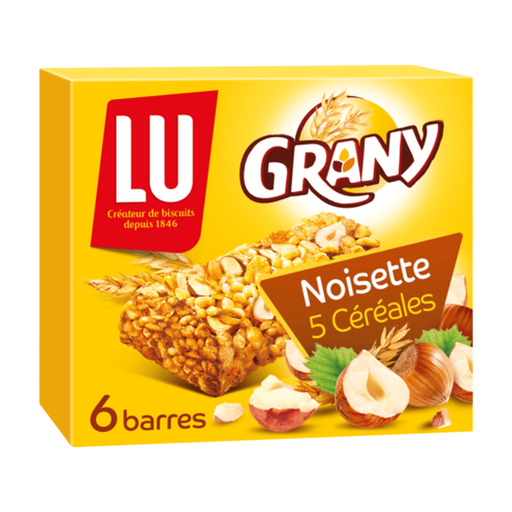 Image unavailable
This flavour is worth considering if you’re looking for a hazelnut recipe to add to your selection.
Check the warnings about hazelnuts, cereals containing gluten and possible traces of other allergens. If you plan to carry the bars separately, also check the number of portions and how they’re wrapped.
 Image unavailable
This energy bar is a different category from classic cereal bars. It’s worth considering if the format suits your breaks.
The pack contains 12 bars of 68 g each. Before planning how to carry them, check whether each bar is individually wrapped, as well as the ingredients and allergens listed for this recipe.
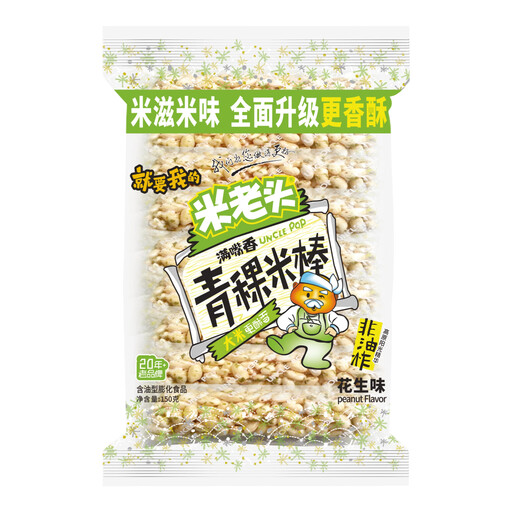 Image unavailable
This barley and rice bar offers another recipe to consider for breaks on the go.
The description says the bars are individually wrapped; check how many there are and how much they weigh to plan your portions. The recipe contains barley, peanuts and soya.
Start by comparing their nutritional values per 100 g. This gives you a consistent basis for checking sugars, fat and salt, even when the portions differ, as Manger Bouger explains. Then look at the values per bar to see how much you’ll be having during your break.
No. Nutri-Score can help you compare products when it’s shown, but it doesn’t replace the ingredients list or checking for allergens. Manger Bouger explains that it’s calculated per 100 g or 100 ml.
Read the highlighted allergens and ‘may contain’ warnings for each product. Depending on the recipes you choose, you may need to check for cereals containing gluten, peanuts, nuts, milk and soya. Don’t assume the label is the same for different flavours.
Check the use-by or best-before date and storage instructions on the packaging for each product. If you plan to take the bars separately, also make sure that each portion has its own wrapper.