For breakfast on the go, choose a bar confirmed to be individually wrapped if you need to put one on its own in your bag. Then compare the weight of each bar, the nutritional information per 100 g and per portion, and the ingredients and allergens. Convenient packaging alone doesn’t tell you what’s in it.
Who are these bars suitable for?
People in a hurry who eat on the go
If you head out without preparing breakfast, a portion wrapped on its own is easier to pop in your bag. Check the packaging of the product you choose, though: a pack containing several bars doesn’t necessarily mean they’re individually wrapped.
People comparing recipes
If flavour alone isn’t enough to guide your choice, check the sugars, fibre, protein and salt per 100 g, then look at the amount in one bar. The DGCCRF notes that information per 100 g makes comparisons easier. You should also check the ingredients and allergens in each recipe.
What should you check?
For a quick breakfast, start with the packaging if you’re carrying a bar on its own, then check the recipe and how many portions you need.
| What to check |
Look for |
Who is it for? |
| Taking one portion with you |
Check that each bar is individually wrapped and note its weight. |
When I put a bar on its own in my bag, I want it to stay protected without any preparation. Around 40% of consumers put portability first. |
| Ingredients and allergens |
Compare the nutritional information per 100 g and per portion; check the ingredients and allergens. |
When choosing between different recipes, their ingredients and anything I need to avoid matter more than the format. Around 30% of consumers are said to share this priority. |
| Number of portions |
Check how many bars are in the pack and its net weight. |
When preparing for several mornings in advance, I want to know how many portions are in the box. Around 30% of consumers would put this quantity first. |
Mistakes to avoid
-
Choosing a nut recipe without checking its allergens
Two varieties from the same brand can contain different ingredients. The DGCCRF states that allergenic ingredients in prepacked foods must be emphasised in the ingredients list.
Read the label for the variety you’re buying, even if you’re only switching to a different flavour.
-
Relying on a claim on the packaging alone
A range name or highlighted ingredient doesn’t tell you everything about a bar’s nutritional values.
Compare the sugars, fat, fibre, protein and salt per 100 g, then work out how those values relate to the portion you’ll eat.
-
Assuming a breakfast biscuit is the same as a cereal bar
BN sells biscuits. A biscuit and a cereal bar aren’t necessarily comparable in terms of recipe, weight or packaging.
If you’re deciding between the two, compare the packaging and nutritional information of the specific products you’re considering.
Brands to know when comparing recipes
Kellogg’s
The brand offers, among other options, nut bars and a Special K Protein variety. These recipes suit different ingredient preferences and aren’t interchangeable.
- Kellogg’s states that its almond, peanut and honey bar contains 41% nuts, and that its Special K Protein coconut and cashew variety provides 5.9 g of protein per 28 g portion.
- Check the ingredients and allergens for the exact variety rather than assuming these details apply across the whole range.
Carrefour
The retailer offers several ranges of cereal bars, including Classic’ and Sensation varieties.
- Its range includes a box of six 21 g Classic’ bars and a Sensation variety with four 32 g bars.
- The range name is no substitute for checking the ingredients and nutritional values of the product you choose.
Marque Repère / Grainea (E.Leclerc)
The Grainea range includes cereal bars sold in boxes with several portions.
- E.Leclerc offers, among other options, boxes of six bars weighing 126 g in total, in red berry or dark chocolate flavours.
- If you want to take them separately, check whether each bar is individually wrapped.
Auchan
The Auchan range includes various cereal bar recipes in multipacks.
- Auchan offers, among other options, a box of six dark chocolate bars weighing 126 g in total, and another box of six bars weighing 180 g in total.
- As pack weights vary, it’s worth checking the weight per bar and the exact recipe.
BN / Choco BN
BN sells biscuits. This is a different category to consider if you’re looking for a packaged breakfast, not a cereal bar range that you can assume is equivalent.
- Before swapping a bar for a biscuit, compare the portion weight, ingredients and packaging of both products.
Bars to consider on Joybuy
For breakfast on the go, this selection includes cereal bars as well as fruit and nut bars and oat bars. The weight and packaging of each product are key if you want to take one portion with you.
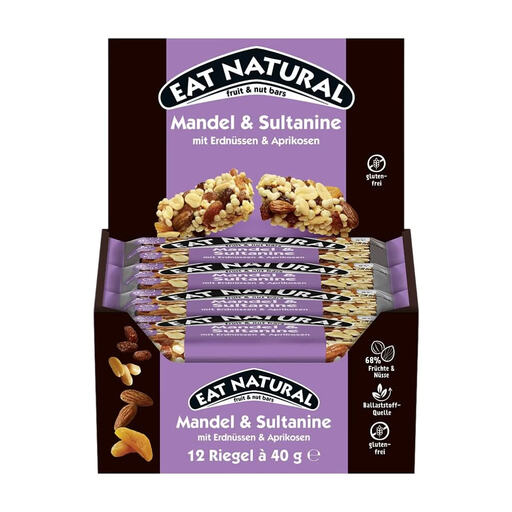 Image unavailable
Eat Natural Almond, Raisin & Apricot Fruit & Nut Bar, 40 g
Worth considering if you’re looking for a fruit and nut bar to take with you. The bar weighs 40 g; check the ingredients and allergens in this recipe before choosing it.
View on Joybuy
 Image unavailable
Nesquik cereal bars, 8 × 25 g
Worth considering if you want to know the number and weight of the portions upfront. The pack contains eight 25 g bars; check that they’re individually wrapped if you plan to take just one with you.
View on Joybuy
 Image unavailable
CLIF BAR Blueberry Energy Bar, 12 × 68 g
Worth a look if you’re considering an oat bar rather than a traditional cereal bar. The pack contains twelve 68 g bars; check that the portion size and packaging suit your journey.
View on Joybuy
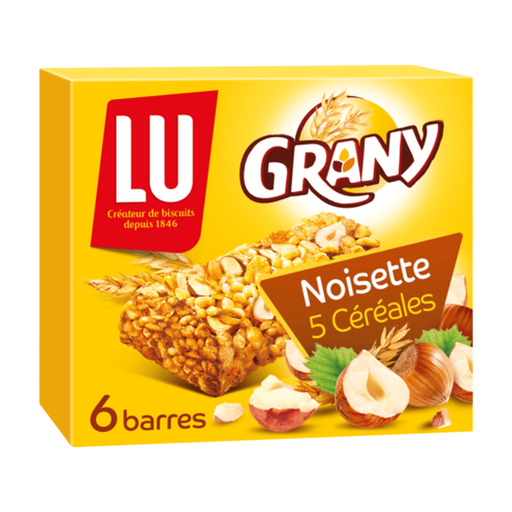 Image unavailable
LU Grany hazelnut cereal bars, 125 g
Worth considering if you prefer a hazelnut recipe. The pack weighs 125 g; check how many bars it contains, how they’re wrapped and the allergen information before planning portions to take with you.
View on Joybuy
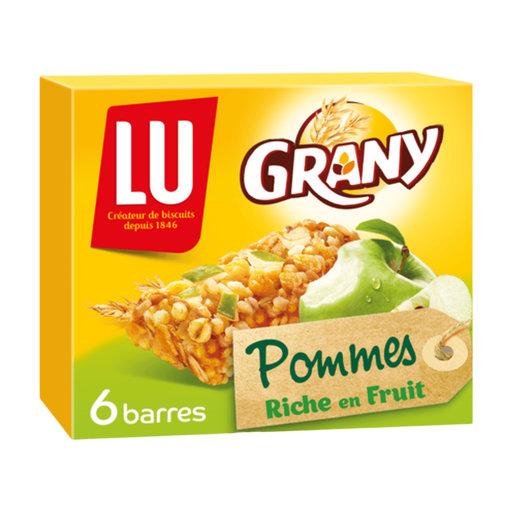 Image unavailable
LU Grany apple cereal bars, 125 g
Worth considering if you’re looking for an apple cereal bar. The pack weighs 125 g; check how many portions it contains, how they’re wrapped and the ingredients in this variety.
View on Joybuy
Frequently asked questions
How do you compare bars that weigh different amounts?
First compare the nutritional values per 100 g, then check the weight of each bar and the values for the portion you’ll eat. The DGCCRF says that information per 100 g makes it easier to compare products.
Where can you check the allergens in a cereal bar?
Read the ingredients list for the product you’re buying: the DGCCRF states that allergenic ingredients in prepacked foods must be emphasised there. Check it again whenever you switch recipe or flavour.
Is a multipack enough to take one portion with you each morning?
Not necessarily: the number of bars doesn’t confirm that they’re individually wrapped. If you’re taking them out of the box, check the individual packaging and the weight of each bar.


