People who take breaks away from the office
If you’re carrying a bar in your bag, check that it’s individually wrapped and that its weight suits the portion you want to take with you.


For a coffee break on the go, start by choosing what matters most to you: an individually wrapped bar that’s easy to carry, a recipe you can compare with others, or an option that suits your dietary requirements. Check the weight of each bar and how many are in the pack, then compare the nutrition information per 100 g and read the ingredients. The number of bars and claims on the front of the pack aren’t enough to tell recipes apart.
If you’re carrying a bar in your bag, check that it’s individually wrapped and that its weight suits the portion you want to take with you.
Nutrition information per 100 g lets you compare two products of different sizes. Then check the weight of each bar to see how much the per-portion information relates to.
If you need to avoid gluten or an allergen, check the packaging of the exact product. Another recipe from the same brand may have a different ingredient list.
For a coffee break away from home, start with the portion you plan to take with you, then check the recipe and any ingredients that matter to you.
| Criterion | What to check | Who is it for? |
|---|---|---|
| Individually wrapped | Number of sachets, number of bars in each sachet and the weight of each bar. | When I put a bar in my bag for a short break, I want to take one portion without carrying an opened pack; around 36% of consumers are said to make individual packaging their top priority. |
| Ingredients and nutrition | Nutrition information per 100 g, followed by the amount in one bar. | When I compare two recipes, I want to understand the differences even if the bars aren’t the same weight; ingredients and nutrition are said to be the priority for around 36% of consumers. |
| Allergens and gluten | Ingredients list, highlighted allergens and a gluten-free claim on the product in question, if needed. | Before taking a bar with me, I need to know whether its recipe suits my dietary requirements; around 28% of consumers are said to put this check first. |
Recipes vary. A ‘organic’ or ‘high-protein’ claim doesn’t replace the nutrition information or ingredients list. For example, Carrefour lists glucose syrup in one of its Bio chocolate products.
Compare the values per 100 g, then relate them to the weight of the bar you plan to eat. If a Nutri-Score is shown, it can help you make sense of the information, but it shouldn’t replace it.
Two packs with the same number of bars may contain bars of different weights. A sachet may also contain two bars rather than one.
Check the total weight, what’s in each sachet and how many breaks you want the pack to cover.
According to the products listed by Carrefour, one Bio chocolate bar may contain traces of milk, peanuts and tree nuts, while a Kellogg’s almond and chocolate recipe contains peanuts and almonds, among other ingredients.
Read the ingredients and allergen information for the exact product. If you’re looking for a gluten-free bar, check that this is stated on the product you choose.
These ranges give you a few options to compare in terms of size and recipe; features vary from one product to another.
In the French ranges cited by Carrefour and Auchan, the brand offers Special K and Frosties bars, as well as chocolate and nut recipes.
These own-brand ranges include bars in different sizes and with different recipes.
The range cited by Auchan includes Crousti bars, Less Sugar recipes and a chocolate product explicitly labelled gluten-free.
At E.Leclerc, the Grainea, Sport and P’TIT DELI ranges cover a variety of formats and recipes.
Crunchy, Protein and Sweet & Salty Nut variants feature in the range cited by Auchan.
These products let you compare a small 25 g bar, 30 g or 40 g bars, and a multipack with two bars in each sachet. For a break on the go, choose the portion that suits you and check the ingredients of the recipe you select.
 Image unavailable
Worth considering if you want to take a 25 g bar with you for a short break. The pack contains eight bars; check the nutrition information and ingredients on the packaging for this product before choosing it.
This product contains wheat and milk and may contain traces of tree nuts.
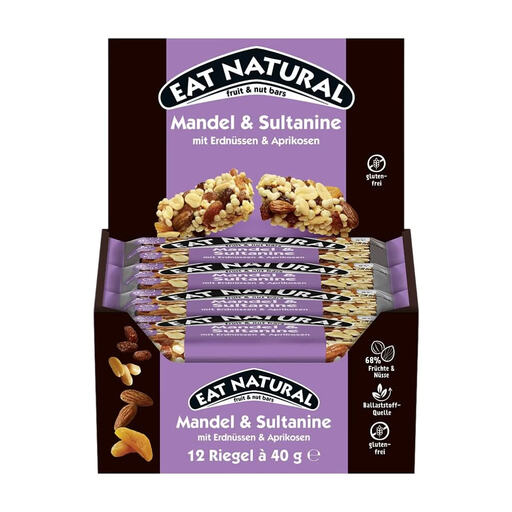 Image unavailable
Consider this if a 40 g bar is the right portion for you to take with you. It’s larger than the small 25 g bars featured here.
The recipe contains peanuts and almonds; check the packaging for information about other allergens.
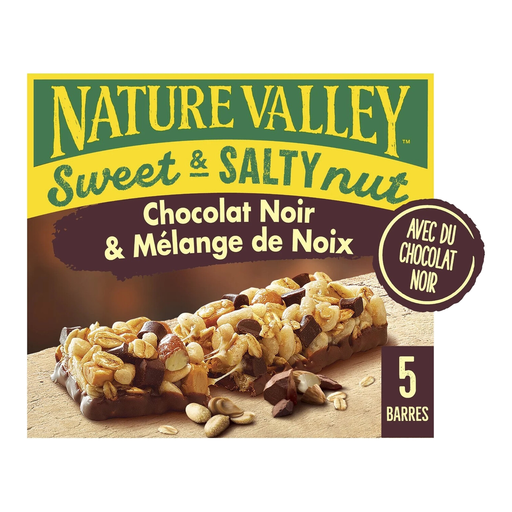 Image unavailable
This multipack may suit you if you’re looking for a 30 g bar rather than a 25 g one. Compare the nutrition information per 100 g with the information for the stated portion.
This variant contains peanuts, milk, soya, almonds and cereals containing gluten, among other ingredients.
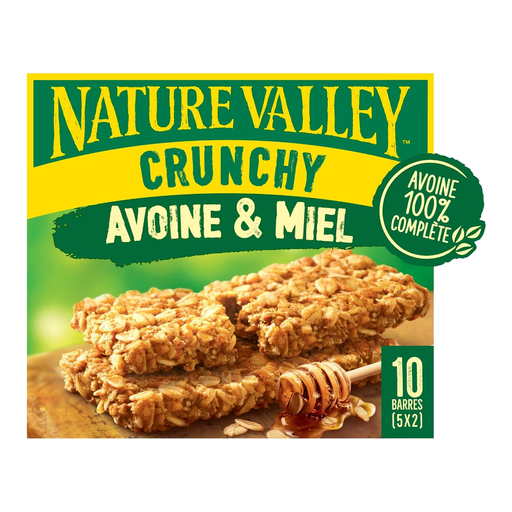 Image unavailable
Check what’s in each sachet if you only want to take a small bar with you: this product has a portion of two bars, or 42 g per sachet.
It contains oats with gluten and may contain soya, wheat, peanuts and tree nuts.
Check the total weight, the number of bars and the weight of each one. If you’re taking a bar with you, also check how many bars are in each sachet: one sachet doesn’t necessarily contain just one bar.
No. If it appears on the packaging, Nutri-Score can be a useful extra guide, but it doesn’t replace the nutrition information or ingredients list. The DGCCRF notes that values per 100 g make it easier to compare products; then check the amount in one bar.
Read the ingredients and any highlighted allergens on the packaging of the exact product. For gluten, look for a gluten-free claim on the product itself rather than assuming it from the name; this claim alone doesn’t tell you whether other allergens are present.
Keep the bars in their packaging and follow the use-by date and any storage instructions shown for the product you choose. If you take the sachets out of the pack, keep the information you need to identify the recipe and its allergens.