When planning your marathon fuelling, start by choosing bars based on the carbohydrates listed per portion, then work out how many portions to include alongside your other fuel. A standard bar, a protein bar and a nut-based recipe aren’t interchangeable just because of their names. Compare their nutritional values and ingredients, then try your chosen portion during training.
Who is this choice for?
Runners who count their carbs
For a marathon or a long run, you’ll want to know how many carbohydrates are in each portion before deciding how many bars to take. World Athletics’ guidelines cover fuelling during exercise; they don’t automatically tell you how much of a single bar to eat.
Runners who check ingredients carefully
If you need to avoid certain ingredients, compare the labels for each recipe. Wheat, soya, milk, peanuts and nuts are listed in the information for some of the products featured by Kellogg’s France and Carrefour France.
People planning several runs
A multipack makes it easy to divide portions between training sessions. Check the number of bars, their individual weight and, if they come in sachets, exactly what each sachet contains.
What should you check first?
Start with the carbohydrate content per portion, then check the recipe and the format you plan to carry. World Athletics recommends 30 to 60 g of carbohydrates per hour for exercise lasting 1 to 2.5 hours, and up to 90 g per hour for anything longer than 2.5 hours. These guidelines alone won’t determine which bars are right for you.
| Criterion |
What to check |
Who is this for? |
| Carbohydrates per portion |
The amount of carbohydrates and the weight of the portion stated on the packaging. |
If you’re planning your fuel for a long run, you need to be able to count each portion without confusing the values for a single bar with those for a whole sachet. Around 42% of consumers put this first. |
| Ingredients and allergens |
The ingredients list and any may-contain warnings for each recipe you’re considering. |
If your multipack includes several flavours, finding one recipe that suits you doesn’t mean the others will too. Around 33% of consumers prioritise ingredient suitability. |
| Portion format |
The number of bars, their individual weight and what each sachet contains, if applicable. |
If you’re preparing for several training sessions, you’ll want portions that are easy to divide and carry, with no confusion about their size. Around 25% of consumers make this their priority. |
Mistakes to avoid
-
Assuming ‘protein’ means a portion suited to your carbohydrate needs
Among the products featured by Kellogg’s France, a Special K Dark Chocolate bar contains 14 g of carbohydrates per 21.5 g bar, compared with 12 g per 28 g Special K Protein Coconut & Cashew Nut bar. So the range name doesn’t tell you how much is in each portion.
Check the carbohydrate content of the exact recipe and count the bar as part of all the fuel you plan to take.
-
Assuming every flavour in a multipack has the same ingredients
Recipes vary from one product to another. For example, the Carrefour France product page for Classic’ Dark Chocolate bars warns that they may contain traces of nuts, milk and peanuts.
Check the ingredients list and any ‘may contain’ warnings for each product before packing it in your bag.
-
Counting boxes instead of portions
The number of bars shown on the box doesn’t tell you how much you’ll want to take on each run. The weight of each bar and whether they’re grouped into sachets also matter.
Check what counts as a portion in the nutritional information, then divide up your bars according to your planned runs.
Brands to know
Kellogg’s
Kellogg’s France features a range of bars, including standard Special K and Special K Protein. Compare the exact recipes rather than guessing what they contain from the range name.
- According to Kellogg’s France, a 21.5 g portion of Special K Dark Chocolate contains 14 g of carbohydrates and 2.1 g of fibre.
- According to Kellogg’s France, a 28 g portion of Special K Protein Coconut & Cashew Nut contains 12 g of carbohydrates, 5.9 g of protein and 4.5 g of fat. Check the allergens in this recipe carefully too.
Carrefour
Carrefour France features several ranges of cereal bars, including Classic’, in formats that make it easy to compare the number and weight of the portions.
- Carrefour France lists its Classic’ Dark Chocolate bars in a multipack of six 21 g bars.
- This recipe contains wheat and oats, among other ingredients. Carrefour France also warns that it may contain traces of nuts, milk and peanuts. Check the label of the product you choose.
Auchan
The range featured by Auchan France includes Crousti bars, Less Sugar recipes and other types of cereal bars.
- Auchan France features a Crousti multipack of six bars, which is useful when comparing how portions are divided up.
- A range or product category name doesn’t tell you the carbohydrate content or allergens for each recipe. Check the information for the product you choose.
Portions and bars to take from Joybuy
This selection includes oat bars, energy bars and a fruit and nut bar. When planning your runs, compare the format with the carbohydrates per portion and the ingredients in each recipe. Being included in this selection doesn’t mean they’re all suitable for the same fuelling plan.
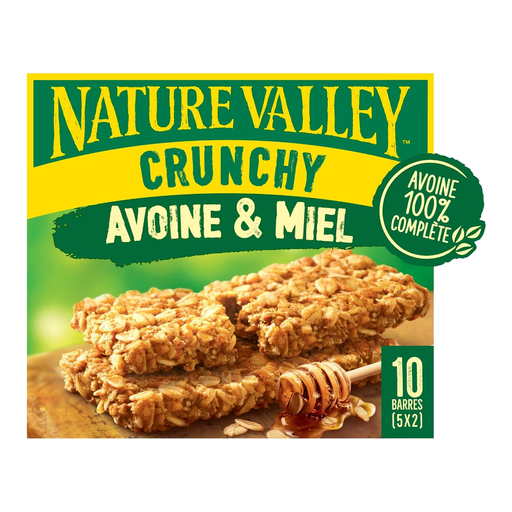 Image unavailable
Nature Valley Crunchy Oats & Honey Energy Bar, x5, 210 g
Worth considering if you want to divide a multipack into portions to take with you. The title lists five units with a total weight of 210 g. Before counting the carbohydrates in a portion, check the packaging to see whether it means one bar or a sachet containing several bars.
View on Joybuy
 Image unavailable
CLIF BAR Blueberry Energy Bar, 12 × 68 g
This multipack could help you plan for several runs if a 68 g bar is the portion you want to take. Compare the carbohydrates in one bar with your other fuel, and try this format during training.
View on Joybuy
 Image unavailable
CLIF BAR Macadamia Nut and White Chocolate Energy Bar, 12 × 68 g
The pack of 12 bars, each weighing 68 g, makes it easy to plan several portions of the same size. If you need to avoid nuts, check the ingredients and any may-contain warnings for this recipe before choosing it.
View on Joybuy
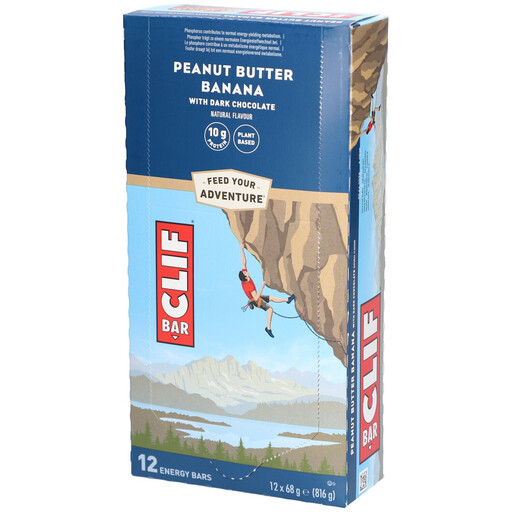 Image unavailable
CLIF BAR Peanut Butter Banana Energy Bar, 12 × 68 g
This pack of 12 bars, each weighing 68 g, can help you plan for several runs if that’s the individual weight you have in mind for each portion. Check the carbohydrate content and ingredients list for this recipe, particularly if you need to avoid peanuts.
View on Joybuy
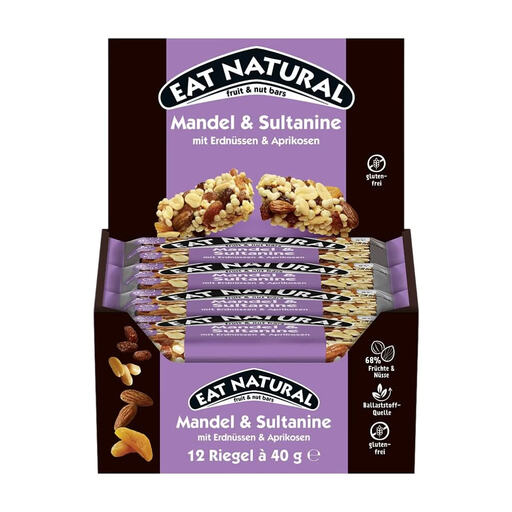 Image unavailable
Eat Natural Almond, Raisin & Apricot Fruit & Nut Bar, 40 g
This 40 g fruit and nut bar is another recipe to consider for a portion to take with you. If the carbohydrates are listed per 100 g rather than per bar, calculate the amount for 40 g. Also check the ingredients if you need to avoid nuts.
View on Joybuy
Frequently asked questions
Is one cereal bar enough to fuel a marathon?
Don’t automatically assume that one bar will cover all your fuelling needs. World Athletics recommends 30 to 60 g of carbohydrates per hour for exercise lasting 1 to 2.5 hours, and up to 90 g per hour for anything longer than 2.5 hours. For example, according to Kellogg’s France, a 21.5 g Special K Dark Chocolate bar contains 14 g of carbohydrates. Count each portion alongside the other fuel you plan to take.
Should you have a standard or protein bar during exercise?
If you’re choosing based on carbohydrates, compare the values per portion rather than the range name. Kellogg’s France lists 14 g of carbohydrates for its 21.5 g Special K Dark Chocolate bar, compared with 12 g of carbohydrates, 5.9 g of protein and 4.5 g of fat for its 28 g Special K Protein Coconut & Cashew Nut bar. These figures apply to those two specific recipes.
How can you check allergens in a multipack in France?
Check the ingredients and any may-contain warnings for every recipe in the multipack. In France, Légifrance states that consumers must be informed when a substance or product listed in Annex II of Regulation (EU) No 1169/2011 is used as an ingredient. Don’t assume one flavour has the same ingredients as another.


