Parents packing lunchboxes
Individually portioned bars can make lunchbox prep easier. Before adding a bar to your child’s lunchbox, check the allergens in the specific product and any rules at their school or other setting.


Choose the number of portions to suit the snacks you need to prepare. A pack of six bars could be a good choice if you want to try a recipe or keep storage to a minimum, while a larger pack may suit more regular needs if you’ll use all the portions before the best-before date. Compare the weight of the bars and the nutritional information per portion and per 100 g, too. If you’re packing a lunchbox, check the ingredients, allergens and any rules at the place where your child will eat their snack.
Individually portioned bars can make lunchbox prep easier. Before adding a bar to your child’s lunchbox, check the allergens in the specific product and any rules at their school or other setting.
The number of bars should match the snacks you need to prepare for one or more children. Check the total weight, too: two packs with the same number of bars may not offer the same portion sizes.
Flavour matters, but it’s also worth comparing the ingredients list, sugars and fat per portion. If a Nutri-Score appears on the pack, it can offer an additional point of reference.
Start with the snacks you need to prepare, then compare the portion sizes and label for each recipe you’re considering.
| What matters | What to check | Who is it for? |
|---|---|---|
| Nutritional composition | Compare sugars and fat per portion and per 100 g. Check the ingredients list and the Nutri-Score, if one is shown. | When the recipes seem similar, I want to know what one bar contributes to a snack before choosing. Around 42% of consumers would put this comparison first. |
| Pack size and portions | Count the snacks you need to prepare, then check the number of bars, their weight and the best-before date. | When planning snacks for several days or several children, I mainly need a pack whose portions will all be used. Pack size would be the top priority for around 33% of consumers. |
| Recipe and allergens | Read the allergens highlighted on the exact product’s packaging and check the rules where the bar will be eaten. | If the bar is going in a lunchbox, I want a recipe that suits the child and meets the rules at their school or other setting. This compatibility would come first for around 25% of consumers. |
The number of bars doesn’t tell you how much each portion weighs. Packs found at Carrefour, Auchan and E.Leclerc come in different bar counts and weights.
Compare the number of portions, the total weight and the date shown on each pack.
A claim about fibre or vitamins doesn’t tell you everything about the recipe. According to Santé publique France, displaying the Nutri-Score is voluntary; it doesn’t replace checking the nutritional information.
Check sugars and fat per portion, the values per 100 g and the ingredients list.
Ingredients vary between products. The DGCCRF states that allergenic ingredients must be highlighted in the ingredients list of pre-packed foods.
Check the packaging of the bar you’ve chosen and the rules at the school or activity where it will be eaten.
The brand offers several cereal bar recipes, including Coco Pops and almond and peanut bars.
The retailer offers cereal bars under its own-brand ranges, as well as in its children’s snacks section.
Auchan’s cereal bar range includes a variety of pack sizes and brands.
Marque Repère’s GRAINEA range includes cereal bars available at E.Leclerc.
These two Joybuy products are cereal bar multipacks to consider if you’re preparing several snacks. They come in different sizes, so check exactly what’s in the pack and read the label before choosing one for a child.
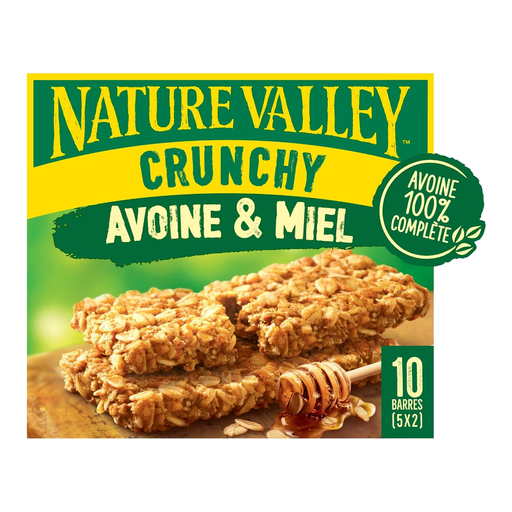 Image unavailable
The x5 pack could be useful for preparing several snacks. The pack states that it contains 210 g in total; check the number of bars in each unit, the allergens and any rules where the bars will be eaten before adding one to a lunchbox.
 Image unavailable
Eight 25 g bars give you several snack portions to plan with. If you’re packing one in a lunchbox, check the ingredients and allergens on the packaging, as well as any rules at the school or other setting.
No. Santé publique France says that producers can choose whether to display it. If it appears on the pack, use it alongside the ingredients list and nutritional information for the product you’ve chosen.
Read the ingredients and allergens on the packaging for the specific product, then check the rules at the school or other setting. The DGCCRF states that allergenic ingredients must be highlighted in the ingredients list of pre-packed foods; these vary by recipe.
Check the number of bars, the total weight and the weight of each portion. Then compare the nutritional information per 100 g and per portion: a pack with more bars won’t necessarily contain portions of the same size.
Follow the best-before date and storage instructions on the packaging of the product you’ve chosen. Also check any guidance for individual portions once the pack has been opened.