People preparing snacks to take with them
You want to pop a bar in your bag or plan snacks for several breaks. In that case, the number of bars and their individual weight matter just as much as the total pack weight.


If you’re preparing several snacks to take with you, start by choosing a pack with the right number of bars and weight per bar for your breaks. A 35 to 40 g bar serves a different purpose from a smaller portion to spread over several days. Then compare the nutritional values per 100 g and per bar, and check the ingredients and allergens in your chosen recipe.
You want to pop a bar in your bag or plan snacks for several breaks. In that case, the number of bars and their individual weight matter just as much as the total pack weight.
You want to compare sugar, fibre, protein and salt in equal quantities, then check what that means for the bar you’ll eat. The DGCCRF says that nutritional information per 100 g makes it easier to compare products.
You need to check the ingredients before choosing a recipe containing peanuts, nuts or chocolate. The DGCCRF states that allergens must be highlighted in the ingredients list.
For an afternoon snack to take with you, start with the portion you’ll actually eat, then compare the recipes and check for allergens.
| What to consider | What to check | Who is it for? |
|---|---|---|
| Portions to take with you | Number of bars, weight per bar and individual wrapping. | If I want to pop a bar in my bag and plan several breaks, I need to know how many portions are in the pack. Around 42% of consumers prioritise how the portions are divided. |
| Nutritional values | Sugar, fibre and protein per 100 g, followed by the amount in one bar. | If I’m choosing between two recipes, I want to compare them in equal quantities before considering my portion. Nutritional comparisons are the main priority for around 33% of consumers. |
| Ingredients and allergens | Ingredients list, highlighted allergens and any ‘may contain’ statements. | If I need to rule out a recipe because of an allergen, its format alone isn’t enough to decide whether to buy it. Around 25% of consumers put this check ahead of other criteria. |
Auchan’s product page for the Kellogg's oat and chocolate bar states that it contains 55% wholegrain oats, but also 11 g of sugar per 40 g bar. The presence of oats alone doesn’t tell you everything about its nutritional values.
Compare the sugar and fibre per 100 g, then check the amounts in one bar.
Auchan’s product page for Kellogg's High Protein Salted Caramel lists peanuts, milk and almonds, among other ingredients. The flavour name is no substitute for the ingredients list.
Check the allergens and any ‘may contain’ statements on the packaging of the product you’re buying.
If it appears on the pack, Nutri-Score alone won’t tell you the weight of a bar, its ingredients or which allergens to avoid.
Use it as an additional guide, then check the nutritional information and ingredients list.
The products reviewed include a 40 g oat and chocolate bar and a 35 g High Protein bar: two different portion sizes to compare depending on the break you have in mind.
The range includes a pack of six 21 g Classic' dark chocolate bars and a Carrefour Bio Seeds and Almonds recipe.
Auchan stocks Grany chocolate and five-grain bars; Joybuy also offers LU Grany apple and hazelnut products.
Auchan stocks a Protein peanut and chocolate variety, which may be worth considering if you’re interested in this combination.
This selection includes small cereal bars in multipacks, LU Grany recipes in 125 g packs and a 68 g CLIF BAR energy bar. If you’re planning separate portions, check the packaging for each product before buying.
 Image unavailable
This pack of eight small bars could be handy for planning several afternoon breaks. Each bar weighs 25 g. If you need to avoid certain ingredients, check the ingredients and allergens on the pack.
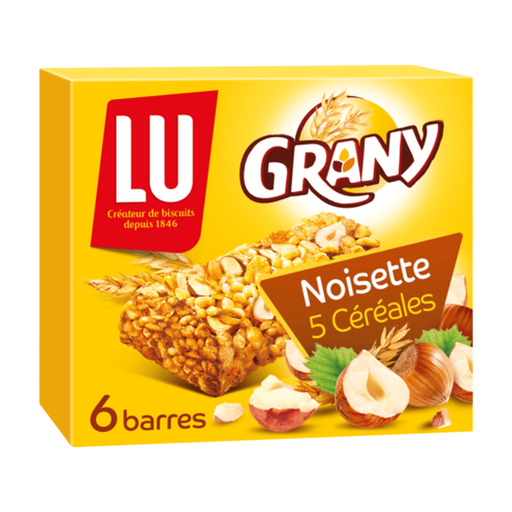 Image unavailable
This hazelnut recipe may appeal if you’re comparing different cereal bar combinations. The pack weighs 125 g. Check the number of bars, their individual weight and how they’re packaged if you plan to split them across several breaks.
 Image unavailable
Unlike the small cereal bars in the Nesquik multipack, this energy bar is a 68 g portion. Check that this size suits the break you have in mind and that each bar is packaged as you’d like. Check the allergens on the packaging.
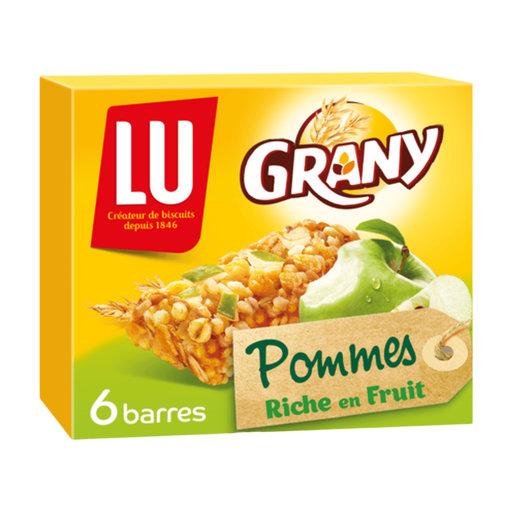 Image unavailable
This apple recipe gives you another combination to compare for an afternoon snack. The pack weighs 125 g. Check the number of portions and how they’re packaged before planning which bars to take with you. For allergen information, refer to the packaging of the product you buy.
Compare the nutritional values per 100 g, then check the weight of one bar and the number of portions. The DGCCRF says that showing nutritional information per 100 g makes it easier to compare products, but it doesn’t tell you how much you’ll eat at each break.
No. If it’s displayed, you can use it as an additional guide, but also read the nutritional information, ingredients, allergens and the weight of the bar.
Check the portion size, sugar, ingredients and allergens before choosing. Manger Bouger recommends a varied snack and advises limiting foods high in fat and sugar; a cereal bar alone won’t provide that variety.
Read the ingredients list and any ‘may contain’ statements on the pack you’re buying. The DGCCRF says that allergens must be highlighted; recipes you compare may contain several relevant ingredients, even if the product name doesn’t list them all.