Students keeping an eye on fat
You want to compare the amount shown per 100 g with the amount in the bar you’ll eat. Sugar and portion size matter too.


If you want to keep a cereal bar handy for the evening, start by comparing fat per 100 g, then check the portion size and sugar content. A claim on the front of the pack isn’t enough to prove that a bar is reduced in fat. If you’re on a budget, check the pack size too. A bar can make a handy snack or accompany a quick dinner, but its fat content alone doesn’t make it a meal.
You want to compare the amount shown per 100 g with the amount in the bar you’ll eat. Sugar and portion size matter too.
You compare the weight of each pack and the number of bars inside, rather than judging by how big the pack looks.
You’re looking for something quick to eat in the evening, while keeping a snack bar separate from the other foods you plan to have for dinner.
If you’re considering cereal bars as part of a budget student dinner, start by comparing their nutritional values per 100 g. Then check the portion size and pack format to work out what each pack means for you.
| Criteria | What to check | Who this matters to |
|---|---|---|
| Fat | Compare the values per 100 g, then check the amount in one bar. Don’t assume a product is reduced in fat based on its name alone. | If a bar is an evening snack, its fat content may matter more than claims on the front of the pack; around 42% of consumers put this comparison first. |
| Pack size | Check the net weight and number of bars to compare packs of different sizes. | If you’re managing a student budget, it’s important to know how many snacks are actually in a box; around 33% of consumers prioritise this. |
| Its place in dinner | Check the portion size and nutritional information, including sugar, protein and fibre, in the context of the other foods you plan to eat. | When a bar is a quick evening fix, I want to know what else I’ll have with dinner; around 25% of consumers put this question first. |
A product range name or how it’s presented on a shelf doesn’t prove that a bar carries a reduced-fat claim. The DGCCRF (France’s consumer and competition authority) states that nutrition claims must be authorised.
Check the wording actually used on the pack, and compare the nutritional values of bars in the same category.
Auchan’s product listing for Eat Natural red berry bars gives 7 g of fat and 48.8 g of sugar per 100 g. Kellogg’s France gives 9.2 g of fat and 28 g of sugar per 100 g for its Special K dark chocolate bars. So a lower value for one nutrient doesn’t tell you everything you need to know.
Compare fat and sugar on the same basis, then check the portion you plan to eat.
Carrefour’s listing for Sensation Protein seeds and red berries gives 33 g of fat per 100 g. The word “Protein” on its own tells you nothing about this value.
If protein is important to your choice, compare the fat content and ingredients of the specific product too.
Kellogg’s describes its bars as snacks. That doesn’t mean a bar on its own is the same as a dinner made up of several foods.
Keep it as a snack, or decide what other foods you’ll have as part of your evening meal.
Special K dark chocolate and Special K Protein coconut and cashew bars let you compare two recipes from the range. Their nutritional values shouldn’t be assumed to apply to all Kellogg’s bars.
The Classic’, Bio and Protein ranges offer different recipes and pack sizes to assess individually.
The red berry cereal bar listed by Auchan offers another nutritional profile to compare.
These two cereal bars are ready-to-eat snacks. If you’re thinking of having one in the evening, compare the pack format and the information on the packaging. Don’t assume it’s reduced in fat or that it can replace dinner.
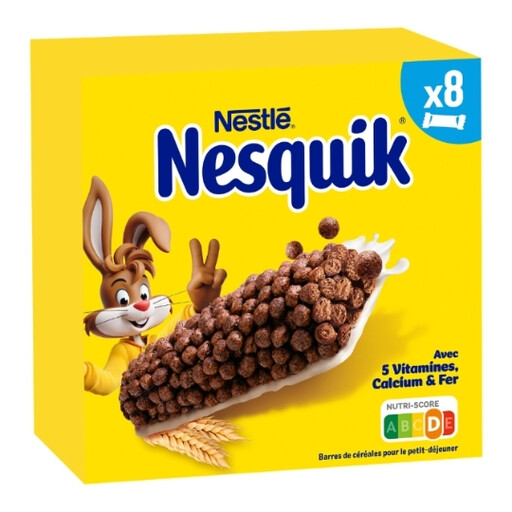 Image unavailable
This pack of eight individually wrapped bars may suit you if you’re looking for a portioned evening snack. The pack contains 8 bars of 25 g each. Check the nutritional information and allergens for the variant you receive before adding it to dinner.
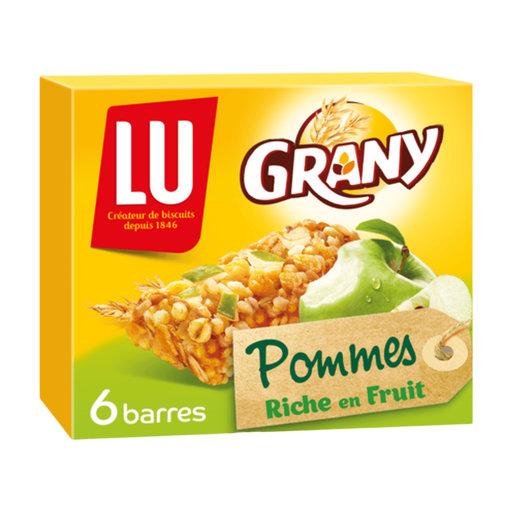 Image unavailable
This apple recipe is another evening snack option to compare. The pack weighs 125 g. Check the packaging for the portion size, number of bars and allergens for this variant before making your choice.
No. The DGCCRF states that nutrition claims must be authorised. When comparing cereal bars, check the fat per 100 g, then the amount in the portion you’ll eat. Don’t assume a product is reduced in fat based on the name of its range.
Kellogg’s France describes its Special K bars as snacks, not dinners. If you have one in the evening, treat it as a snack or one part of your meal, then choose the other foods you’d like to eat separately.
First, compare the nutritional values per 100 g on both packs. Then check the weight of each bar, the number of bars and the ingredients list to relate those values to what you plan to eat.
No. The ingredients alone don’t tell you the fat content of the finished product. Auchan’s listing for Eat Natural red berry bars gives 7 g of fat per 100 g, while Carrefour gives 33 g per 100 g for its Sensation Protein seeds and red berries bar. Compare each recipe using its own nutritional information.
Read the ingredients list and any “may contain” warnings on the packaging for the exact variant. Don’t assume the information for another bar from the same brand applies: the ingredients may differ.