Students eating between lectures
You’re looking for a portion you can pop in your bag and eat without any preparation. Check the weight of each bar and whether the bars are individually wrapped: a multipack doesn’t necessarily mean they are.


For a break at uni, first choose a format that lets you carry each portion the way you want, then check the weight of the bars. If you’re planning to make one your lunch, don’t judge the meal by the product name alone: compare the nutritional information per 100 g, the ingredients and the allergens in the recipe you’ve chosen.
You’re looking for a portion you can pop in your bag and eat without any preparation. Check the weight of each bar and whether the bars are individually wrapped: a multipack doesn’t necessarily mean they are.
If you’re planning several breaks, count the bars and compare their individual weights. That way, you’ll know exactly what each pack contains before choosing a larger pack to keep in reserve.
Compare the ingredient list and nutritional values for the exact recipe. France’s Directorate-General for Competition Policy, Consumer Affairs and Fraud Control (DGCCRF) reminds shoppers that allergenic ingredients must be highlighted on the label.
Start with a format that’s easy to carry, then check how many breaks the pack will cover and what each recipe contains.
| What to consider | What to check | Who is it for? |
|---|---|---|
| Portions to take with you | Number and weight of the bars; whether individual wrapping is explicitly stated. | Between lectures, I want to be able to take one bar out of my bag without carrying the whole pack around. Around 38% of shoppers would put ease of carrying first. |
| Enough for several breaks | Check the number of bars and the net weight of the pack together. | If I’m keeping bars for several days at uni, I want to know how many separate portions are in the pack. This would be the priority for around 31% of shoppers. |
| Recipe ingredients | Ingredients and allergens; sugars, fat and salt per 100 g. | Before choosing a recipe, I need to check its ingredients or avoid an allergen that affects me. Around 31% of shoppers would put this check ahead of the format. |
The number tells you how many bars there are, not necessarily how they’re packaged. That matters if you only want to put one in your bag.
Look for an explicit statement that the bars are individually wrapped on the exact product listing, or check photos of the pack.
Terms such as “Protein”, “Energy”, “Organic” or “wholegrain cereal” don’t, on their own, tell you everything about a bar’s nutritional profile.
Compare the nutritional values per 100 g, the portion size and the ingredients list. If a Nutri-Score is shown, it can be a useful extra guide.
Ingredients can vary from one recipe to another, even within the same range.
If you need to avoid an allergen, check which ingredients are highlighted on the packaging of the exact product you’ve bought before eating it.
The Special K range includes a chocolate option sold in a pack of six 21.5 g bars, according to Carrefour’s product listing.
The Carrefour Classic’, Carrefour Bio and Carrefour Sensation ranges include different recipes and formats.
At E.Leclerc, the GRAINEA range includes packs of six bars in several flavours, including dark chocolate, red fruit, fig and hazelnut.
E.Leclerc’s Eco+ range includes packs of six 126 g bars in flavours such as apple and apricot, dark chocolate and peanuts, and milk chocolate and banana.
This selection includes a barley and rice bar, energy bars, and a fruit and nut bar. When choosing something to take to uni, distinguish between the product category, the weight of each portion and how it’s packaged.
 Image unavailable
Worth considering if you’d like to spread your energy bars across several breaks. The pack is listed as containing 12 bars of 68 g each; if individual wrapping is essential for your bag, check the selected product.
If you’re allergic to, or avoiding, oats, soya, barley, almonds, wheat or milk, check the label on the pack you buy.
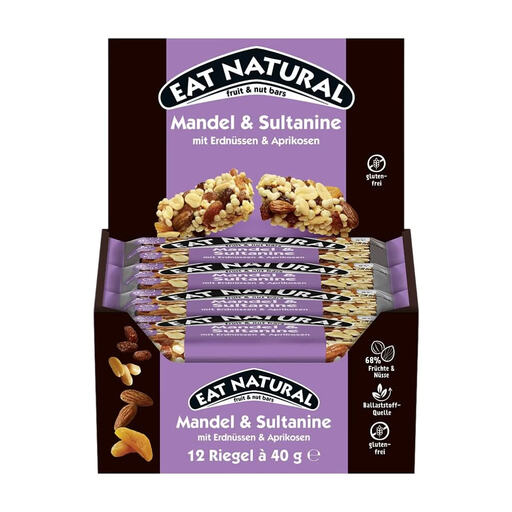 Image unavailable
A handy snack for a break if you’re after a fruit and nut bar rather than something specifically described as a cereal bar. Each bar is listed as weighing 40 g; check how many are in the pack if you’re planning for several days.
The product listing mentions peanuts and almonds. If these allergens affect you, check the packaging of the product you buy.
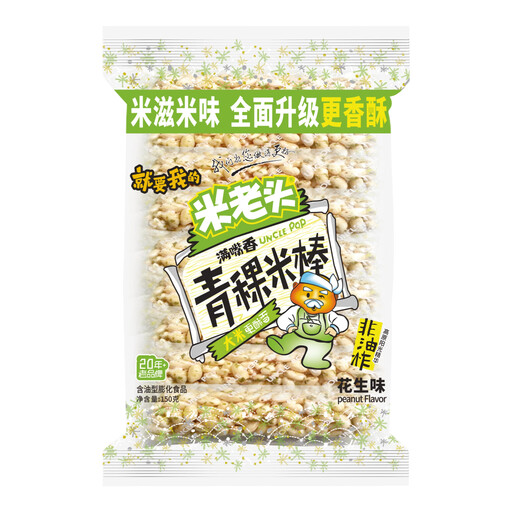 Image unavailable
A barley and rice bar to consider if you’re specifically looking for a cereal-based snack. The pack weighs 150 g: check how many bars it contains and the weight of each one before planning your breaks.
The product listing mentions barley, peanuts and soya. If you need to avoid any of these ingredients, check the label on the product you buy.
 Image unavailable
For keeping several energy bars to hand, this pack contains 12 bars of 68 g each. If you need to carry one separately, check how it’s packaged before you buy.
If you’re allergic to, or avoiding, oats, soya, barley or macadamia nuts, check the label on the pack you buy.
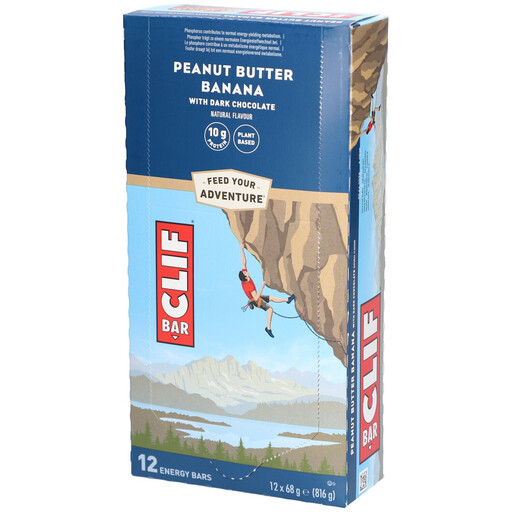 Image unavailable
Another pack of 12 energy bars weighing 68 g each, ideal for planning several breaks. If carrying bars individually is your main priority, check whether each one is wrapped separately.
The product listing mentions peanuts and soya, and says it may contain nuts, milk and wheat. If you have an allergy, check the packaging of the product you buy.
Don’t assume that one bar makes a suitable lunch for you. Check the portion size and nutritional information, then plan the rest of your meal according to your appetite and needs.
Check the ingredients list on the packaging of the recipe you’ve bought. In France, the Directorate-General for Competition Policy, Consumer Affairs and Fraud Control says allergenic ingredients must be highlighted. Don’t assume two flavours have the same ingredients.
Yes. Compare their nutritional values per 100 g, then check the weight of the portion you plan to eat. The Directorate-General for Competition Policy, Consumer Affairs and Fraud Control states that the nutrition declaration for relevant food products is given per 100 g or 100 ml.
Read the nutritional information per 100 g and the ingredients list. Manger Bouger recommends checking sugars when comparing products without a Nutri-Score. Also consider the portion size and any allergens that affect you.
Yes, for relevant food products sold in France. The Directorate-General for Competition Policy, Consumer Affairs and Fraud Control states that mandatory labelling information must be written in French.