Organisers on a tight budget
You need to have enough bars for the expected number of attendees without buying more packs than you need. The number of bars and the net weight will help you work out how much to buy.


To plan a village fête within a set budget, start by working out how many portions you need to hand out, then compare the number of bars and the net weight of the packs you’re considering. Also check the ingredients, allergens and packaging: two bars in one wrapper do not count as two individually wrapped portions.
You need to have enough bars for the expected number of attendees without buying more packs than you need. The number of bars and the net weight will help you work out how much to buy.
You want portions that are easy to count and hand out. Check whether the bars are individually wrapped or paired in one wrapper.
You’re preparing treats for a varied group and need to be able to check the ingredients, allergens and nutritional information for every product you choose.
First, work out how many portions you’ll need for the fête, then check the recipes and packaging of the products you might hand out.
| Criterion | What to check | Who is it for? |
|---|---|---|
| Quantity to buy | Compare the net weight and number of bars, then work out how many packs you’ll need for the planned distribution. | When I have a set budget, I want to make sure I buy enough for everyone attending. The cost of portions would be the top priority for around 36% of consumers. |
| Portions to hand out | Check the number of wrappers and whether each bar has its own individual wrapper. | At a busy stall, I’d rather be able to count and hand out portions quickly. Around 29% of consumers would put this need first. |
| Choice of recipes | Look at the flavours on offer and make sure they are cereal bars, rather than biscuits or chocolate bars. | For a group with varied tastes, I don’t want to rely on just one recipe. Variety would be the top criterion for around 21% of consumers. |
| Ingredients and allergens | Read the packaging for each product and keep the information accessible while handing them out. | If attendees have mentioned dietary requirements, I need to be able to check exactly what I’m offering them. Checking the ingredients would come first for around 14% of consumers. |
Two packs that look the same size may contain different numbers of bars. So the total number of packs isn’t enough to plan your distribution.
Make a note of the net weight, number of bars and number of wrappers before deciding how much to buy.
Ingredients vary from one product to another, even between two bars in the same category. The French Directorate General for Competition Policy, Consumer Affairs and Fraud Control (DGCCRF) reminds shoppers that allergens in prepacked food must be clearly highlighted.
Read the exact product packaging and keep it available for anyone who wants to check the ingredients.
A cereal bar, a protein bar and a chocolate bar are not necessarily the same type of product. Recipes and portion sizes can differ too.
Check the product name, ingredients list and nutritional information rather than relying on a claim on the front of the pack.
E.Leclerc’s product listing for an ECO+ dark chocolate and peanut bar says it is not sold on its website and advises shoppers to contact the store to check availability.
Confirm your chosen products with the shop or drive-through collection service before the fête, and leave yourself time to choose another recipe if needed.
ECO+ includes six-bar cereal packs, with apple and apricot and dark chocolate and peanut recipes listed by E.Leclerc.
Carrefour’s range includes several cereal bar recipes, including chocolate and fruit varieties.
Auchan’s range includes bars from different brands and packs with six, eight, ten or twelve items, among other formats.
Kellogg's has a product listing for its Special K dark chocolate bar, with details of its ingredients and nutritional values.
BN mainly sells biscuits and filled snacks, so the brand name alone doesn’t identify a pack of cereal bars.
These two formats can help you prepare several portions for a group. However, you’ll need to count their packaging differently.
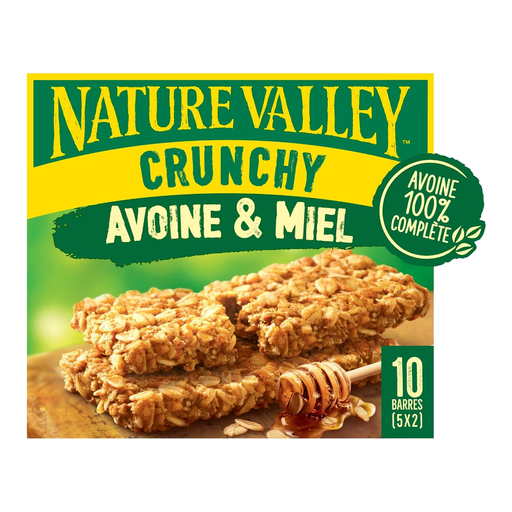 Image unavailable
For a stall, count this as five wrappers, each containing two bars, rather than ten individually wrapped bars. The pack weighs 210 g. Check the ingredients and allergens on the packaging before offering it to attendees.
 Image unavailable
The pack of eight 25 g bars makes it easy to count how many portions you’ll need for the fête. Check the packaging before handing them out individually. The ingredients listed for this product include wheat and milk; check the exact packaging for allergen information.
Start with the number of portions you plan to hand out, then check how many bars and wrappers there are in each pack. If two bars share a wrapper, decide whether you’ll hand out the whole pack or whether your set-up allows you to separate them.
No. Check the product name on the listing and the packaging for the specific item. BN mainly sells biscuits and filled snacks, so you can’t automatically count a BN pack as a pack of cereal bars.
Check the product name, ingredients, allergens, net quantity and date shown on each product. For prepacked food in France, the DGCCRF reminds shoppers that allergens must be clearly highlighted. Keep the packaging accessible so you can answer attendees’ questions.
You don’t have to offer only cereal bars at the fête. Manger Bouger recommends offering a variety of foods for a snack; cereal bars can be one packaged option among others, bearing in mind the ingredients of the products you choose.