Shoppers looking for a verifiable reduction
You want to give a bar that’s explicitly labelled as reduced fat. The claim must apply to the specific product you choose; a recipe that looks light doesn’t meet this criterion on its own.


If reduced fat is the deciding factor for your gift, look for a claim that applies to the bar itself rather than relying on the word ‘organic’, the ingredients or another nutrition claim. If you’re choosing between bars without this claim, compare their values per 100 g, then check the portion size, ingredients and allergens. A lower fat value alone isn’t enough to qualify a product as ‘reduced fat’.
You want to give a bar that’s explicitly labelled as reduced fat. The claim must apply to the specific product you choose; a recipe that looks light doesn’t meet this criterion on its own.
When choosing between several bars, you want to check the sugars, fibre, saturates and portion size too, rather than basing your decision on a single value.
You’re looking for a flavour and format that suit the recipient. Before giving bars containing seeds or nuts, check the ingredients and allergen information for the exact product.
First decide whether you’re looking for an explicitly stated reduction in fat or simply want to compare different recipes. In either case, the label on the bar you choose is what matters.
| Criteria | What to check | Who is it for? |
|---|---|---|
| Reduced fat | The ‘reduced fat’ claim must apply to the bar in question. Then compare the fat values per 100 g. | If I’m giving a bar specifically because of this feature, I want to distinguish a stated reduction from a general impression that it’s light; around 42% of consumers would put this evidence first. |
| Other nutritional values | Check the sugars, fibre and saturates per 100 g, then look at the portion size. | When choosing between several recipes, I don’t want to focus only on their fat content; around 33% of consumers would prioritise this broader look at nutritional information. |
| Suitability as a gift | Check the ingredients, allergens and any possible traces, as well as the number of bars. | When putting together a gift to share, the recipient’s tastes and dietary requirements come first; around 25% of consumers would make suitability their priority. |
A claim about sugars doesn’t mean that the bar’s fat content has been reduced. For example, Auchan lists the Gerblé Apricot Sesame bar with a claim relating to sugars.
If fat is your priority, look for a claim that specifically relates to fat, then check the nutritional values.
The production method and the names of the ingredients don’t tell you how much fat a bar contains. A bar with seeds can’t therefore be described as reduced fat on that basis alone.
Compare the values per 100 g of similar products, and reserve the term ‘reduced fat’ for products that actually carry this claim.
The Carrefour Bio Seeds and Almonds product listing flags almonds and possible traces of milk, peanuts and other nuts. This information could affect your choice of gift.
Ask about the recipient’s dietary requirements, then check the ingredients list and any ‘may contain’ statements on the exact product’s packaging.
The range includes Croustille Oat & Honey bars.
Auchan’s product listing presents the Apricot Sesame bar with a Nutri-Score A and a claim relating to sugars.
The Bio Seeds and Almonds bar combines several seeds with almonds.
The retailer offers its own-brand bars, including varieties labelled Less Sugar.
E.Leclerc lists several flavours of Eco+ cereal bars in boxes of six.
These products include cereal bars and a blueberry energy bar. They offer a chance to explore different formats and compare labels before choosing a gift; their inclusion here doesn’t mean they’re ‘reduced fat’ bars.
 Image unavailable
A blueberry energy bar to consider if this type of bar suits the recipient. The box contains 12 bars of 68 g each. Compare its label with those of other bars of the same type, and check the allergens before giving it as a gift.
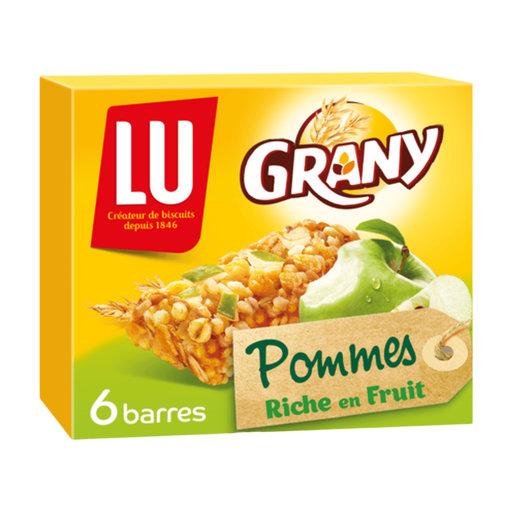 Image unavailable
Apple cereal bars for someone who enjoys this flavour. The pack weighs 125 g; check the values per 100 g and the ingredients for this product before comparing it with another recipe.
 Image unavailable
Eight 25 g cereal bars to consider if this format suits your gift. A reference to cocoa powder in the ingredients doesn’t demonstrate that the fat content of the whole bar has been reduced; check its label and allergen information.
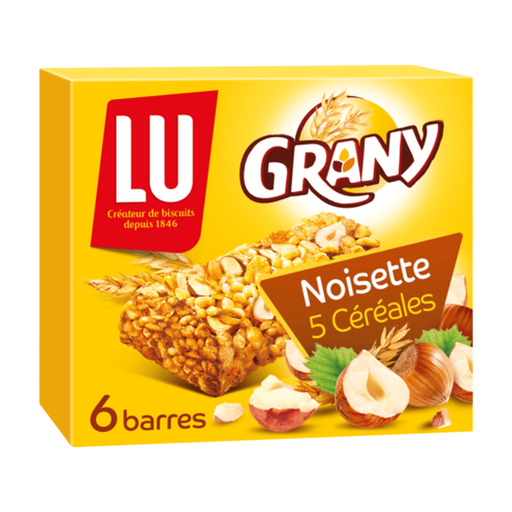 Image unavailable
Hazelnut cereal bars to consider if this ingredient suits the recipient. The pack weighs 125 g; check the nutritional values and allergen information for this variant before buying.
No. Under European Regulation (EC) No 1924/2006, a ‘reduced’ claim generally requires a reduction of at least 30% compared with a similar food. Values per 100 g can help you compare bars, but a difference between them alone isn’t enough to justify this claim.
No. Santé publique France describes Nutri-Score as a way to help people understand nutritional information, not as a standalone indication of fat content. If it appears on the bar, check the values per 100 g and the portion size too.
Check the ingredients list and any trace warnings on the packaging of the exact variant. For example, Carrefour flags almonds and possible traces of milk, peanuts and other nuts in its Bio Seeds and Almonds bar.
Yes. Sugars are listed separately in the nutrition table and ingredients list. Anses notes that they may appear under other names, including ‘invert sugar’ and ‘glucose syrups’.