What should you check?
If reducing fat is your aim, start with the ingredients and nutritional information. Then check each recipe against your guests’ dietary restrictions and the quantity you’ll need.
| What to check |
Look for |
Who is it for? |
| Fat |
The figures per 100 g for similar bars, and the comparison behind any ‘light’ or ‘reduced-fat’ claim. |
I want to choose a lower-fat recipe without judging its contents by the word ‘organic’ or ‘high-protein’ alone; around 43% of consumers would put this check first. |
| Allergens |
Allergens in the ingredients and any ‘may contain’ warnings, for each recipe. |
Before serving a group, I need to rule out bars that aren’t suitable for my guests’ stated dietary restrictions; around 29% of consumers would put this check first. |
| Portions to share |
The number of bars and the pack’s net weight. |
If several friends will be helping themselves, I want to make sure there are enough bars without assuming they’re all the same size; around 28% of consumers would prioritise this first. |
Bars available on Joybuy
These multipacks could be suitable for serving a group. Compare their ingredients and portion sizes to suit your guests; don’t assume either is ‘reduced fat’.
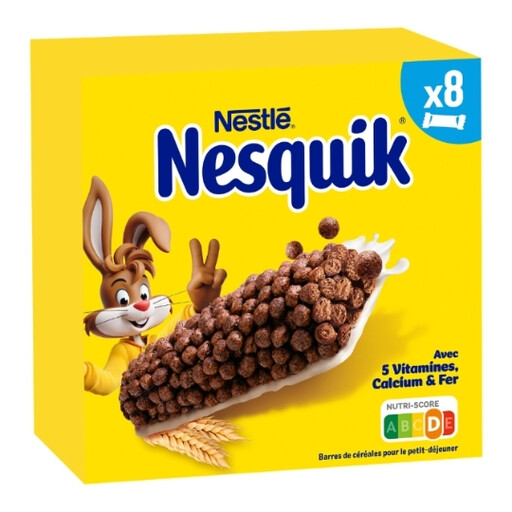 Image unavailable
Nesquik cereal bars, 8 × 25 g
This pack size makes it easy to plan how many bars to hand out when serving drinks. Before presenting it as a lower-fat option, check the fat content per 100 g for the whole bar: a claim about cocoa powder doesn’t show that the bar itself has less fat. The product details list milk and gluten, as well as possible traces of tree nuts. Check the packaging against your guests’ dietary restrictions.
View on Joybuy
 Image unavailable
CLIF BAR Blueberry Energy Bar, 12 × 68 g
At 68 g each, these bars are a different portion size to consider if you’re planning to serve them with drinks. Their fat content per 100 g alone isn’t enough to establish that they contain less fat than a similar bar. Check the packaging for allergens and trace warnings before serving them to your group.
View on Joybuy
Frequently asked questions
Is a ‘no added sugar’ bar necessarily lower in fat?
No. The claim refers to added sugars, not a comparison of fat content. For a specific recipe, read the nutritional information per 100 g and compare it with a similar bar.
What does ‘reduced fat’ mean on a bar?
In France, the DGCCRF says this comparative claim requires a reduction of at least 30% in fat content compared with a similar product. If you’re choosing between several bars, compare their figures per 100 g too; one figure on its own doesn’t prove that reduction.
What should I check before serving bars to a group?
First, ask about dietary restrictions. Then check the ingredients, highlighted allergens and trace warnings for each recipe. Finally, check the number of bars and the pack weight so you can plan the portions.
Is an organic seeds and almonds bar necessarily lower in fat?
No. Carrefour lists 39 g of fat per 100 g for its Bio Seeds and Almonds bar. Organic status is no substitute for checking the nutritional information for the recipe you choose.
How should I store the bars before serving them?
Follow the storage instructions on the packaging for the product you’ve bought. These take account of the requirements for that particular recipe until you’re ready to serve it.


