For drinks on the patio, choose a cereal bar if you’d like to offer a small sweet option alongside other snacks, rather than as a substitute for savoury bites to share. To find a lower fat content, compare the values per 100 g for similar bars, then check the sugars, allergens and pack size. The presence of grains or seeds alone doesn’t mean a bar is “reduced fat”.
Who is this choice for?
Anyone looking for a lower-fat bar
You’d like to add a sweet option to the table without relying on the recipe name alone. Compare the fat content using the nutritional information for similar products, without assuming they carry a “reduced fat” claim.
Anyone mindful of allergens
You’re hosting guests who need to avoid certain ingredients. Recipes featured by Kellogg’s France, Carrefour France and Auchan France may contain milk, soya, peanuts or tree nuts, among other allergens. The label for the specific product you’re serving is what matters.
Anyone planning savoury snacks to share
If you’re mainly looking for bites to put in the middle of the table, an individually wrapped sweet bar can be an extra. Manger Bouger suggests serving carrot or cucumber sticks as appetisers, for example.
What should you check before buying?
First decide whether the bars will be a sweet extra or whether you’re looking for food to share with drinks. Then compare the labels of bars that suit your choice.
| Criteria |
What to check |
Who is it for? |
| Fat content |
Compare the fat and saturated fat content per 100 g across similar bars. Check any “reduced fat” claim on the packaging. |
If I want a small sweet option with less fat than the other bars I’m considering, I can’t rely on the word “cereal”. Around 36% of consumers rank this comparison of fat content as their top priority. |
| Place in the spread |
Choose between a bar to offer as an extra and savoury bites to share. |
When hosting around a table, I might prefer food that everyone can help themselves to rather than an individual sweet bar. This style of drinks and snacks is a priority for around 29% of consumers. |
| Allergens |
Read the ingredients list and any warnings about traces on the packaging for each product. |
When guests need to avoid certain ingredients, I want to know exactly what I’m serving them. Checking allergens comes before other criteria for around 21% of consumers. |
| How much to serve |
Check the net weight, number of bars and whether they’re individually wrapped. |
If several people will be having a bar, I need to know how many portions are available before planning what to serve. Around 14% of consumers prioritise this practical format. |
Mistakes to avoid
-
Assuming “organic” or “with grains” means low in fat
Carrefour’s Carrefour Bio Graines et Amandes bar contains 39 g of fat per 100 g, according to Carrefour France. So the recipe name is no substitute for checking the nutritional values of that specific product.
Compare the fat and saturated fat content per 100 g of similar products before choosing.
-
Confusing a personal comparison with a “reduced fat” claim
In France, nutrition claims used on food products must meet the definitions and conditions that apply across the European Union, as Your Europe and the DGCCRF explain.
A lower value than that of another bar isn’t enough on its own to describe a product as “reduced fat”.
-
Overlooking allergens when food is laid out for guests to help themselves
Ingredients and warnings about traces vary by recipe. A bar’s small size doesn’t change the precautions needed for anyone affected.
Keep the packaging to hand and check each product with guests who need to avoid certain ingredients.
-
Serving only bars with savoury drinks
An individual sweet bar isn’t the same as bites to share.
Keep it as an extra if it suits your guests. For savoury options, Manger Bouger suggests carrot or cucumber sticks, for example.
Brands to consider
These products show how recipes can differ. Compare specific products rather than drawing conclusions about an entire brand.
Kellogg’s Special K
The range includes chocolate bars and a coconut and cashew Protein recipe, which you could consider as individual sweet snacks.
- According to Kellogg’s France, the milk chocolate bar contains 8.9 g of fat and 25 g of sugars per 100 g.
- These values apply to this product, not every Special K bar. Check the ingredients for the variety you choose, too.
Carrefour
Carrefour France’s cereal bar range includes a variety of recipes and pack sizes.
- This variety makes it possible to compare the labels of several products, depending on the type of bar you’re looking for.
- According to Carrefour France, the Carrefour Bio Graines et Amandes bar contains 39 g of fat per 100 g. Check the ingredients and allergen information for this specific product.
Nature Valley
The Sweet & Salty Nut recipe is for anyone looking for a sweet-and-savoury combination with peanuts.
- Taste and texture can help guide your choice if a peanut bar is suitable for your guests.
- The product information featured by Auchan France lists 25.7 g of fat and 7.2 g of saturated fat per 100 g for this product. Check its allergen information before serving it, too.
An option on Joybuy
This apple cereal bar could make a sweet extra with drinks on the patio. To see whether it suits your search for a lower fat content, compare its label with those of the other bars you’re considering.
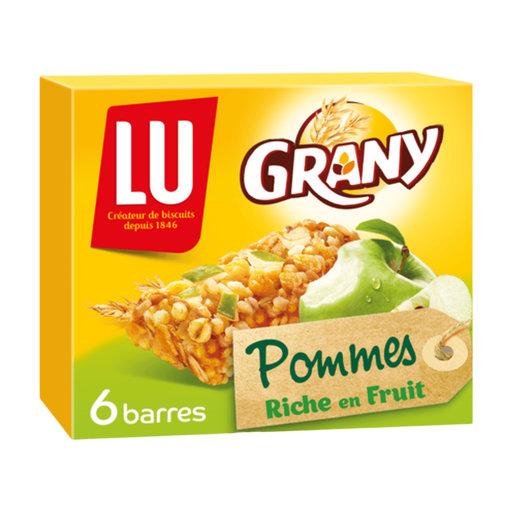 Image unavailable
LU Grany apple cereal bars, 125 g
A sweet option to serve alongside savoury bites. The pack is listed as 125 g. Check the packaging for the number of bars, nutritional values and allergens before planning portions.
View on Joybuy
Frequently asked questions
Is a bar with seeds or almonds always lower in fat?
No. Carrefour France lists 39 g of fat per 100 g for its Bio Graines et Amandes bar, while the Nature Valley Sweet & Salty Nut product information featured by Auchan France lists 25.7 g per 100 g. Compare the values for similar products rather than assuming what’s in a bar from its recipe name.
Can I call a bar “reduced fat” if it contains less fat than another one?
Not based on that comparison alone. In France, nutrition claims must meet the definitions and conditions that apply across the European Union, as explained by Your Europe and the DGCCRF. You can compare the values per 100 g of two bars without making an unverified claim about either one.
Which allergens should I check before serving bars to guests?
Read the ingredients list and any warnings about traces for each product. Depending on the recipe, product information from Kellogg’s France, Carrefour France and Auchan France mentions cereals containing gluten, milk, soya, peanuts or tree nuts, among other allergens. The DGCCRF reminds food businesses that allergenic ingredients must be emphasised on the labels of prepacked foods.
What can I serve if I’d prefer savoury snacks to share?
Plan bites that are suitable for sharing, and keep the bars as a possible sweet option. Manger Bouger suggests carrot or cucumber sticks as appetisers, for example.


