Students prioritising fat content
If this is your main criterion, compare the ‘fat’ figures per 100 g. A claim about sugar or protein doesn’t, on its own, tell you whether the fat content is lower.


If your priority is choosing a cereal bar with less fat, compare the figures given per 100 g across similar recipes. Claims such as ‘less sugar’, ‘organic’ or ‘high-protein’ don’t answer this question. For lunch at uni, also check the portion size, other nutritional information and the ingredients. A bar on its own may not be a substitute for a varied meal.
If this is your main criterion, compare the ‘fat’ figures per 100 g. A claim about sugar or protein doesn’t, on its own, tell you whether the fat content is lower.
A bar is easy to slip into your bag, but its convenient size doesn’t make it a lunch in itself. Manger Bouger reminds us that one food on its own is no substitute for a varied, balanced diet.
The exact recipe matters more than the range name. Check the ingredients and allergens listed on the packaging, especially if you need to avoid certain cereals, peanuts, soya, milk or nuts.
When choosing a bar to take to uni, start with your main need, then check the portion and recipe before deciding how to include it in your lunch.
| What matters to you | What to check | Who is this for? |
|---|---|---|
| Fat content | Compare fat per 100 g in bars intended for similar uses, and check that any reduction claim applies specifically to this nutrient. | If I’m looking above all for less fat, I don’t want to confuse this with a claim about sugar. Around 31% of consumers put this comparison at the top of their list. |
| How it fits into lunch | Check the portion weight and the nutritional information relevant to your choice. Plan the other foods in your meal to suit your needs. | Between lectures, I need something easy to take with me, but I shouldn’t assume that one bar makes up my whole lunch. This is the top priority for around 31% of consumers. |
| Sugars and ingredients | Read the ‘sugars’, ‘fat’, ‘fibre’ and ‘protein’ figures separately, using the same per-100 g basis. | A ‘less sugar’ claim interests me, but I also want to understand what’s in the recipe. Around 23% of consumers prioritise this overall nutritional picture. |
| Ingredients and allergens | Check the ingredients list, highlighted allergens and any ‘may contain’ information for the exact product. | If I need to avoid an ingredient, whether the bar is suitable comes before its fat content. This is the top criterion for around 15% of consumers. |
The Less Sugar claim on the Auchan range relates to sugar. Auchan lists 10 g of fat per 100 g for its oat bran and almond bar: these are two different pieces of information.
Check ‘fat’, ‘of which saturates’ and ‘sugars’ separately in the nutrition table.
‘Organic’ or ‘high-protein’ describes another aspect of the product; it doesn’t mean its fat content is lower.
Compare the nutritional values, portion and ingredients according to what you’re actually looking for.
Ingredients vary from one recipe to another, even when the bars look similar. If you have an allergy, check this before comparing nutritional information.
Check the packaging for the exact product every time you buy it, including any ‘may contain’ information.
The figures per portion depend on the weight of the bar, so they don’t let you compare two recipes in different sizes on their own.
Compare the figures per 100 g first, then use the per-portion values to assess how much you’re planning to eat.
The Special K range includes a variety of recipes, so the range name alone doesn’t tell you whether a bar has less fat.
The Less Sugar range may interest people comparing sugar content, but it doesn’t automatically meet the needs of someone looking for bars with less fat.
Carrefour Bio recipes need to be checked individually: the organic claim doesn’t tell you about their fat content.
The Marque Repère range includes Grainea bars in a variety of recipes.
BN’s wholegrain cereal and chocolate-filled biscuit is a different type of product from a cereal bar.
These bars are easy to take with you and let you compare recipes and formats for lunch at uni. Their stated fat content isn’t, on its own, a ‘reduced fat’ claim. Check the packaging if this claim is important to you.
 Image unavailable
This pack of 68 g bars is handy for a snack on the go; plan the other parts of your lunch separately.
The stated fat content is 8.2 g per 100 g. If you need to avoid an ingredient, check the packaging for oats, soya, barley, almonds, wheat and milk, as well as any ‘may contain’ information.
 Image unavailable
These 68 g bars are another option to take with you if you’d like to compare flavours and portion sizes.
The stated fat content is 12.1 g per 100 g. Check the ingredients and any ‘may contain’ information if oats, soya, barley or macadamia nuts are a concern for you.
 Image unavailable
The 68 g size is easy to take along for a break between lectures, but that doesn’t necessarily make it a whole meal.
The stated fat content is 13 g per 100 g. Check the packaging if you need to avoid peanuts or soya, and look out for any ‘may contain’ information.
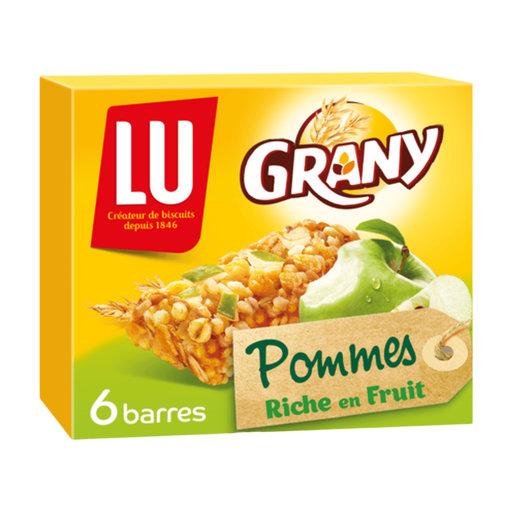 Image unavailable
This 125 g pack is worth considering if you’re looking for apple bars to take with you. Check how many bars it contains and their individual weight to work out your portion.
The stated fat content is 13 g per 100 g. Check the packaging for gluten-containing cereals, hazelnuts and any ‘may contain’ information for other nuts or milk.
No. A light-looking product doesn’t replace nutritional information about fat. If a reduction is claimed, check that it specifically relates to this nutrient, then compare the figures given per 100 g.
Not necessarily: the two claims relate to different nutrients. For its Less Sugar oat bran and almond bar, Auchan claims a reduction in sugar compared with the average for plain biscuits and lists 10 g of fat per 100 g.
Don’t assume that one bar on its own makes a complete lunch. Manger Bouger reminds us that one food on its own is no substitute for a varied, balanced diet. Choose the other parts of your meal to suit your appetite and needs.
Read the ingredients, highlighted allergens and any ‘may contain’ information on the packaging for the exact recipe. The DGCCRF states that allergenic ingredients must be highlighted on the labels of the foods concerned.