For a sweet treat that guests can pick up without cutting, choose individually portioned organic cereal bars. If you’re planning a chocolate tasting for everyone to share, a break-apart bar is better suited to the occasion. In either case, check the organic certification on the specific product, as well as its allergens and sugar content per 100 g: the word “organic” alone doesn’t tell you what’s in it.
Who are these formats for?
Hosts who prefer individual portions
If everyone needs to be able to grab a snack without breaking a bar of chocolate or using crockery, check how many bars are in the pack and how they’re wrapped. A box of cereal bars could work well, as long as the recipe suits your guests.
Shoppers who want to check organic certification
A brand name or the way a pack looks isn’t enough to confirm that a specific product is organic. Check its certification: Agence Bio explains that European Regulation (EU) 2018/848 covers, among other things, the production, inspection and labelling of organic products.
Shoppers keeping an eye on sugar and allergens
If you’re putting together a buffet for a group, check the ingredients, declared allergens and sugar content per 100 g for each recipe. If the packaging displays a Nutri-Score, remember that it doesn’t replace this information.
What should you check before buying?
First, decide how you’ll serve the product. A cereal bar to hand out, a small portion of chocolate and a break-apart bar are suited to different occasions. Then check the label of the recipe you’ve chosen.
| Criteria |
What to check |
Who is it for? |
| Organic certification |
The organic certification on the specific product, followed by its ingredients list. |
If certification is a condition of my purchase, I want to see it on the product rather than rely on its name. Around 33% of consumers would make this their top priority. |
| Allergens |
Allergens listed in the ingredients and any ‘may contain’ warnings. |
If guests have told me they have an allergy, I need to find a suitable recipe before thinking about the taste or format. Around 25% of consumers would put this precaution first. |
| Portions and serving |
The number of portions, the weight and whether the chocolate needs to be broken up. |
If I want everyone to help themselves easily, I look for a format that suits the number of guests and the way I’m setting out the buffet. Around 25% of consumers would put ease of serving first. |
| Sugar and nutritional information |
Sugar per 100 g and per serving; check the Nutri-Score only if one is displayed. |
When I’m choosing between several recipes, I want to compare their nutritional information on the same basis, rather than assume anything from the word “organic” alone. This would be the main criterion for around 17% of consumers. |
Common misconceptions to avoid
-
Assuming “organic” means low in sugar
Organic certification relates to production standards and labelling. On its own, it doesn’t tell you how much sugar is in a cereal bar or a bar of chocolate.
Compare the sugar content per 100 g of similar products, then take into account the portion you plan to serve.
-
Thinking every pack displays a Nutri-Score
The DGCCRF distinguishes between the nutrition declaration, which is compulsory for most prepacked foods, and the Nutri-Score, which is voluntary. So its absence doesn’t tell you whether a product is a good or poor choice.
If it’s displayed, use it as an additional guide when comparing products in the same category, and check the ingredients and nutritional information too.
-
Serving a recipe without checking its allergens
Cereal bars, recipes with dried fruit and milk chocolate bars can contain different allergens. At a buffet, keeping the original packaging gives guests a chance to check the information for the product being served.
Check the ingredients and any ‘may contain’ warnings. If you know someone has an allergy, provide a suitable alternative and keep it clearly separate.
-
Applying the soft drinks tax to solid bars
Article 1613 ter of the French General Tax Code, published by Légifrance, concerns drinks and liquid preparations for making drinks. This levy isn’t a factor when choosing a solid chocolate bar.
To compare bars, look at their format, labelling and nutritional information.
Brands to know, depending on the format you’re looking for
Carrefour Bio
A box of organic chocolate cereal bars could be a good choice for handing out snacks, rather than serving pieces of chocolate for everyone to share.
- Carrefour’s product listing features a box of six bars weighing 138 g. The number of portions can be compared with the number of guests.
- The listed recipe includes ingredients such as glucose syrup, oats and wheat. Check all the ingredients and allergens on the box you buy.
Bjorg
The Fruit, Nut and Honey Bar is a snack made with dried fruit and nuts, rather than a chocolate bar or a bar of chocolate to share.
- Bjorg’s product listing gives a recipe that includes peanuts, honey, almonds, pumpkin seeds and raisins.
- The peanuts and almonds should be taken into account before offering these bars to a group.
Ethiquable
The brand offers organic, fair-trade chocolate bars to break into pieces for everyone to enjoy.
- Its Lait 50 % Bolivie bar lists 50% cocoa. Check the specific recipe if you’re planning to offer a choice of chocolates.
- A milk chocolate bar won’t suit every guest. Check the allergens and any ‘may contain’ warnings on the product you choose too.
Kaoka
Kaoka offers organic, fair-trade chocolate bars, including recipes with added ingredients that are ideal for sharing.
- The range includes a 100 g 70% dark chocolate bar with crispy quinoa and a 180 g milk chocolate bar with almonds, caramel and fleur de sel.
- The ingredients, including almonds, vary from one bar to another. Check the label before serving.
Chocolate and cereal options on Joybuy
These products include chocolate to serve in pieces, a small portion of chocolate and cocoa cereal bars. Choose according to how you plan to serve them, then check the organic certification and allergens on the packaging of the product you buy.
 Image unavailable
CARRE SUISSE organic dark chocolate with lemon and green pepper, 100 g
Worth considering if you want to serve pieces of chocolate to guests who enjoy this flavour combination. The bar weighs 100 g; check the organic certification and allergens on the packaging.
View on Joybuy
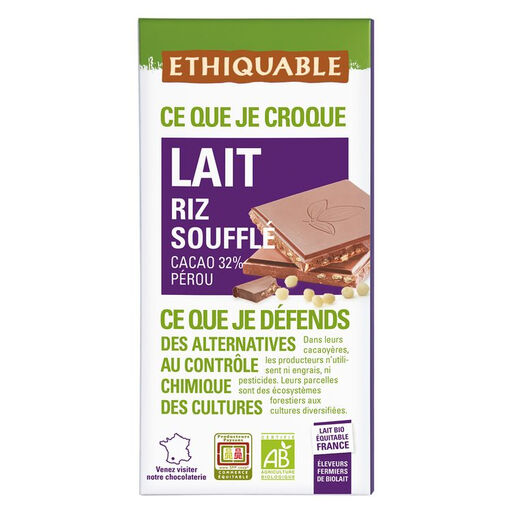 Image unavailable
ETHIQUABLE organic milk chocolate with puffed rice, 100 g
A bar to break into pieces if you’d like to serve milk chocolate with puffed rice. It weighs 100 g; check the packaging for organic certification and allergen information.
View on Joybuy
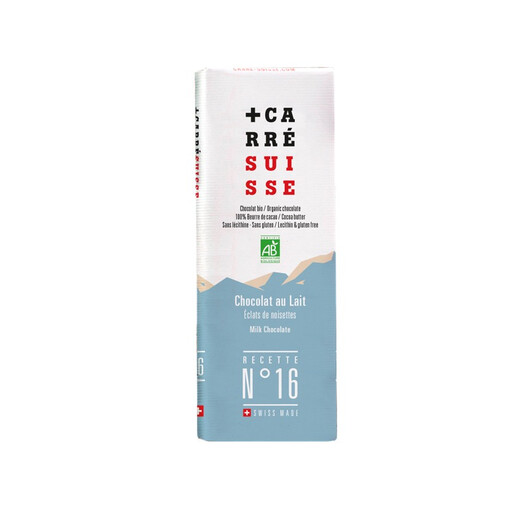 Image unavailable
CARRE organic milk chocolate with hazelnuts, 40 g
At 40 g, this is better suited to a small portion of chocolate than sharing between several guests. It contains hazelnuts, so check all the allergens and the organic certification on the packaging.
View on Joybuy
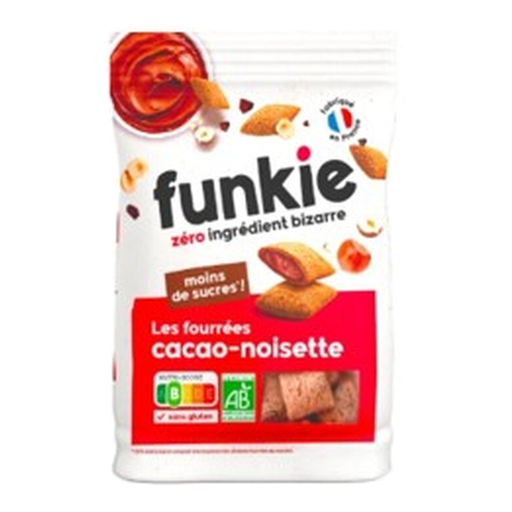 Image unavailable
FUNKIE organic cocoa and hazelnut cereal bars, 250 g
Worth considering if you’d prefer cocoa cereal bars to a bar of chocolate. The pack is listed as 250 g; check how many bars it contains, whether they’re individually wrapped, and the allergens and organic certification before planning to hand them out.
View on Joybuy
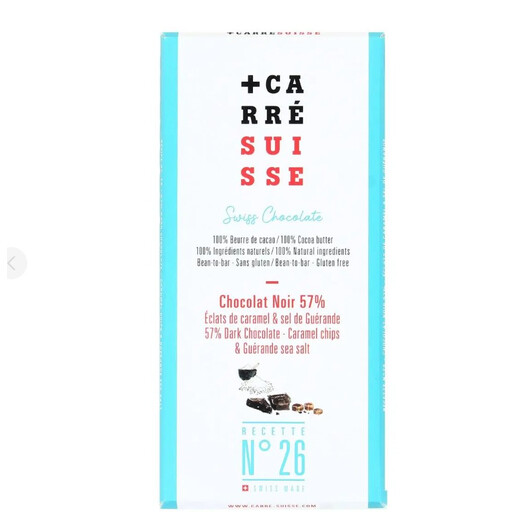 Image unavailable
CARRE organic dark chocolate with caramel and Guérande salt, 100 g
Another recipe to serve in pieces, if caramel and Guérande salt suit your planned spread. The bar weighs 100 g; check the organic certification, sugar and allergens on the packaging.
View on Joybuy
Frequently asked questions
Does the soft drinks tax apply to chocolate bars in France?
No. A solid chocolate bar doesn’t fall within the scope of the levy on drinks and liquid preparations for making drinks described in Article 1613 ter of the French General Tax Code, published by Légifrance. When choosing a bar, check its sugar content in the nutrition declaration instead.
Does a chocolate bar have to display a Nutri-Score?
No. The DGCCRF states that the Nutri-Score is voluntary, while a nutrition declaration is compulsory for most prepacked foods. You can compare sugar and fat per 100 g even when no Nutri-Score is displayed.
How can you check whether a cereal bar or chocolate bar is organic?
Look for organic certification on the packaging of the specific product. Don’t rely solely on the range name or how it’s presented. Agence Bio explains that European Regulation (EU) 2018/848 governs the inspection and labelling of organic products.
What should you keep handy at a shared buffet?
Keep the packaging for the products you serve so guests can check the ingredients, allergens and any ‘may contain’ warnings. If a guest has told you they have an allergy, check that the specific product is suitable before serving it.


