People preparing several lunch boxes
A clearly stated number of bars makes it easier to split them between several bags or travellers. The total pack weight alone won’t tell you how many portions you can hand out.


Choose a multipack based on how many people you’re catering for and how many times you plan to hand out a bar. Then check the weight of each portion: six bars don’t necessarily make six meals. Before sharing the pack, check the ingredients and plan what else you’ll need to complete the meal. For your journey, also check your airline’s and airport’s rules.
A clearly stated number of bars makes it easier to split them between several bags or travellers. The total pack weight alone won’t tell you how many portions you can hand out.
If you’d rather take fewer bars but have heavier individual portions, compare the weight per bar rather than just the number on the pack. A four-bar pack may suit a different need from a pack of six or ten.
When sharing a pack, everyone should be able to check the ingredients that matter to them. Depending on the recipe, you may need to pay particular attention to peanuts, nuts, milk or cereals containing gluten.
When buying snacks to share on a journey, first decide how many bars you need. Portion size, ingredients and travel requirements may then affect which pack you choose.
| Criteria | What to check | Who is it for? |
|---|---|---|
| Number of portions | Count how many bars you need, then check the number of units and their individual weight. | If I want to put a snack in several bags, I need to know how many bars I can hand out. This would be the top priority for around 40% of consumers. |
| Size of each bar | Compare the weight per bar and the nutritional information per portion. Don’t infer the size of an individual bar from the pack’s total weight alone. | Between stages of a journey, I’d rather have a larger portion, even if it means buying fewer bars. Around 30% of consumers would put portion size first. |
| Ingredients | Read the ingredients for the product you’re buying and compare the nutritional information per 100 g if the portions differ. | Before sharing a pack, I need to make sure its recipe suits the people who’ll be eating it. For around 20% of consumers, ingredients would be the main consideration. |
| Travel requirements | Check the rules set by the airline and airport for your flight. | If I’m taking the pack in my cabin baggage, I want to know the rules for my journey before setting off. Around 10% of consumers would put this check first. |
The number of bars tells you how many you can hand out, not how much food is intended for each meal. Carrefour products mentioned in the brief include bars weighing 21 g, while portion sizes vary between recipes.
Check the weight of each bar and decide separately what else you’ll need to pack to complete the meal.
Recipes aren’t interchangeable when you’re buying for a group: some products from Kellogg's or E.Leclerc, for example, contain nuts or peanuts.
Read the label on the product you’ve actually bought before sharing it. Choose a different recipe for anyone who needs to avoid an ingredient.
Paris Aéroport states that baggage weight and size rules depend on the airline. That doesn’t mean a particular bar will be allowed through every security check or at every destination.
Check your airline’s and airport’s rules for your specific journey.
Kellogg's products mentioned include Special K bars sold in packs of six at Auchan, and a Honey Almond & Peanut recipe with a 32 g portion size stated by the brand.
Carrefour offers Classic' bars in packs of six, as well as Sensation products in packs of four.
The Auchan range mentioned includes packs of six Crousty bars, packs of ten Grany bars and Nature Valley Crunchy in five sachets of two bars.
E.Leclerc offers Marque Repère bars, including products in the Grainea range, in packs of six.
BN offers biscuit snacks, including Mini BN and P'tit Dej. A biscuit can be a useful addition to a lunch box, but it isn’t the same as a cereal bar.
Two cereal bar formats to help you plan what to share, followed by a pack of energy bars to consider separately if you’re looking for larger portions.
 Image unavailable
This pack of eight bars lets you plan on one 25 g bar per person. If anyone in your group needs to avoid certain ingredients, check the label before sharing them. A bar isn’t necessarily a meal on its own.
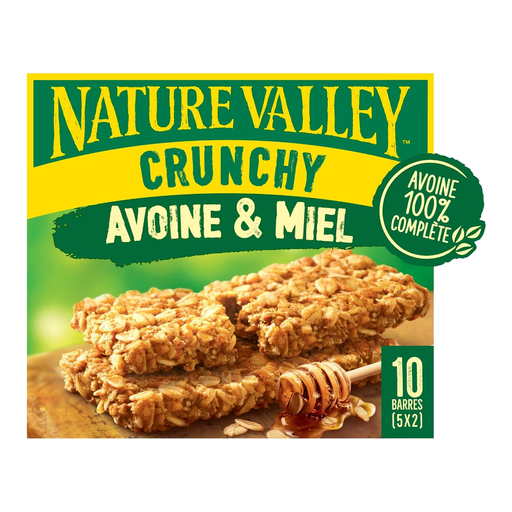 Image unavailable
This 210 g pack is suited to sharing by sachet if each person can have two bars. Sachets containing two bars are less convenient if you need to hand them out individually. Check the ingredients before sharing them, too.
 Image unavailable
This pack of twelve 68 g energy bars is an option if you’re looking for larger portions, but it isn’t described as a cereal bar multipack. If you plan to hand them out individually, check that they’re individually wrapped before buying. Also check the ingredients for anyone in your group who needs to avoid certain foods.
Not necessarily: six tells you the number of bars, not what makes up a meal. Check the weight of the bar you’ve chosen, then plan separately what else each person will need to complete their meal.
Compare the number of bars and their weight, then look at the nutritional information per 100 g. The DGCCRF says this format makes it easier to compare pre-packed food. The per-portion figures then help you understand what one bar from your chosen pack contains.
Read the ingredients for the specific product you’ve bought. Depending on the product, the recipes mentioned here may contain peanuts, nuts, milk or cereals containing gluten. Don’t assume every bar from the same brand has the same ingredients.
Don’t assume the same answer applies to every product and journey. Paris Aéroport points out that baggage weight and size rules depend on the airline. Check the requirements of your carrier and airport, and, if necessary, your destination.