What should you check before choosing?
Start with the portion you’ll actually take with you, then compare its ingredients and how the multipack is packaged.
| What to consider |
What to check |
Who is it for? |
| Protein per bar |
The amount per portion and the weight of the bar; compare values per 100 g if the formats differ. |
After a workout, I want to know how much protein is in the bar I’ll eat, rather than relying on the word ‘protein’ alone. Around 33% of the consumers considered here put this stated amount first. |
| Taking portions with you |
The number of bars and whether the exact pack includes individual wrappers. |
To pop a snack in my bag, I need separate portions that are ready to take when I leave. This convenience is the main priority for around 25% of the consumers concerned. |
| Ingredients and allergens |
The ingredients list and allergens for your chosen flavour, including in a selection pack. |
If I need to avoid peanuts, nuts, milk or soya, the exact recipe matters more than the pack format. Around 25% of consumers prioritise whether a product suits their dietary requirements. |
| Portion size and contents |
The weight of each bar, and the sugar, fat, fibre and salt per portion and per 100 g. |
When choosing between a small standard bar and a larger portion, I want to know what one bar actually contributes to my snack. For around 17% of consumers, portion size and contents are the main consideration. |
Bars to consider on Joybuy
These products let you compare protein bars, a multipack of cereal bars and a fruit and nut bar. If separate portions are important for taking them with you, check the packaging of each product before choosing.
 Image unavailable
Optimum Nutrition Whipped Protein Bar Peanut & Salted Caramel, 10 × 60 g
Worth considering if you’re looking for several protein bars to enjoy as post-workout snacks. The pack contains 10 bars weighing 60 g each; check that they’re individually wrapped if you need to take them separately.
Check that the ingredients are suitable for your allergies, particularly milk and soya. The product information also notes a possible laxative effect if you consume too many polyols.
View on Joybuy
 Image unavailable
Optimum Nutrition Marshmallow Crunch Protein Bar, 10 bars (650 g)
This multipack is a good option if you’re looking for several protein bars for snacks around your workout. It contains 10 bars with a total weight of 650 g; check whether each bar is individually wrapped.
The recipe listed contains soya, milk and wheat containing gluten. If salt or fat content matters to you, check the nutritional information for each portion.
View on Joybuy
 Image unavailable
CLIF BAR Blueberry Energy Bar, 12 × 68 g
This pack of 12 bars weighing 68 g each is useful for comparing portions for snacks around physical activity. Check how each bar is wrapped if you plan to divide them between several bags.
Before choosing this product, check the recipe if you need to avoid soya, barley, almonds, wheat or milk.
View on Joybuy
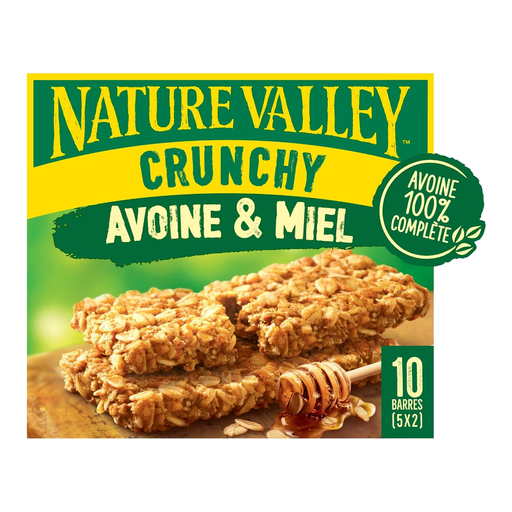 Image unavailable
Nature Valley Crunchy Oats & Honey Energy Bar, 210 g pack
Worth considering if you’d prefer a multipack of cereal bars rather than a bar specifically marketed as a protein bar. The pack contains five sachets, each with two bars. Bear this in mind if you want to take just one bar at a time.
The recipe contains oats and may contain soya, wheat, peanuts and nuts. Compare the portion stated on the pack rather than assuming that one bar is equivalent to one sachet.
View on Joybuy
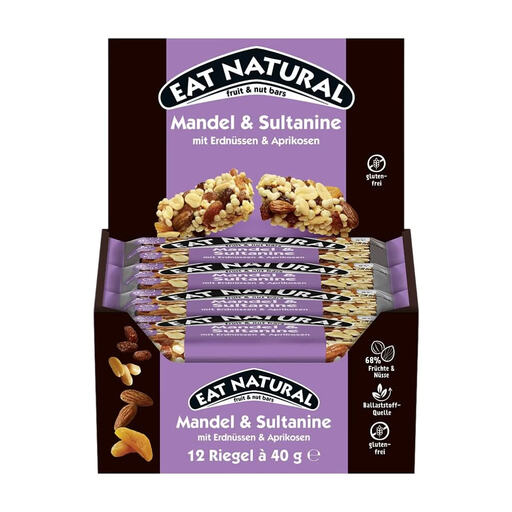 Image unavailable
Eat Natural Almond, Raisin & Apricot Fruit & Nut Bar, 40 g
Worth considering if you’re looking for a 40 g fruit and nut bar to take with you. If you’re putting together a selection, check the number of bars and how they’re packaged when choosing the pack size.
The recipe lists peanuts and almonds, so check the label if you have an allergy. To compare its protein content with another portion, refer to the nutritional information for the exact product.
View on Joybuy
Frequently asked questions
How do you compare two bars that weigh different amounts?
Compare their nutritional values per 100 g, then compare the portions you’ll eat. The DGCCRF explains that nutritional information per 100 g makes products easier to compare; the weight of each bar then tells you how much you’ll actually be taking with you.
Is the word ‘protein’ enough to help you choose a post-workout bar?
No. Check the protein per bar and the portion size, then look at the sugar, fat, salt and ingredients according to your priorities. The products mentioned by Kellogg’s and Auchan show that the stated amounts vary from one product to another.
Which allergens should you check in a selection of bars?
Check the ingredients in each flavour, particularly whether the recipes concerned contain peanuts, nuts, milk or soya. The Kellogg’s and Nature Valley products featured here illustrate these differences; another bar from the same brand may have different ingredients.
Do cereal bars in France have to display the Nutri-Score?
No. The DGCCRF describes the Nutri-Score as a voluntary label. If it appears on the pack, read it alongside the ingredients list and nutritional information, rather than treating it as an answer to your personal dietary requirements.
Is one bar enough to replace a meal after a workout?
A bar’s name doesn’t tell you whether it can replace a meal. Look at its portion and ingredients in the context of what else you eat; if you have specific dietary requirements, seek advice tailored to your needs.


