Households planning several snacks
You want the number and weight of the bars to suit how often your household eats them, without building up a stash of packs that go unused.


For back-to-school snacks, choose a multipack with enough bars for the portions you actually need. A larger pack isn't necessarily useful if some of it will go unused. If the bars are going in a school bag, check how they're packaged, as well as the ingredients and allergens in your chosen variety.
You want the number and weight of the bars to suit how often your household eats them, without building up a stash of packs that go unused.
You're looking for portions that are easy to pop into a school bag, and checking that the ingredients and allergens are suitable for the child who'll be eating them.
You choose based on the ingredients, a particular flavour or recipe, then check that the pack size also meets your needs.
For back-to-school snacks, start by working out how many portions you need, then check the packaging and the label for each recipe.
| What to consider | What to check | Who it's for |
|---|---|---|
| Pack size | Number of bars and net weight, compared with the snacks you have planned. | When I'm preparing several snacks, I want enough bars without leaving an opened pack unused; around 43% of consumers would put managing quantities first. |
| Portions to take out | Weight of each bar and whether the bars come in individual wrappers. | For a snack in a school bag, I need portions that are easy to carry; around 29% of consumers would prioritise portioning. |
| Ingredients and allergens | Ingredients and allergens in the exact variety; sugars and other nutritional values per 100 g. | If the recipe needs to meet specific requirements, I'll read the label before choosing a pack size; around 21% of consumers would prioritise ingredients or allergens. |
| Recipe you're looking for | The exact product name and ingredients of the featured recipe. | Sometimes I'm looking for a particular flavour or type of recipe, although pack size matters too; this would be the main consideration for around 7% of consumers. |
A product's name alone doesn't tell you what's in it. Manger Bouger recommends varying snacks and limiting foods that are high in fat and sugar as part of your everyday diet.
Read the ingredients and nutritional information, then consider the bar as part of the whole snack you have planned.
Ingredients and precautionary allergen statements can vary between recipes. The DGCCRF states that allergens must be highlighted in the ingredients list.
Check the label for the exact variety and pack you plan to buy.
An organic label or a particular product positioning doesn't tell you how many portions you'll use or whether the ingredients are suitable.
First, check the recipe, allergens and number of bars you need.
The retailer offers ranges including Classic', Bio, Sensation and Protein bars.
The Eco+ products reviewed include packs of six bars weighing 126 g.
The retailer offers ranges including Crousty, Less Sugar and Bio, in packs of six bars.
The brand offers bars under names including Spécial K, Frosties and Corn Flakes.
Choco BN products are snack biscuits, not cereal bars.
These two multipacks let you compare different portion counts for snacks to take out. Check the exact recipe and packaging before choosing.
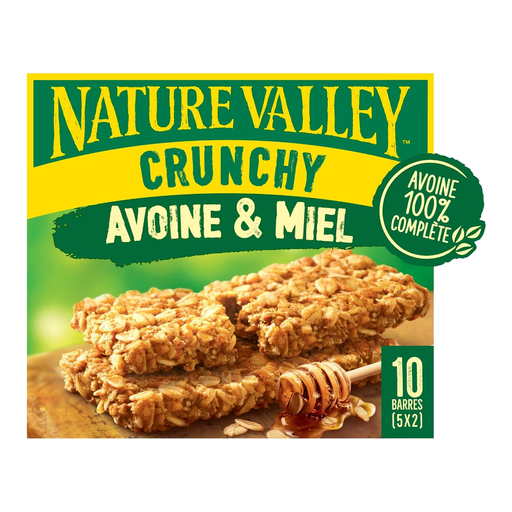 Image unavailable
Worth considering if you're planning several snacks to take out. The pack is listed as 5 bars weighing 210 g; check the packaging to see how the bars are divided between the sachets, and check the recipe's allergens.
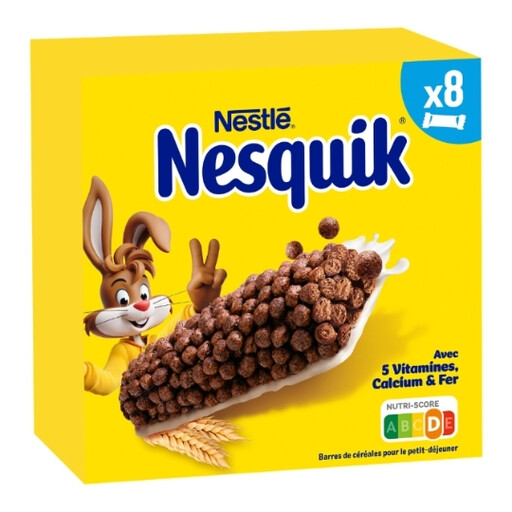 Image unavailable
Consider this pack if eight 25 g portions suit the snacks you have planned. Check the ingredients list and allergens before slipping it into a school bag.
Count the snacks for which you're planning to include a bar, then compare that number with the portions and weight shown on the pack. A larger pack is only useful if its portions match how much you expect to use.
First, compare their nutritional information per 100 g on a like-for-like basis, then check the weight of each bar to see the portion size. The DGCCRF states that nutritional information is given per 100 g or 100 ml.
Read the ingredients and any highlighted allergens on the exact pack, as well as any precautionary allergen statements. The DGCCRF says allergens must be distinguished in the ingredients list; a familiar flavour doesn't mean you can skip this check.
A bar's convenience doesn't define the whole snack. Manger Bouger recommends varying snacks and limiting foods that are high in fat and sugar in your everyday diet, so consider the recipe and what else you plan to serve.