People planning several coffee breaks
If you keep bars at work or at home, check how many breaks the pack will cover and whether the portions are easy to take separately.


For regular coffee breaks, choose the number of bars to suit the breaks you need to cover, then check whether the pack makes them easy to share out. A pack of six bars may suit a short rotation; a pack of ten may work for several people, although each sachet could contain two bars. Also compare the nutritional information per portion and per 100 g, along with the ingredients and allergens in your chosen recipe.
If you keep bars at work or at home, check how many breaks the pack will cover and whether the portions are easy to take separately.
If you’re sharing bars between several people, the number of bars isn’t the only thing to consider: check their weight and how many bars are in each sachet too.
If you’re choosing a recipe to enjoy regularly, compare the sugars, fat, protein and fibre listed on the label, then check the ingredients and allergens.
Start by thinking about how many breaks you need to cover and how you’ll share out the bars. Then compare the labels of recipes that suit your needs.
| Criterion | What to check | Who is this important for? |
|---|---|---|
| Number of bars | Count the bars and check their individual weight to work out how many breaks the pack will cover. | If you want to keep bars for several afternoons, look for a pack that suits your routine without having to open another one too soon. Around 31% of consumers prioritise the number of breaks a pack can cover. |
| How the portions are packed | Check whether the bars are individually wrapped or grouped in pairs in a sachet. | If you’re preparing several lunch boxes, you’ll want to know what each person can take without opening anyone else’s portions. Around 31% of consumers prioritise how easy the bars are to share out. |
| Nutritional content | Compare the nutritional information per 100 g, then check the figures per portion if they’re provided. | If you regularly have the same recipe with your coffee, you’ll want to compare its sugars, fat, fibre and protein with those in another bar. Around 23% of consumers say nutritional content is their main consideration. |
| Allergens | Read the ingredients list for your chosen flavour and check the pack for any ‘may contain’ warnings. | If a bar is for someone with an allergy, check the exact recipe before considering the pack size. Around 15% of consumers prioritise allergen suitability. |
An individual sachet may contain two bars. For example, Auchan lists a Nature Valley Crunchy pack of ten bars divided into five sachets.
Before packing a lunch box, check what’s in each sachet and the nutritional information for the amount you plan to take.
Ingredients vary from one recipe to another. Kellogg’s and E.Leclerc product listings include products containing peanuts, tree nuts, milk or wheat.
Read the label for the flavour you’re buying, including highlighted allergens and any ‘may contain’ warnings.
The amount of protein listed for a bar doesn’t tell you everything about its other nutritional values or ingredients.
Compare the nutritional information per 100 g and per portion, then check the ingredients list and the Nutri-Score if it’s shown on the pack.
Kellogg’s offers several ranges of bars, including Special K and recipes made with nuts.
Carrefour’s range includes a variety of cereal bar recipes, including packs of six.
Auchan offers cereal bars in a variety of recipes, including a six-bar organic chocolate option.
E.Leclerc offers ECO+ packs of six 126 g bars, including dark chocolate and peanut, and milk chocolate and banana recipes.
Nature Valley Crunchy products are available in packs of ten bars, divided into five sachets of two bars.
These two cereal bar pack sizes can help you plan for several coffee breaks or prepare lunch boxes. The number of bars and how they’re packed make them suitable for different needs.
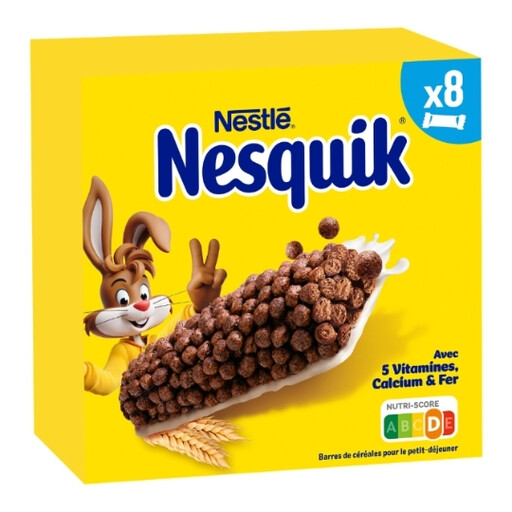 Image unavailable
A pack of eight bars can cover several breaks or be shared between lunch boxes. Each bar weighs 25 g. If you need each one to be individually wrapped, check the inner packaging. If you have an allergy, check the label on the product you buy.
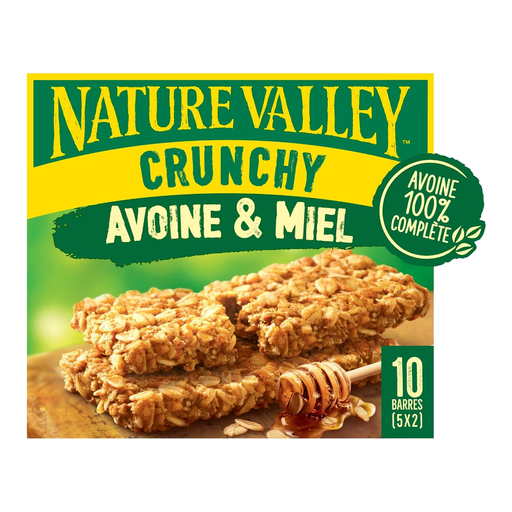 Image unavailable
The five sachets can be shared between several breaks or people. Auchan describes this 210 g oat and honey pack as containing five sachets, each with two bars, making ten bars in total. Check the quantity you need before counting one sachet as a single break. Read the label for your chosen flavour to check for allergens and any ‘may contain’ warnings.
Compare the nutritional information per 100 g, then check the figures per portion where provided. The DGCCRF presents the per-100 g figure as a basis for comparing products; the number and weight of the bars can then help you plan your breaks.
No. When shown, Nutri-Score gives you an indication of overall nutritional quality, but it doesn’t tell you on its own about the portion you’ll take with you or the recipe’s ingredients. Check the nutritional information and ingredients list too.
Check how many bars are in each sachet and read the allergen information on the pack for your chosen flavour. For prepacked food in France, the DGCCRF says allergenic ingredients must be highlighted in the ingredients list. Also look for any ‘may contain’ warnings.
Follow the storage instructions for the product you’ve bought and check the date on the packaging. If you’re sharing the bars between several lunch boxes, also check how the individual portions are packed.